Quick Answer: Search engine optimisation (SEO) in 2026 is the practice of earning visibility across every surface where people now find answers, Google’s classic results, AI Overviews, and answer engines like ChatGPT, Gemini and Perplexity. It has expanded from “ranking links” into a broader discipline of being found, cited and trusted by both search algorithms and large language models.
The global SEO services market is worth roughly $108 billion in 2026, up from about $93 billion the year before, yet the rules that built it have quietly changed. Google still processes more than 8.5 billion searches a day and holds around 90% of the global market share, but a growing share of those searches never result in a click. This guide explains what SEO actually means now, channel by channel, and how to stay visible as AI rewrites the front page of the internet.
Table of Contents
- What Is SEO? The Core Definition
- Why SEO Matters More Than Ever in 2026
- What Is On-Page & Content SEO?
- What Is Technical SEO?
- What Is Off-Page SEO (Links & Digital PR)?
- What Is Local SEO?
- What Is Search Engine Marketing (PPC)?
- The AI Overhaul: AI Overviews, AEO & GEO
- How to Approach SEO in the AI Era: 5 Principles
- The 2026 SEO Glossary (30+ Terms)
- Work With a Team That Lives This Daily
- Schema & Technical Recommendations
1. What Is SEO? The Core Definition
Search engine optimisation is the discipline of structuring a website and its content so that search engines and AI answer engines understand it, trust it, and surface it to the right person at the right moment.
In plain language: SEO is how you earn free, repeatable visibility. When someone searches for a product, a service or an answer, SEO is the work that decides whether your business appears and, increasingly, whether an AI system quotes you when it replies.
That definition is broader than it used to be. For two decades, SEO meant one thing: ranking a blue link as high as possible on Google. The mechanics were keywords, links and a fast website. Rank in the top three positions, and you captured the majority of clicks. The job ended at the search results page.
In 2026, the job doesn’t end there. Search results now sit beneath AI-generated summaries, and a meaningful share of “searches” happen inside chat interfaces that never show a list of links at all. Modern SEO, therefore, covers three jobs at once:
- Classic SEO — ranking organic listings on Google and Bing.
- Answer optimisation — being the source that an AI summary pulls its answer from.
- Generative visibility —being recommended by name inside ChatGPT, Gemini, Claude and Perplexity. The complete primer on the discipline behind that visibility – Answer Engine Optimisation – is in our AEO breakdown.
Why does the broader definition matter specifically in 2026? Because the gap between being ranked and being seen has never been wider. You can hold position one and still lose the click to a summary sitting above you. Treating SEO as a links-only game in 2026 is like optimising for a shop window on a street people have stopped walking down.
It also helps to be clear about what SEO is not. It is not a one-time setup, not a list of keywords stuffed into a page, and not a trick to fool an algorithm. Search engines have spent two decades getting better at rewarding genuine quality and ignoring manipulation. The shortcuts that worked in 2015 actively harm you now. Modern SEO is closer to building a durable reputation than gaming a system, and reputation, by definition, compounds slowly and then pays off for years.
One useful mental model: think of SEO as answering the questions your customers are already asking, in the places they are already asking them. Some of those places are Google’s results. Some are an AI chat window. Some are a map listing or a voice assistant. The medium changes; the underlying job, being the most useful, trustworthy answer, does not.
2. Why SEO Matters More Than Ever in 2026
SEO matters more in 2026 – not less – because the volume of searches keeps rising while the cost of paid attention climbs and AI raises the bar for what “trustworthy” content looks like.
The instinct, when AI summaries reduce clicks, is to assume SEO is dying. The data says the opposite: the discipline is growing and consolidating. Here is the macro picture driving the urgency.
- The market is expanding, not shrinking. The global SEO services market grew roughly 17% year on year to about $108 billion in 2026, its fastest jump in years.
- Search is still the front door. Around two-thirds of online experiences begin with a search engine, and Google alone handles 8.5 billion+ queries per day.
- Zero-click is now the norm. Industry studies put US zero-click searches at roughly 58–60% the answer is resolved on the results page itself. On mobile and in AI Mode, the figure runs far higher.
- AI Overviews are everywhere. By early 2026, BrightEdge tracked AI Overviews on roughly 48% of monitored queries, with some research placing the figure above 50%. In health, education and research, it approaches 80%.
- The ROI is still elite. SEO delivers an average return cited at 700–788% across industries, with payback typically inside 7–9 months and compounding for years after.
The macro shift is simple to state and hard to action: visibility and traffic have split into two different metrics. Your brand can appear prominently in an AI Overview, shape a buyer’s decision, and send you zero referral clicks for that appearance. Gartner has forecast a 25% decline in traditional search volume as AI assistants absorb routine queries. The full strategic frame for treating discovery as a multi-surface discipline rather than a Google-only one is in our breakdown of
Search Everywhere Optimization.
That is why 2026 SEO measures presence, not just position. The brands winning are the ones building authority deep and wide enough that algorithms and language models reach for them by default. The mechanic underneath that authority – entity recognition in the knowledge graph – is documented in our
Entity SEO primer.
There is a second, quieter reason SEO matters more now: the playing field has tilted toward quality. When manipulation worked, deep-pocketed competitors could buy their way to the top. As engines and AI systems reward genuine expertise and trust, a smaller, sharper business that truly knows its subject can out-rank and out-cite a larger rival coasting on thin content. For specialist brands, that is an opening, not a threat.
3. What Is On-Page & Content SEO?
On-page SEO is the practice of optimising the content and HTML of an individual page – its headings, copy, structure and intent match – so both humans and machines can extract the answer quickly.
This is the channel that changed least in name and most in execution. The mechanics still revolve around mapping content to search intent: understanding whether a query is informational, navigational, commercial or transactional, and building the page that satisfies it best.
What’s new is extractability. AI systems lift answers from clearly structured passages. Research into LLM citations found that a large share of quoted material comes from the first portion of a page. If your answer is buried in paragraph nine, an AI summary will quote a competitor who put theirs in paragraph one.
How it works in practice: a search engine reads your page to judge two things, relevance (does this match what the user wants?) and quality (is this the best version of the answer available?). It assesses the title, the headings, the depth of coverage, the supporting media, and how the page connects to the rest of your site. An AI engine does something similar but adds a third question: can I quote a clean, self-contained passage from this without misrepresenting it? Pages written in long, hedged, meandering prose fail that test. Pages that state things plainly pass it.
The 2026 on-page checklist:
- Lead every section with a direct, standalone answer before you elaborate.
- Match content to a single, well-defined search intent – don’t blend four.
- Use a clean H1 → H2 → H3 hierarchy that mirrors how people ask questions.
- Write scannable paragraphs; dense walls of text get skipped by readers and parsers alike.
- Add comparison tables, definitions and FAQs – formats AI engines quote readily.
- Cover the topic to genuine depth; thin pages rarely earn citations. The full structural playbook for depth done right – pillar architecture, cluster linking, and schema – is documented in our guide to pillar pages that rank.
Think of every page as having two audiences now: the person skimming on a phone, and the language model deciding whether to quote you. Good on-page SEO serves both with the same clarity.
4. What Is Technical SEO?
Technical SEO is the work of making a website fast, crawlable, indexable and machine-readable, so search engines and AI crawlers can access and understand every page without friction.
If on-page SEO is the message, technical SEO is the infrastructure that delivers it. No amount of brilliant content ranks if crawlers can’t reach it or render it. In 2026, this layer carries extra weight because a new class of AI crawlers now reads your site to decide what to cite.
The core pillars are stable, but the priorities have sharpened:
| Crawlability | Whether bots can reach pages | Allow AI crawlers, audit robots.txt |
| Indexability | Whether pages enter the index | Fix orphan & duplicate pages |
| Core Web Vitals | Loading, interactivity, stability | Optimise INP (the current metric) |
| Structured data | Machine-readable meaning | Now a key AI-citation signal |
| Site architecture | How pages connect | Build topical clusters & hubs |
Two technical moves define 2026. Before either of them matters, the foundation layer – Core Web Vitals – has to clear; the non-developer playbook for that is in our
Core Web Vitals optimization guide. First, schema markup has shifted from a “nice to have” to a primary input, structured data is one of the strongest determinants of whether you get cited in an AI Overview. Second, an emerging convention called llms.txt lets you signal to AI systems which content is fair to use, mirroring how robots.txt guides traditional crawlers.
Block AI crawlers reflexively, and you forfeit citation eligibility entirely; the major models are reading the web whether or not they send you a click today.
5. What Is Off-Page SEO (Links & Digital PR)?
Off-page SEO is everything you do beyond your own website to build authority and trust, primarily earning high-quality backlinks, brand mentions and third-party coverage.
Backlinks remain one of the strongest ranking signals: pages that rank highest consistently have more, and better, links pointing to them. The full earned-link playbook for 2026 – outreach, original research, broken-link reclamation, and digital PR – is in our complete guide to link building in 2026.
But off-page SEO in 2026 is wider than links. Language models weigh unlinked brand mentions and independent, corroborating coverage when deciding who to recommend. When three trusted sources describe you as a leader in your category, an AI engine internalises that, even without a clickable link.
The modern off-page playbook:
- Digital PR — earn coverage on authoritative publications in your niche.
- Original data & research — publish studies others cite and link to.
- Brand entity building — get mentioned consistently across the sources AI trusts.
- Strategic partnerships — guest contributions, expert quotes, co-authored work.
- Review & reputation signals — third-party validation that reinforces trust.
The throughline is corroboration. In a world where anyone can publish a confident claim, the brands that win are the ones that other credible sources vouch for. Off-page SEO is how you manufacture that consensus, ethically and at scale.
6. What Is Local SEO?
Local SEO is the practice of optimising a business to appear in geographically relevant searches and map results – the “near me” and city-specific queries that drive real-world footfall and calls.
For any business with a physical location or service area, a clinic, a boutique, or a law firm, local SEO is often the highest-ROI channel that exists. These searches carry intense intent: someone searching “dentist in Whitefield” or “saree shop near me” is usually ready to act today.
The engine of local SEO is your Google Business Profile (GBP), the listing that powers the map pack. The advanced optimisation tactics that move GBP beyond a basic listing – Posts, Q&A, attributes, and review response – are in our guide to
Google Business Profile optimisation beyond the basicsLocal SEO essentials:
- Claim and fully complete your Google Business Profile.
- Keep NAP (Name, Address, Phone) identical everywhere online.
- Earn and respond to reviews consistently, they shape rankings and trust.
- Build local citations in relevant directories.
- Create location-specific landing pages with genuine local value.
- Add the LocalBusiness schema so engines parse your details precisely.
AI assistants increasingly answer local questions directly, pulling from structured business data. A clean, complete, well-reviewed profile is now the difference between being the recommendation and being invisible.
7. What Is Search Engine Marketing (PPC)?
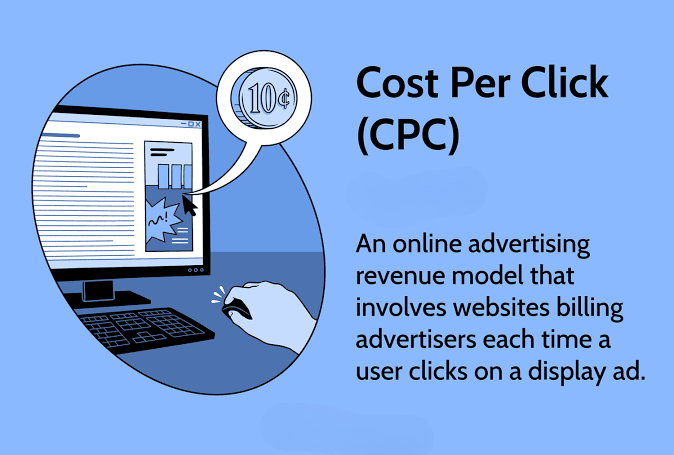
Search engine marketing (SEM) is the paid side of search visibility – bidding to place ads on search results pages and across networks, charged on a pay-per-click (PPC) basis.
SEO earns visibility; SEM buys it. The two are siblings, and in 2026, they’re increasingly co-dependent. As organic clicks compress under AI Overviews, the paid slots on commercial and transactional queries have become more valuable real estate, not less.
SEM still revolves around Google Ads and Microsoft Ads, but the levers have moved toward AI-driven automation:
| Search ads | High-intent keywords | Smart Bidding + broad match |
| Performance Max | Cross-channel goals | Fully automated, asset-fed |
| Shopping ads | E-commerce products | Merchant feed quality |
| Demand Gen | Awareness & discovery | Audience & creative led |
The strategic point: SEM gives you immediate presence on the exact queries where AI summaries are eating organic clicks. A smart 2026 strategy runs SEO and SEM as one funnel, paid capturing demand today while organic and AI visibility compound for tomorrow.
8. The AI Overhaul: AI Overviews, AEO & GEO
The biggest shift in search since the mobile era is the arrival of AI between the user and your website – answering directly, and reshaping what visibility even means.
For most of search history, the deal was simple: the engine showed you a list of links, and you clicked one to get your answer. AI breaks that contract. Now the engine often writes the answer itself, drawing on your content but keeping the user on its own page. This is the single change that explains nearly every 2026 SEO trend, the rise of zero-click search, the new obsession with citations, and the birth of two entirely new disciplines, AEO and GEO. Understanding this section is understanding modern search.
What are AI Overviews — and what’s the impact?
AI Overviews are Google’s AI-generated answer summaries that appear at the very top of the results page, above the organic listings. They synthesise an answer from multiple sources and cite a handful of them.
The traffic impact is real and well-documented. Ahrefs data from late 2025 found the presence of an AI Overview reduced click-through rate for the top organic result by around 58% — up from a 34.5% drop measured in April 2025. A large Seer Interactive study (53 brands, 5.47 million queries, 2.43 billion impressions) tracked organic CTR bottoming near 1.3% in December 2025 before recovering to 2.4% by February 2026. Pew Research found users clicked any organic result in just 8% of sessions where an AI Overview appeared, versus 15% without.
The crucial nuance: being cited inside the AI Overview matters enormously. Cited brands earn more clicks than uncited ones, meaningfully, Ahrefs puts the advantage at roughly 35%. The game is no longer “rank above the Overview”; it’s “be the source the Overview quotes.”
What is Answer Engine Optimisation (AEO)?
Answer engine optimisation (AEO) is the practice of structuring content so it can be lifted directly as the answer to a specific question by AI Overviews, featured snippets and voice assistants.
AEO tactics that work:
- Answer one clear question per section, in the first sentence.
- Use a question-and-answer structure with real FAQs.
- Keep answer passages concise, factual and self-contained.
- Apply the FAQPage and HowTo schema to make answers machine-readable.
- Format definitions so they read as standalone, quotable statements.
What is Generative Engine Optimisation (GEO)?
Generative engine optimisation (GEO) is the practice of building brand presence and authority so that AI chat platforms – ChatGPT, Gemini, Claude, Perplexity – mention and recommend you by name in their generated responses.
GEO is the newest discipline and the fastest-growing: industry surveys show around 43% of marketers were actively implementing it in 2026, up from near zero a year earlier. The market is also fragmenting, AI referral share is no longer a ChatGPT monopoly, with Gemini, Perplexity and Claude all capturing meaningful, growing slices.
GEO tactics that work:
- Build a strong, consistent brand entity across the web’s trusted sources.
- Earn third-party mentions that corroborate your expertise.
- Publish original data and clearly attributed expert opinion.
- Optimise for each platform’s quirks (Perplexity rewards freshness and tight sourcing; ChatGPT rewards depth).
- Monitor brand mentions across all four major AI engines.
SEO vs AEO vs GEO at a glance
Platform | Google & Bing results | AI Overviews, snippets, voice | ChatGPT, Gemini, Claude, Perplexity |
Goal | Rank a clickable listing | Be lifted as the direct answer | Be recommended by name in chat |
Core lever | Relevance + authority + links | Structure + schema + clarity | Brand entity + corroboration |
Success metric | Position & organic clicks | Citations & snippet capture | Mention frequency & share of voice |
These are not three competing strategies. There are three layers of one modern search practice, and the same foundations (clarity, depth, trust) feed all of them.
9. How to Approach SEO in the AI Era: 5 Principles
Winning at search in 2026 is less about chasing tactics and more about adopting a handful of durable principles that hold as the platforms keep shifting.
Principle 1: Optimise for presence, not just position. Why: rankings and visibility have split apart, you can rank and still be skipped. How: track citations, AI mentions and share of voice alongside classic rankings, and treat appearing in an AI answer as a win even without a click.
Principle 2: Earn trust before you chase traffic. Why: E-E-A-T (Experience, Expertise, Authoritativeness, Trustworthiness) is now the filter AI systems use to decide who to quote. How: publish first-hand experience, name your authors with real credentials, cite sources, and get corroborated by other trusted sites.
Principle 3: Structure everything for extraction. Why: machines quote what they can parse cleanly. How: lead with answers, use logical headings, add schema, and format key facts as standalone, quotable statements.
Principle 4: Build topical depth, not isolated posts. Why: algorithms and LLMs reward sites that demonstrably own a subject. How: build pillar-and-cluster architectures — a hub page like this one linking out to focused supporting articles.
Principle 5: Diversify your visibility across surfaces. Why: dependence on any single channel, even Google, is now a business risk. How: spread presence across organic, AI engines, local, paid and owned channels so no single algorithm change can sink you.
10. The 2026 SEO Glossary (30+ Terms)
- AEO (Answer Engine Optimisation) — Optimising content to be extracted as the direct answer by AI Overviews, snippets and voice assistants.
- AI Mode — Google’s conversational, fully AI-driven search experience where results are generated rather than listed.
- AI Overview — Google’s AI-generated summary shown above organic results, synthesising and citing multiple sources.
- Anchor text — The visible, clickable words of a hyperlink, which signal context to search engines.
- Backlink — A link from another website to yours; still a core authority and ranking signal.
- Canonical URL — The preferred version of a page, declared to prevent duplicate-content issues.
- Citation (local) — An online mention of a business’s name, address and phone number.
- Citation (AI) — When an AI engine credits your page as a source inside its generated answer.
- Core Web Vitals — Google’s metrics for loading, interactivity (INP) and visual stability.
- Crawlability — How easily search and AI bots can access and navigate a site’s pages.
- E-E-A-T — Experience, Expertise, Authoritativeness, Trustworthiness; Google’s framework for content quality and the trust filter AI uses.
- Entity — A distinct person, brand or concept that engines and LLMs recognise and connect.
- Featured snippet — A highlighted answer box pulled from a ranking page to the top of results.
- GBP (Google Business Profile) — The free business listing that powers Google Maps and local results.
- GEO (Generative Engine Optimisation) — Building authority so AI chat platforms mention and recommend a brand by name.
- Indexing — The process of a search engine storing a page so it can appear in results.
- Internal linking — Links between pages on the same site that pass authority and define topical structure.
- INP (Interaction to Next Paint) — The Core Web Vital measures how quickly a page responds to user input.
- Keyword — A word or phrase users search for and content targets.
- llms.txt — An emerging file convention signalling to AI systems how a site’s content may be used.
- Long-tail keyword — A longer, more specific query with lower volume but higher intent.
- Map pack — The block of local business listings shown with a map in local searches.
- Meta description — The summary snippet under a result influences clicks, not rankings directly.
- NAP — Name, Address, Phone; must stay consistent across the web for local SEO.
- Off-page SEO — Authority-building activity beyond your own site, chiefly links and mentions.
- On-page SEO — Optimising a page’s content, structure and HTML for relevance and clarity.
- Organic search — Unpaid search results earned through relevance and authority.
- Pillar page — A comprehensive hub page on a broad topic that links to focused cluster content.
- PPC (Pay-Per-Click) — Paid search advertising is charged each time an ad is clicked.
- Schema markup — Structured data code that helps engines and AI understand page meaning.
- Search intent — The underlying goal behind a query: informational, navigational, commercial or transactional.
- SEM (Search Engine Marketing) — The paid discipline of buying search visibility.
- SERP — Search Engine Results Page; now a layered mix of AI, ads and organic listings.
- Technical SEO — Optimising site infrastructure for crawling, indexing and performance.
- Topical authority — The depth and breadth of trusted coverage a site has on a subject.
- Zero-click search — A search resolved on the results page itself, with no click to any website.
11. Work With a Team That Lives This Daily
SEO in 2026 rewards the relentless and the well-organised – brands that build authority across every surface, structure content for both humans and machines, and adapt as the platforms shift week to week.
That is hard to do well in-house while running a business. It takes a team that watches the data, ships consistently, and treats organic, AI and paid visibility as one connected system. That is exactly what we do.
- Grow your organic and AI visibility – explore our search engine optimisation services.
- Capture high-intent demand today – see our search engine marketing services.
Written by the NullStack Technologies SEO & GEO Strategy Team – a decade-old software development and performance marketing agency building enterprise-grade search visibility for brands across India and beyond.
12. Schema & Technical Recommendations
Apply the following structured data after publishing to maximise eligibility for rich results and AI citation:
- Article schema — mark up the full piece, including author, publisher and dateModified.
- FAQPage schema — map to the glossary and any Q&A blocks for snippet and AI-answer eligibility.
- BreadcrumbList schema — reflects the page’s place in your site hierarchy.
- Organisation schema — reinforce your brand as a recognised entity (supports GEO).
- DefinedTerm / DefinedTermSet schema — topic-specific markup ideal for the glossary section.
For brands ready to commit to that compounding work rather than chase short-term tactics, our SEO company in Kolkata structures every engagement around the durable, defensible practices documented across this guide.