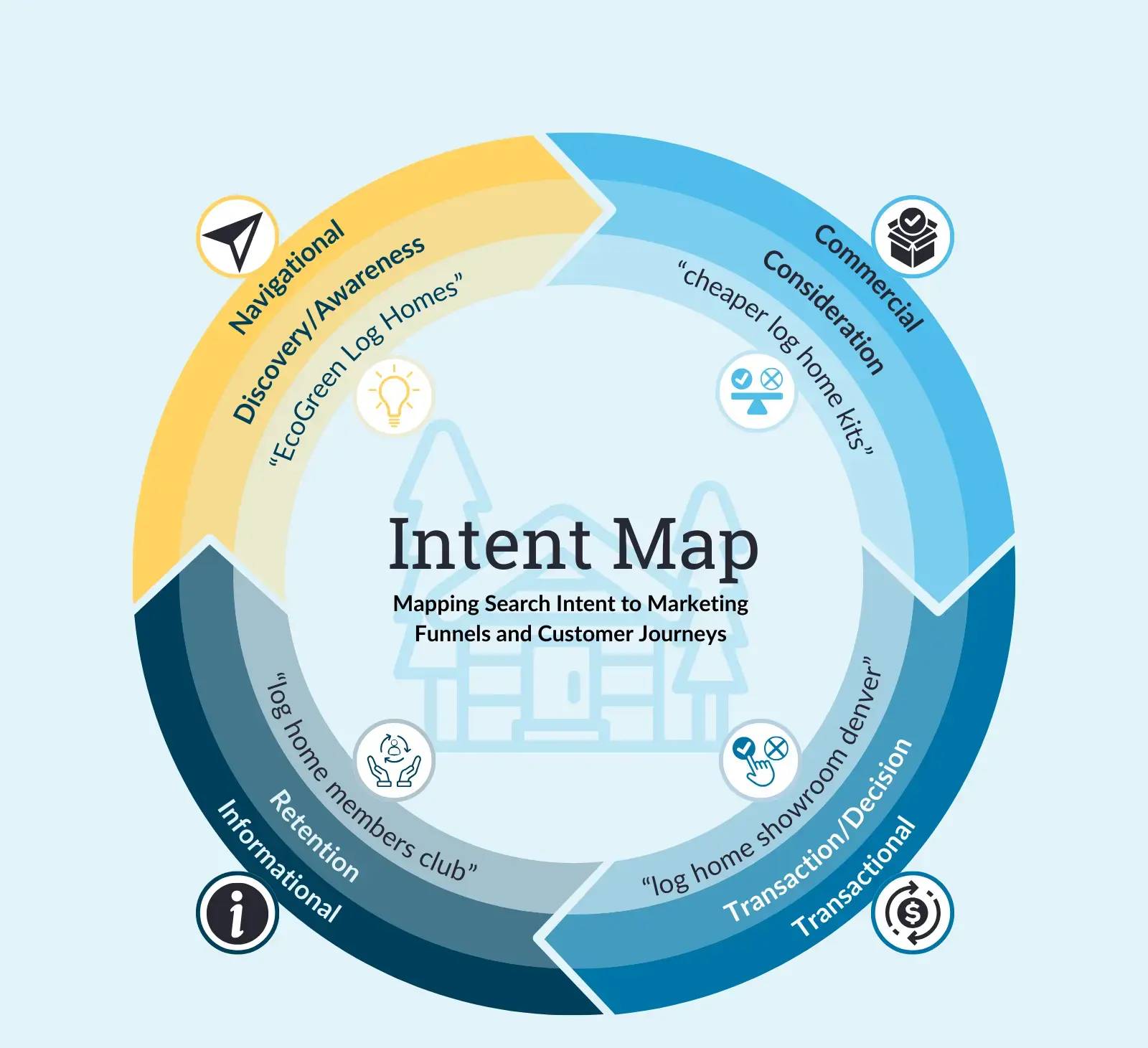
Marketers love to blame the algorithm. The truth is less flattering: most campaigns fail because the team built them around keywords instead of the reasons people typed those keywords. You can outspend competitors, hire the sharpest copywriter, and deploy a flawless technical stack, and still watch your bounce rate climb and your conversions flatline. The missing layer is search intent mapping, the discipline of matching every piece of content, ad, and landing experience to the specific mental state of the searcher behind the query. Master it, and you stop guessing why pages underperform; you start engineering visibility around how real people search and decide. The complete classification framework – beyond the textbook four buckets – is in our user intent mapping 4-quadrant breakdown.
What Search Intent Mapping Actually Is (Beyond the Four Buckets)
Most introductions stop at the textbook’s four types: informational, navigational, commercial, and transactional. That framing is a starting line, not a finish. Real intent mapping treats every query as a layered signal: the surface question, the emotional state behind it, the stage in the buying journey, and the format the searcher expects to see returned. A query like “best CRM for small agencies” may appear commercial, but the searcher may actually want a comparison table, a Reddit-style honest review, or a YouTube walkthrough, and the SERP itself will reveal which format is most effective. The 10-minute method for reading those SERP signals systematically is documented in our SERP intent analysis guide.
Why Campaigns Collapse When Intent Is Treated as an Afterthought
When teams skip this step, the failure pattern is predictable. You target a high-volume keyword, build a beautifully written page, and watch it sit on page two for months without movement. The reason isn’t backlinks or word count; it’s that your page answers a different question than the one searchers asked. The four-layer diagnostic for identifying exactly which kind of mismatch is killing a page – format, depth, audience, or stage – is in our search intent mismatch guide. A “what is” query met with a sales-heavy page sends bounce signals straight back to Google. A transactional query met with a 3,000-word explainer does the same. Paid campaigns suffer faster and more visibly: rising CPCs, sinking quality scores, and ad copy that wins clicks but loses conversions because the landing page resolves the wrong problem entirely.
How AI-Driven Search Has Rewritten Intent Signals
The intent puzzle has gotten harder. AI Overviews, multimodal results, and entity-based retrieval now sit between your content and the searcher. AI Overviews increasingly answer informational queries directly, which means traffic for “what is” and “how does” topics is shrinking unless your content earns citation inside the overview itself. Meanwhile, commercial and decision-stage queries have become more valuable because AI systems still defer to authoritative human-curated comparisons, reviews, and first-hand expertise. The strategic shift is uncomfortable but clear: you stop chasing volume and start chasing intent depth, queries where the searcher needs nuance, perspective, or specificity, an AI summary cannot credibly deliver.
The Practical Framework for Mapping Intent at Scale
Start with SERP scraping, not keyword research tools. For every target query, examine the top ten results and ask: what formats dominate, what subtopics appear in featured snippets, and what does the People Also Ask section reveal about adjacent confusion? Then categorise each query by intent stage, expected format, and emotional driver, anxiety, curiosity, urgency, or validation. Plot these into a content map where each URL owns one intent cluster, not one keyword. Brands like HubSpot and Notion execute this rigorously: their pillar pages do not chase a single phrase; they own a coherent intent group, with internal links routing readers to the next logical question in the journey.
Aligning Paid Media and Landing Experiences with Intent
Paid search is where intent mismatch burns budget fastest. A user searching “Zoho CRM pricing” wants a number, not a hero banner promising “transformation.” Match the ad copy to the query intent, then ensure the landing page resolves that intent within the first viewport above the fold. Run intent-based ad group structures rather than match-type-based ones. Group queries by what the searcher wants to do, not just by the words they used. For ecommerce, this means separating research-stage queries from purchase-ready ones and routing each to a different template entirely. The cost-per-acquisition drop from this single discipline is usually larger than any bid optimisation tactic you will run this quarter. For brands whose paid programmes are currently burning budget on intent-mismatched landing pages, our digital marketing services in Kolkata include a full intent-realignment audit at the start of every retainer.
Measuring Intent Fit Instead of Just Rankings
Rankings are a lagging vanity metric in an intent-led strategy. The real diagnostics live in scroll depth, dwell time, query-to-conversion paths, and the share of returning users who eventually convert. Build a simple intent-fit scorecard per URL: average position, click-through rate against SERP benchmark, engagement time, and assisted conversions across the funnel. Where any of these underperform, your intent mapping is off, not your SEO foundation. Search Console’s query report, paired with GA4’s engagement data, will tell you within weeks whether the page is resolving the right need or accidentally serving the wrong stage of the buyer’s journey.
Search intent mapping is the connective tissue between what you publish and what searchers actually expect to find. Without it, even strong content earns weak returns; with it, modest content can outperform far larger competitors. Prioritise three moves: audit existing URLs against current SERP intent signals, restructure paid campaigns around intent groups rather than keyword themes, and build measurement systems that reward resolution over ranking. The future of search rewards brands that understand the reason behind every query, not the keyword itself, and that understanding is no longer optional in an AI-mediated discovery landscape. Brands ready to operationalise intent mapping across their entire content portfolio engage our SEO experts in Kolkata for the audit, the restructure, and the measurement system that follows.