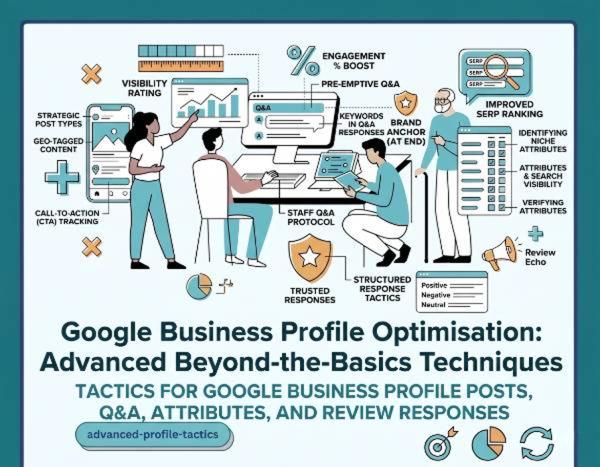
Most “GBP optimisation” guides stop at the checklist: claim the listing, fill every field, upload photos, ask for reviews. That’s table stakes. By 2026, the businesses winning the Map Pack aren’t the ones with the most complete profiles, they’re the ones using GBP as a structured content surface that feeds Google’s AI summaries, Ask Maps responses, and ranking models.
Here’s what’s quietly shifted. Google now treats your profile as a grounding source. When a searcher asks “is this place good for solo diners” or “do they handle commercial leases,” the answer increasingly comes from your attributes, your Q&A, your posts, and the language inside your review responses, not just your website. If those surfaces are thin or generic, you’re invisible in the moment that matters most.
This piece skips the basics. We’re getting into how to engineer each section of your profile to do real work.
Posts: Stop Treating Them as a Frequency Game
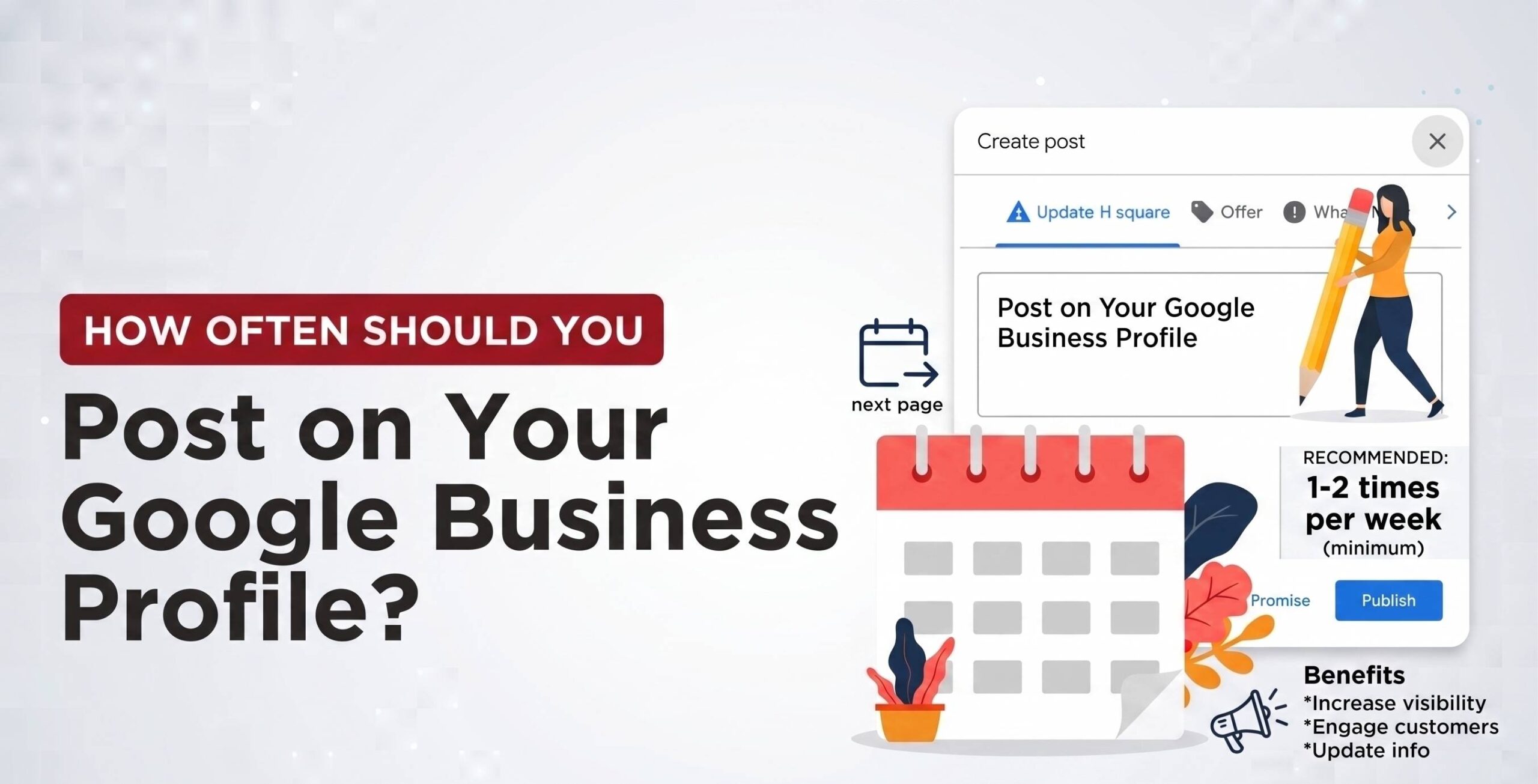
The conventional wisdom “post weekly to stay active” is half-right and entirely uninspiring. Posts don’t directly move pack position, but they shape what searchers see and click in the local panel, and they create indexable signals about what’s currently relevant to your business.
The advanced play has three layers.
Use post types deliberately. Standard updates, Offers, and Events each render differently and carry different intent signals. Offers create a coupon-style card with a visible expiry, strong for conversion-focused queries. Events occupy real estate during their active window and surface in time-bound queries. Standard updates are best for thought leadership and seasonal positioning. Most businesses default to “Update” for everything; you should be matching post type to commercial intent.
Write for two audiences simultaneously. Every post needs to read well to a human scanning the local panel and contain the entity-rich language Google needs to categorise it. A post titled “New collection” tells Google nothing. “New monsoon-ready leather laptop bags now in our Indiranagar store” gives Google a category (leather goods), a sub-product (laptop bags), a use case (monsoon-ready), and a location anchor all in one line.
Build a 90-day post calendar around buyer questions. For each high-intent service or product line, ask: what does a customer need to know before they walk in or click “call”? Turn each answer into a post. Pricing transparency, timeline expectations, “what makes us different,” credentialing, common objections, these convert better than promotional content.
Always have one post live. When the most recent post is three months old, it signals dormancy to both Google and humans. If you’re going to be slow, schedule evergreen posts in advance rather than letting the slot go empty.
Q&A: The Most Underused Surface in Local SEO
The Q&A section has become disproportionately important in 2026 because it’s one of the cleanest grounding sources for AI-generated responses on Maps and Search. Yet most businesses ignore it entirely, leaving competitors, spammers, and confused customers to populate it on their behalf.
Three tactics separate serious operators from the rest.
Seed your own questions. This is fully within Google’s guidelines and arguably the single highest-leverage move on the entire profile. Log in as a regular Google user (not as the business owner), ask 8–15 of the questions you genuinely hear from customers, then switch to your business account and answer them in detail. The “owner” badge on your answers carries weight, and your seeded questions get upvoted naturally over time, which keeps them surfaced at the top.
What to seed: questions about pricing structure, service area, parking, payment methods, languages spoken, appointment policies, customisation options, warranty, turnaround times. Anything that converts a curious browser into a confident buyer.
Treat customer questions as a 24-hour SLA. Unanswered questions sit publicly visible. Worse, anyone, including competitors and trolls- can answer them. Set up notifications and respond the same day. Use the customer’s actual phrasing in your reply so the answer indexes against the way real people search.
Don’t let the section become a help desk. If a question is genuinely a service complaint, answer politely and pivot the resolution offline (“Please reach us at [number] so we can look into your order directly”). Public Q&A is a marketing asset, not a support channel, but it must be visibly attended to.
Attributes: Precision Signals That Punch Above Their Weight
Attributes are the most quietly powerful field in GBP, and the one most businesses set once and never revisit. Google has been steadily expanding the attribute taxonomy, and in 2026, they’re feeding directly into how Maps filters and AI Overviews qualify a business for specific queries.
There are three categories of attributes worth auditing.
Service and amenity attributes are the ones most owners know about wheelchair accessible, free Wi-Fi, outdoor seating, and accepts cards. Fill every applicable one. The gain isn’t just visibility; it’s qualification. When a searcher filters Maps for “wheelchair accessible restaurants,” only profiles with that attribute checked appear. Missing one accurate attribute can quietly remove you from entire query sets.
Transparency and identity attributes – “women-led,” “veteran-led,” “LGBTQ+ friendly,” “Black-owned,” and the regional equivalents – surface visually in the profile and increasingly factor into queries where buyers explicitly seek these businesses. If you qualify, claim them. Don’t claim what isn’t accurate; Google audits these, and penalties are real.
Category-specific attributes are where most opportunity sits. Restaurants get “good for solo dining,” “quick bite,” “kid-friendly menu.” Salons get service-level specificity (hair colouring, threading, bridal). Hotels have dozens of operational attributes. These are the inputs Google uses to decide which long-tail queries you qualify for. Audit your category’s full attribute list, it’s longer than you remember, and ensure every accurate option is checked.
One discipline: revisit attributes every quarter. Google adds new ones without announcement, and the businesses that adopt early benefit from less crowded query surfaces.
Review Response Tactics: Where Most Brands Sound Like Bots
Review responses do three things at once. They demonstrate care to the next reader (who is the actual audience, not the original reviewer). They contribute response-rate and recency signals that feed local ranking. And the language inside them is now indexable content that AI summaries can pull from.
This makes generic responses (“Thank you for your feedback! We hope to see you again.”) actively harmful. They consume the slot without adding a signal.
For positive reviews: thank by name, reference one specific thing the reviewer mentioned, and naturally reinforce a relevant keyword or service. Compare these two:
“Thanks for the kind words, Priya!”
“Thanks, Priya – really glad the bridal trial went well, and that Anjali was able to match the lehenga colour you wanted. See you on the wedding day.”
The second response surfaces a service category (bridal trial), a staff member’s name (which builds a searchable association), and a product attribute (colour matching). Same warmth, infinitely more SEO and trust value.
For negative reviews: never argue, never get defensive, and never copy-paste. The framework that works:
- Acknowledge the specific issue (shows you read it).
- Take responsibility for what’s yours; clarify what isn’t, briefly and without blame.
- Move resolution offline with a direct contact path.
- Close warmly without grovelling.
The audience for a negative review response is the next prospect reading it. They want to see professionalism under pressure, not victory in the dispute. A well-handled 2-star review can convert better than a 5-star review with a flat reply.
For fake or policy-violating reviews: respond publicly anyway, calmly and factually, while you file the removal request. (“We have no record of an order under this name and would welcome the chance to investigate – please reach us at [contact].”) Removal can take weeks; the response is your defence in the interim.
For all reviews: target a response rate above 90% and a response time under 48 hours. Both are visible signals to Google and to prospects scanning your profile.
How These Signals Compound
The temptation is to treat each of these as a separate task on a checklist. The real leverage comes from their interaction.
A well-seeded Q&A answer reinforces the same service language used in your posts, which reinforces the attributes you’ve claimed, which gets echoed back in your review responses. Google’s AI surfaces synthesise across all of these. When the language is consistent, same service names, same neighbourhood references, same value propositions, the AI summary becomes a coherent, flattering portrait of your business. When the language is fragmented, the summary turns generic or worse, contradicts itself.
The agencies and operators winning local visibility in 2026 are the ones treating GBP as a single editorial surface rather than a collection of fields. Pick the 8–10 phrases you most want to be associated with, your category, your differentiators, your neighbourhood, and weave them with discipline through every section.
That’s the work beyond the basics. It isn’t glamorous, it doesn’t get done in a one-time audit, and it compounds quietly over months. Which is exactly why most competitors won’t bother.