Most viral campaigns are remembered. Few are profitable. Engineering content for organic spread requires the same testing rigour as paid acquisition, which is how our social media marketing agency in Kolkata operates campaigns end-to-end.
The truth is that virality and conversion are driven by different psychological mechanisms, and most campaigns optimize for one while inadvertently sabotaging the other. Understanding the behavioral science underneath both is what separates campaigns that make headlines from campaigns that make money.
Why Virality and Conversion Are Often in Tension
Content spreads when it triggers strong emotional responses: awe, amusement, outrage, or shared identity. The deeper economics of why attention gets captured at all is in our attention marketing primer. These states generate shares, comments, and reach. But conversion, the moment someone takes a desired commercial action, is driven by trust, relevance, and reduced friction. Emotional arousal and deliberate decision-making don’t always coexist.
This is the core tension. A wildly funny video that strips all brand context in favor of the joke generates reach but no purchase intent. A highly rational product comparison that’s technically excellent generates intent among a small audience but travels nowhere. The campaigns that do both are the ones worth reverse-engineering.
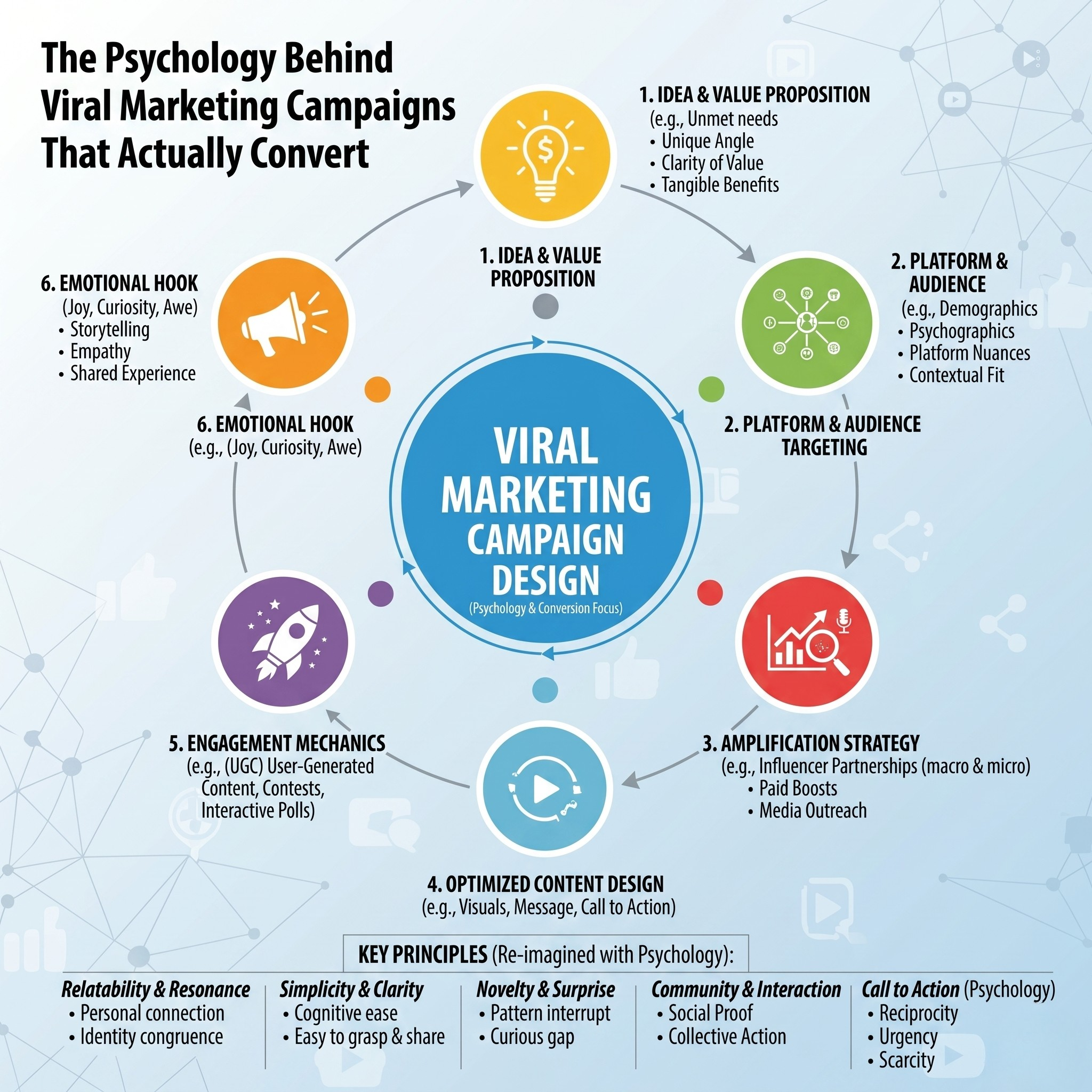
The Psychological Triggers That Drive Sharing
Jonah Berger’s research on social transmission, refined through years of social platform behavior, points to a consistent set of drivers.
Social currency is the most powerful. People share content that makes them look good, knowledgeable, or culturally relevant to their audience. This is why counterintuitive data reports, insider-perspective content, and “things most people don’t know” formats consistently outperform feel-good content in B2B contexts.
A wildly funny video that strips all brand context in favor of the joke generates reach but no purchase intent. The behavioural-analytics workflow for measuring engagement-led campaigns properly is in our analytics guide for digital marketing.
Much of this sharing happens in untracked private channels – the dynamic mapped in our dark funnel marketing analysis. When content expresses a worldview that a specific audience strongly holds, sharing becomes an act of self-definition. Brands that take clear, polarizing positions, not on politics, but on industry orthodoxy, generate this kind of loyal amplification.
Emotional elevation, awe, inspiration, or a genuine sense of wonder is the premium tier of viral psychology. It’s hard to manufacture, but when it’s authentic, it travels across demographic and interest boundaries in ways that no other trigger does.
What Converts: The Behavioral Science of Action
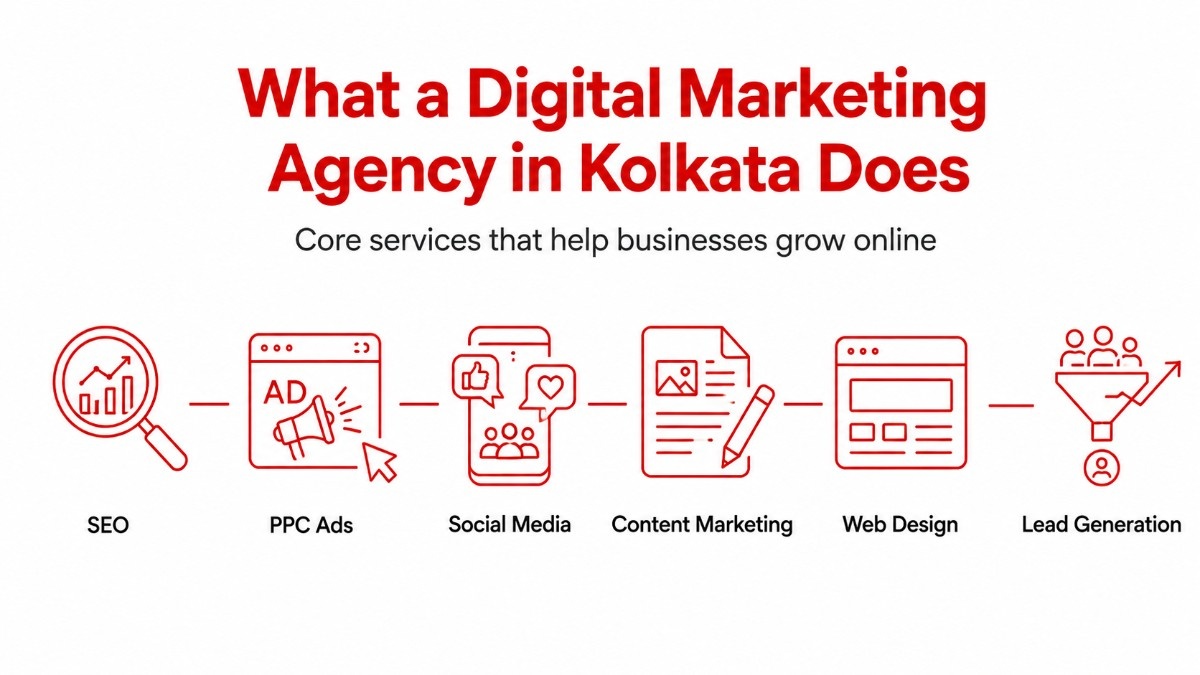
Conversion is fundamentally a trust problem. Before someone clicks “buy,” books a demo, or enters their email, they’re implicitly asking: is this brand safe to engage with? Building campaigns engineered for spread AND trust is what our digital marketing agency in Kolkata runs as an integrated ideation-to-attribution. A wildly funny video that strips all brand context in favor of the joke generates reach but no purchase intent.n loop.
Social proof is the most direct answer to these questions. Not generic testimonials, but specific, credentialed, and contextually relevant validation. A quote from someone who looks like your target buyer in the same industry carries exponentially more conversion weight than a five-star rating from an anonymous source.
Loss aversion, the well-documented tendency to weight potential losses more heavily than equivalent gains, converts better than opportunity framing in most categories. “Stop losing leads to competitors” outperforms “grow your business faster” for high-consideration purchases. This isn’t manipulation; it’s meeting buyers where their psychological state actually is.
Reduced cognitive load is underrated as a conversion driver. Every unnecessary decision, form field, or ambiguous CTA introduces friction that compounds. The campaigns that convert well are usually the ones with the clearest single action, not because they have smaller ambitions, but because they respect how decisional fatigue works.
The Campaigns That Do Both: Structural Patterns
Campaigns that achieve both virality and conversion share a structural pattern worth studying.
They lead with emotion and close with clarity. The creative hook, the shareable, resonant, emotionally charged piece, drives awareness and sharing. But there’s a deliberate transition to a clear, low-friction conversion path for the subset of the audience ready to act. The two phases serve different audiences in the same funnel.
They use sequencing, not single shots. Viral reach fills the top of the funnel with warm audiences who’ve had an emotional brand touchpoint. Retargeting and follow-up content then move that audience toward conversion with rational, trust-building content. The viral moment is the acquisition; the sequence is the conversion engine.
They anchor to identity, not just product. The most durable viral-to-conversion campaigns create a sense of belonging to something, a movement, a methodology, a way of thinking about a problem. When buyers feel they’ve adopted a worldview rather than purchased a product, both loyalty and word-of-mouth compound naturally.
Applying This to Paid and Organic Channels in 2026
On TikTok and Instagram Reels, the first two seconds determine whether the content reaches beyond your existing audience. Emotional pattern interrupts unexpected statements, visual hooks, or counterintuitive openings trigger the “wait, what?” response that extends watch time and initiates the algorithmic amplification loop.
On LinkedIn, thought leadership that presents a contrarian professional perspective consistently outperforms promotional content. The key is that the opinion must be defensible and specific “Why your content calendar is hurting your brand” lands harder than “How to improve your content strategy.”
For paid campaigns, the psychological structure shifts slightly. Meta and TikTok Ads at the top of funnel should optimize for emotional resonance and engagement signals. As audiences move down the funnel through retargeting, the creative should gradually shift toward specificity, social proof, and clear CTAs, mirroring the natural progression from feeling to decision.
Final Thought
Viral without conversion is a vanity metric. Conversion without reach is a ceiling. The brands building sustainable growth in 2026 are the ones engineering campaigns with enough psychological sophistication to do both, understanding that the triggers for spreading content and the triggers for acting on it are different, and designing accordingly.
Frequently Asked Questions
Does viral marketing work for B2B?
Yes, but the definition of ‘viral’ is different. B2B virality often happens in private channels — Slack groups, email forwards, internal presentations. Industry-relevant data and strong opinions travel fastest.
How do you measure if a campaign that went viral also converted?
Track post-campaign branded search lift, self-reported attribution in lead forms, and direct traffic spikes alongside direct conversion data. Combine these for a fuller picture.
What emotional trigger works best for SaaS campaigns?
In SaaS, the most effective emotional triggers are usually pain acknowledgment (you understand my problem) followed by competence demonstration (and you’ve solved it). Amusement can work but rarely converts as well as relief.