W
For most of digital marketing’s history, brand and performance have lived in different budget lines, different teams, and different conversations. Brand marketers talked about awareness, affinity, and equity. Performance marketers tracked ROAS, CPL, and conversion rates. The separation felt logical, they were optimizing for different things on different timescales.
That separation is no longer a feature. It’s a liability – and resolving it is the core operating model of our digital marketing company in Kolkata, which runs brand and performance on shared dashboards and shared KPIs.
Performance branding is the strategic integration of brand-building principles into performance media and the application of performance accountability to brand investment. Done well, it collapses the false dichotomy between campaigns that build and campaigns that convert, producing a system where each reinforces the other.
Why the Old Model Is Breaking Down
Pure performance marketing, optimizing for immediate measurable returns with minimal brand investment, is experiencing deteriorating efficiency across most paid channels. The macro shift driving this is covered in our breakdown of how consumer attention became the most valuable currency in digital marketing.
The brands seeing the most efficient paid media performance today are typically those with strong organic brand equity, higher click-through rates on their ads, lower cost per acquisition, and higher conversion rates on landing pages because the brand is recognized and trusted before the ad is clicked. Brand investment creates a performance multiplier. Without it, you’re bidding blind against competitors who have it.
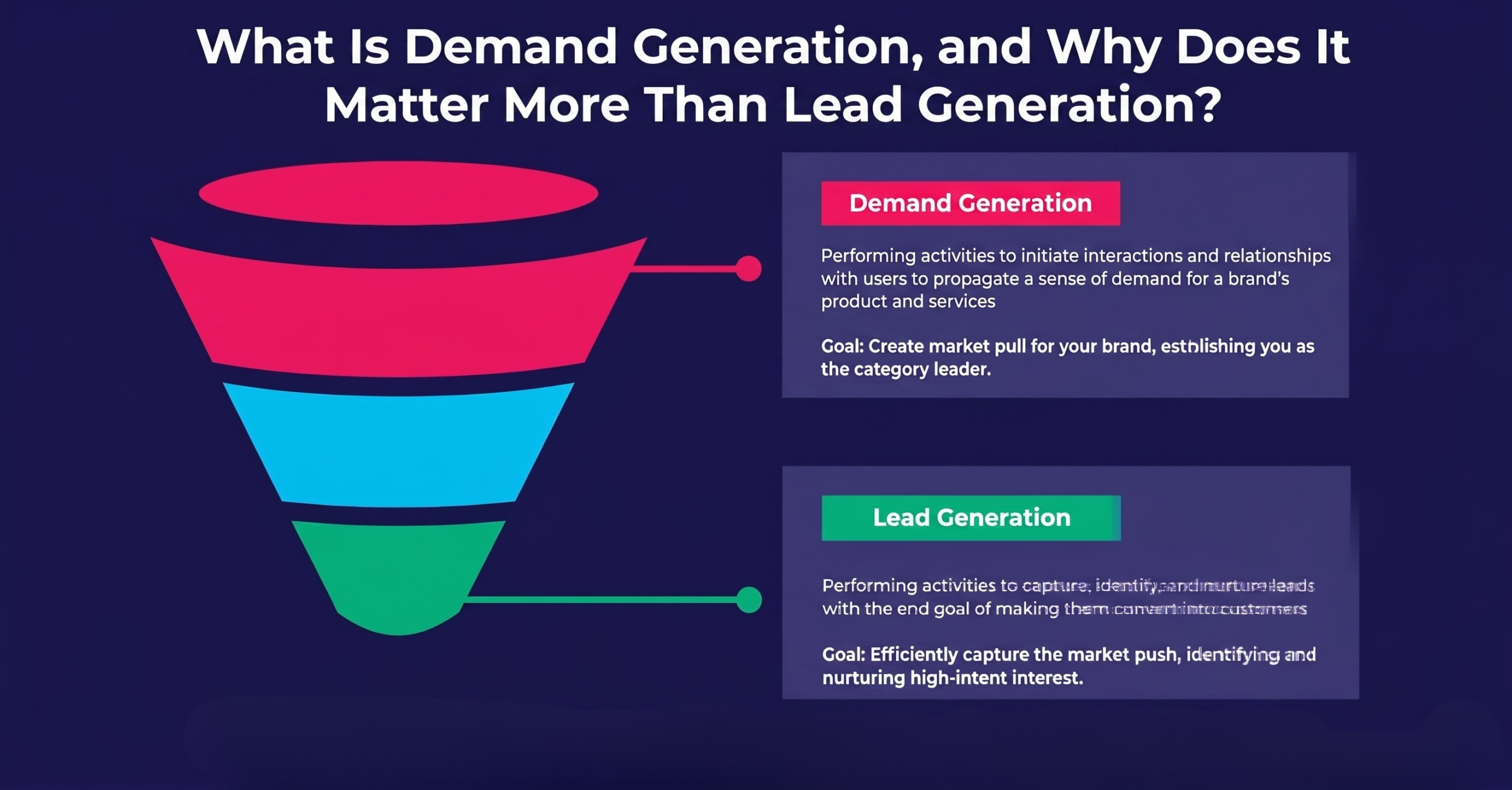
At the same time, pure brand marketing without performance accountability has become increasingly difficult to justify in organizations with data-driven leadership. The “we’re building equity” argument doesn’t survive quarterly board reviews unless it’s attached to measurable outcomes. The strategic distinction underneath the brand-performance debate is fully unpacked in our demand generation vs lead generation breakdown.
The Performance Branding Workflow
Performance branding operates across three integrated layers.
Layer one is brand-coded creative in performance channels. This means running ads that carry consistent visual identity, tonal character, and brand values, not just conversion-optimized direct response creative stripped of brand personality. Research from System1 and other brand effectiveness firms consistently shows that ads with higher brand recognition scores outperform generic direct response creative on long-term ROAS, even when short-term CTR is similar. The brand coding is doing work that attribution models don’t capture.
Layer two is audience architecture that serves both objectives. Upper-funnel audiences receive brand-building content, educational, emotional, identity-driven, that builds familiarity and preference. Mid-funnel audiences, retargeted based on engagement signals, receive more product-specific content. Lower-funnel audiences receive conversion-optimized creative. Each layer is measured with stage-appropriate metrics, but all three are running on paid media simultaneously.
Layer three is creative testing with a brand health lens. Traditional performance creative testing optimizes for immediate click and conversion signals. Performance branding adds brand recall, message association, and emotional response metrics to the testing structure typically through platform brand lift studies, third-party surveys, or Kantar-style panel research. This prevents the short-term optimization trap where winning direct response creative erodes brand equity over time.
Channel-Specific Implementation
Meta Ads are the most versatile performance branding channel, capable of supporting the full funnel within a single platform. Advantage+ campaigns can be structured to serve brand-coded awareness creative to cold audiences while simultaneously retargeting engaged users with conversion creative, with shared budget dynamically allocated by the algorithm based on predicted outcomes.
YouTube’s skippable in-stream format creates a natural performance branding mechanic: the first five seconds must earn attention (brand building), and the remaining time can serve whatever objective, awareness, consideration, or conversion. Non-skippable bumper ads function as pure brand frequency tools, while longer-form content captures engaged viewers with high active attention.
LinkedIn’s Thought Leader Ads allow brands to amplify individual executive content with paid distribution, creating a performance branding format that builds both brand authority and direct response simultaneously, the executive’s content builds trust and familiarity while a CTA drives pipeline.
Connected TV and programmatic audio represent premium brand-building channels where performance measurement is evolving. Attribution through brand search lift and matched market testing is becoming more common, bridging the brand-performance gap in these traditionally pure-brand channels.
Measurement: Building a Unified Dashboard
The practical challenge in performance branding is measurement, specifically, convincing finance teams and leadership to fund brand investment alongside performance metrics. The measurement layer that makes this defensible is documented in our guide to how behavioural analytics improves digital marketing performance.
Build a dual-track measurement system. Track performance metrics (ROAS, CPL, pipeline contribution) at the campaign level for operational optimization. Track brand metrics (aided and unaided awareness, brand preference, branded search volume, share of voice) at the program level for strategic evaluation. Present both tracks together, and show their correlation over time.
Brand lift studies available through Meta, Google, and TikTok provide controlled measurement of awareness and consideration shifts from specific campaigns, these are the most accessible entry point for quantifying brand impact within performance budgets. For more rigorous measurement, matched market testing (running brand campaigns in some geographic markets but not others) provides the closest thing to a controlled experiment available outside a laboratory.
Final Thought
Treating these as separate disciplines is the strategic equivalent of optimizing half an engine. For brands ready to retire that split and run brand and performance as one integrated programme, our performance marketing team in Kolkata is built to deliver exactly this model end-to-end.
Frequently Asked Questions
How much budget should go to brand vs. performance in a paid media mix?
The Binet & Field research suggests roughly 60% brand / 40% activation for long-term efficiency in most categories, though early-stage companies often need to invert this temporarily while building initial revenue.
Can small businesses afford performance branding?
Yes, it’s more about creative discipline than budget size. Even a $3,000/month ad budget can run brand-coded creative with a consistent visual identity and values alongside conversion campaigns.
What tools help measure brand impact from paid campaigns?
Platform-native brand lift studies (Meta, Google, TikTok), Google Search Console for branded query trends, and third-party tools like Lucid or Kantar for panel-based brand tracking.
Does performance branding work for e-commerce?
Especially for e-commerce. Brands with strong brand equity consistently see higher average order values, better repeat purchase rates, and lower acquisition costs than pure direct-response competitors.