The shift that broke keyword research
For a decade, SEO was based on a simple premise: find a keyword with high volume and low difficulty, write better content than the current top result, and win the ranking. That premise is dead.
The kill shot wasn’t AI Overviews or the Helpful Content Update. It was a quieter realisation: Google doesn’t rank pages; it ranks intent fulfilment. Two pages targeting the same keyword can have wildly different fates depending on whether they match what searchers actually want, even if they cover identical topics in identical depth.
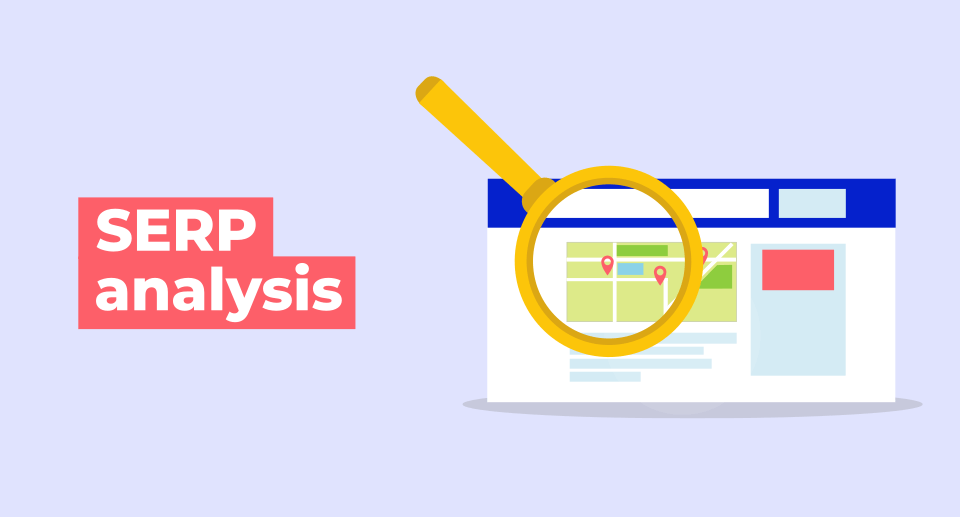
Which means the most valuable ten minutes you’ll spend on any new SEO project aren’t in your keyword tool. They’re in the SERP itself, reading what Google has already told you — and reading that signal systematically is part of the standard pre-brief workflow at our SEO services in Kolkata.
The setup (90 seconds you cannot skip)
Before you analyse anything, fix three things.
Location. Use an incognito window with a VPN or location override set to your target market. SERPs vary wildly by region – a “best CRM” search in Mumbai surfaces different results than the same query in Bangalore, let alone London.
Logged out. Personalization corrupts the signal. Incognito mode isn’t a privacy ritual here; it’s analytical hygiene.
Timestamp. SERPs shift. Your analysis is a snapshot, not a permanent record. Annotate it with the date so you know when to revisit.
Minutes 1–2: Read the SERP top to bottom
Don’t analyze yet. Read.
Open the SERP and consume it as a user would. What’s the first thing you see? An AI Overview? A featured snippet pulled from Reddit? A shopping carousel? A local pack? Skip past the AI Overview’s content for now – but note that it’s there, and note which domains it cites.
What you’re looking for in this pass is gut reaction. If you searched this query yourself, would the page-one results satisfy you in fifteen seconds, three minutes, or thirty minutes of reading? That answer is your first clue to intent depth.
Minutes 3–4: Classify the dominant content type and format
Now get analytical. For each of the top ten results, label two things.
Content type is the structural answer to the page: blog post, product page, category page, comparison tool, calculator, video, forum thread, documentation page, or directory.
Content format is the editorial shape: listicle, how-to guide, in-depth pillar, definition page, case study, review.
Look for the pattern. If seven of the top ten are listicles titled “X best of Y,” Google has decided this query wants a listicle. You can argue with that decision in your content strategy, but you’ll lose. The minority types tell you what doesn’t work for this query.
Pay particular attention when there’s a mixed SERP – say, four product pages, three blog posts, two video results, and a Reddit thread. Mixed SERPs signal that Google is uncertain about intent, which means the query has multiple valid interpretations. The deeper classification framework that helps you pick which interpretation to target – covering risk, value, and stage as separate dimensions – is in our user intent mapping 4-quadrant breakdown.
Minutes 5–6: Decode the SERP features
SERP features are Google’s tell. They reveal what the algorithm thinks users want without you having to guess.
People Also Ask boxes show you the next questions users have after searching this one – often more valuable than the original keyword for structuring your content. Featured snippets tell you the format Google considers the “right” answer – a paragraph, a list, a table. Match that structure if you want to win the snippet. Image packs mean visual content matters here. Video carousels mean YouTube is part of the answer space. Shopping results mean transactional intent dominates. And heavy presence of discussions and forums – especially Reddit and Quora – means users want peer experience, not marketing-polished content.
If the SERP shows an AI Overview, study which sources it cites. Those are the formats and angles Google’s model considers most authoritative for the query right now. Getting cited in the AI Overview is a different optimization game than ranking #1, and starting from that source list is a head start. The full primer on the discipline – Answer Engine Optimisation, and how it differs from traditional SEO – is in our AEO breakdown.
Minutes 7–8: Find the outlier
Every SERP has one result that doesn’t fit the pattern. A definition page sitting at #4 in a SERP of comparison articles. A YouTube video at #2 is surrounded by blog posts. A six-year-old forum thread holding its position against everything fresh and optimized.
The outlier is your most important data point. It tells you what Google values that the obvious pattern misses – and where most content fails by ignoring it. The four-layer remediation playbook for content already trapped on page two or three is in our search intent mismatch guide.
In 2026, the outlier is often a Reddit thread or a YouTube video – signals that users in this query want human experience, real opinions, and unvarnished discussion that branded content can’t replicate. If that’s your outlier, your strategy needs to account for it, either by creating content that captures the same energy or by accepting that you’ll never fully own the top position.
Minutes 9–10: Synthesize the intent statement
Close the SERP. Write one sentence that answers: What *is the searcher actually trying to do?* For brands that want every priority keyword analysed this way before any content investment commits, our Kolkata SEO company offers the pre-production SERP audit as a standalone deliverable.
Not “they want information about X.” That’s not intent, that’s category. Intent is specific. It sounds like this:
Marketing managers at mid-sized B2B companies who are evaluating whether to switch CRMs and want a structured comparison of three to five well-known options with pricing transparency and integration details.
Or this:
DIY homeowners in their first year who suspect a problem but don’t know if it warrants calling a professional, and want a quick diagnosis plus reassurance about cost.
If you can’t write that sentence after ten minutes, your analysis isn’t complete — and any brief you write from it will be just as fuzzy.
What you walk away with
A complete SERP intent analysis gives you six things you didn’t have ten minutes ago: the format your content should take, the depth users expect, the angle that’s missing from the current top ten, the SERP features worth optimizing for, the format gap your outlier revealed, and the specific user you’re writing for in one sentence.
That’s your brief. That’s what your writer or your AI workflow should start with – not a keyword and a word count target.
The mistakes that waste this exercise
Three mistakes turn a ten-minute method into wasted time.
The first is fitting the SERP to your existing plan. If you’ve already decided to write a 3,000-word guide and the SERP is dominated by 600-word definition pages, your analysis won’t save you, you’ll see what you want to see. Approach the SERP with no opinion about what you’re going to write.
The second is ignoring authority signals. If the top three results are all enterprise vendors with thousands of referring domains, the SERP isn’t telling you to write a better page, it’s telling you the query is closed to new entrants. Move on, or pick a long-tail angle the incumbents haven’t covered.
The third is treating one analysis as permanent. SERPs shift quarterly, sometimes monthly. The intent that was clear in January may have fractured by July. Redo the analysis when results stop performing as expected.
The real value isn’t speed
Ten minutes is the floor, not the ceiling. The method works in ten because it forces you to read the signals that are already there instead of generating opinions about what should be there.
For agencies producing content at scale, the discipline matters more than the duration. A team of writers all using the same SERP intent framework produces content that’s coherent across hundreds of briefs – because they’re all extracting strategy from the same source, instead of guessing from the same keyword.
That coherence is what separates content that ranks from content that fills a calendar.