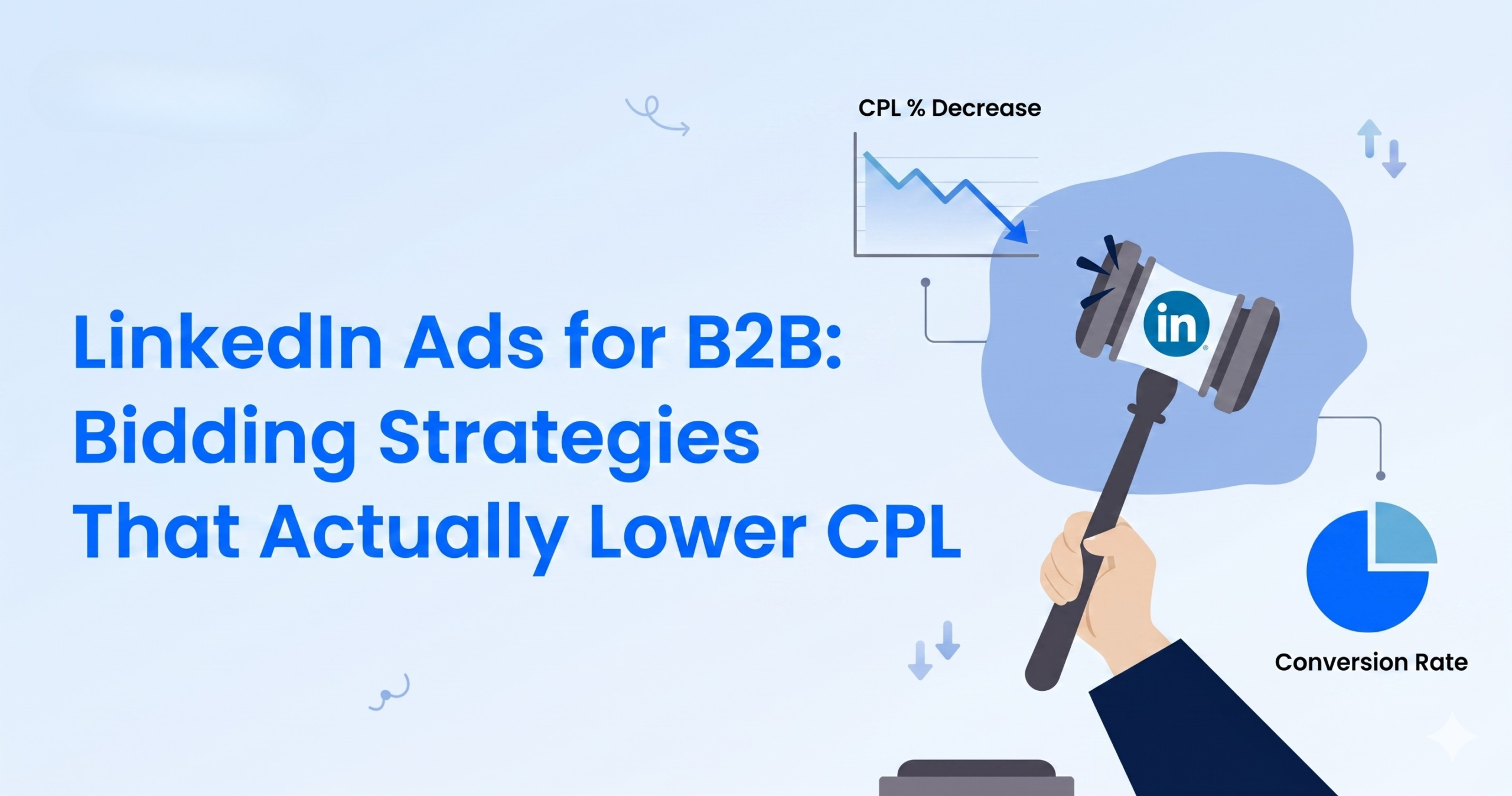
The average LinkedIn CPL in B2B sits between $200 and $500, with premium SaaS and enterprise targeting routinely pushing it past $700. Most advertisers blame the platform. LinkedIn is expensive, the auction is competitive, and the audiences are smaller. The actual problem is the bidding strategy. Before any of that strategy matters, the broader frame for B2B paid – demand generation, not lead generation – is in our demand vs lead generation breakdown.
Default LinkedIn settings push you into Maximum Delivery, which auto-bids to spend your full daily budget regardless of efficiency, often paying 2–3x what the audience would actually clear at. By the end of this article, you’ll know which bid strategies compress LinkedIn CPL, how to size audiences for better auction economics, and which formats consistently lower lead costs without sacrificing quality.
Why Default LinkedIn Bidding Runs Hot
LinkedIn’s auction is structurally different from Meta’s. Most of the actual buying conversation on LinkedIn happens in DMs and shares that no UTM captures – a phenomenon covered in our dark funnel marketing analysis.
Audience supply is smaller, professional context inflates CPM benchmarks, and Maximum Delivery, LinkedIn’s default, competes aggressively against every other advertiser targeting overlapping audiences. The result is paying ceiling prices on impressions that the algorithm could have won at half the cost. Many advertisers also build broad campaigns targeting hundreds of thousands of professionals across a single industry, which forces LinkedIn to spread spend across mismatched intent layers. Tight audiences with premium job titles and broad reach campaigns both hit the same inflation problem from opposite directions. Understanding why the default runs hot is the first step toward forcing the auction to clear at your terms instead of LinkedIn’s. For B2B brands ready to fix CPL without giving up volume, our digital marketing company in Kolkata runs LinkedIn paid programmes with bid management, audience design, and CRM integration handled in-house.
Manual CPC vs Maximum Delivery vs Target Cost
Manual CPC bidding gives you the most control and consistently produces the lowest CPL when used correctly. For brands running paid social on both LinkedIn and Meta, the manual-vs-automated decision tree for Meta is in our Advantage+ Shopping guide.
Starts bids 20–30% below LinkedIn’s suggested range and adjust upward only if delivery stalls. This forces the auction to clear at efficient prices and often delivers 30–50% lower CPL than Maximum Delivery on identical audiences. Maximum Delivery is useful only when you’re spending against a large warm audience with proven conversion history and need to fully exhaust budget. Target Cost sits between the two, useful for mid-funnel campaigns where you need a predictable CPL but can’t manually manage bids across multiple ad sets. Most B2B accounts should run roughly 70% of spend on manual CPC and reserve automated bidding for retargeting or high-intent ABM campaigns.
Audience Sizing for Better Auction Economics
Audience size affects bid economics more than most advertisers realise. The sweet spot for LinkedIn lies between 50,000 and 300,000 matched members. Below 50,000, LinkedIn forces premium bids to deliver impressions at all. Above 300,000, you waste on members who lack the seniority or fit your offer requires. Build audiences using job function combined with seniority and company size, rather than relying on job title alone, title targeting misses too many qualified buyers using non-standard titles. ABM list uploads of 1,000–10,000 accounts paired with seniority filters create high-intent pockets at reasonable scale. If your audience sits below 30,000, consolidate adjacent audiences before LinkedIn forces you to bid at delivery-floor inflation.
Format Selection That Cuts CPL by 40–60%
Sponsored Content Single Image ads remain the workhorse, but they rarely produce the lowest CPL in B2B. Lead Gen Forms attached to Sponsored Content typically reduce CPL by 25–40% over off-platform landing pages because pre-filled forms remove friction. Document Ads, where you sponsor a downloadable whitepaper or report displayed natively in-feed, consistently produce the lowest CPL across most B2B categories because they match how LinkedIn users actually behave on the platform. Conversation Ads work well for demo bookings in SaaS, but their CPL has crept up as advertisers have crowded the format. Video Ads under 30 seconds with a clear CTA framework for top-of-funnel brand building, but rarely beat Document or Lead Gen Forms on direct CPL.
Layered Targeting and Quality Signals
Layering targeting tightens audience quality without forcing bid inflation if done correctly. Combine job function plus seniority plus company size as your base layer. Add an interest or skill filter only when you have a clear hypothesis about it, random skill stacking shrinks audiences faster than it sharpens them. Overlay matched company lists (your ABM target accounts) for the strongest qualification signal. Conversion tracking quality matters as much as targeting: pass back-end lead quality scores from your CRM into LinkedIn’s Conversion API so the algorithm learns which lead types convert downstream. Without this signal loop, LinkedIn optimises toward form fills rather than a qualified pipeline, and your CPL number stays low while your cost per SQL quietly rises.
Lower LinkedIn CPL doesn’t come from finding hidden audiences. It comes from rejecting Maximum Delivery as your default, building audiences in the 50k–300k range, choosing formats matched to how LinkedIn users actually engage, and feeding the algorithm back-end quality signals. The B2B advertisers spending efficiently on LinkedIn aren’t lucky, they’ve stopped letting the platform’s defaults set their bid economics, and they’re running manual control on the campaigns that matter most.