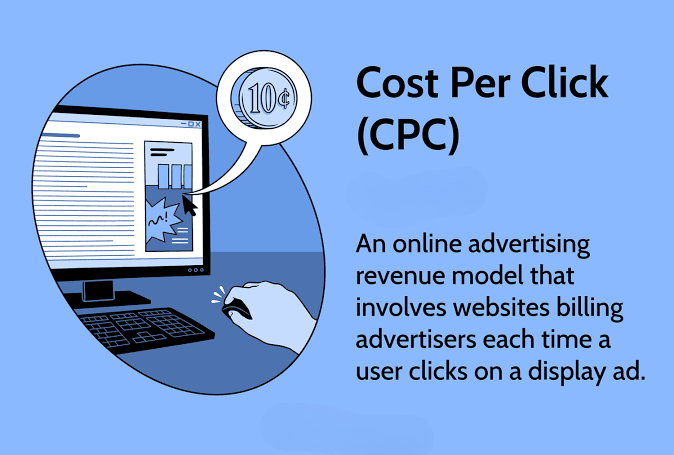
Rising cost-per-click has become one of the most consistent pressures facing performance marketers, as platform auctions get more competitive and more advertisers bid for the same limited attention. Brands that don’t actively manage CPC end up funding their growth entirely through higher spend rather than smarter spend, a strategy that stops working the moment budgets get scrutinised.
Cost Per Click (CPC) optimization isn’t about finding a single trick that lowers auction prices. It’s the compounding result of relevance, creative quality, audience precision, and bidding discipline working together, each lever pulling CPC down for a different reason.
This guide breaks down the exact framework Nullstack uses to consistently drive down CPC across Google, Meta, and TikTok campaigns, covering audience targeting, creative strategy, bidding and budget structure, landing page relevance, and the ongoing testing discipline that keeps CPC low over time rather than just for a single campaign cycle.
Why CPC Rises in the First Place
Before optimising CPC, it’s worth understanding what actually drives it up, since most “CPC fixes” only work if they address the real cause.
Auction-based ad platforms price clicks based on competition for an audience and, critically, on how relevant your ad is predicted to be to that audience. Two advertisers can bid the same amount and pay very different CPCs because one has a more relevant ad, a better-matched audience, or a higher engagement rate.
The core drivers of high CPC:
- Low ad relevance or quality score (Google) / relevance ranking (Meta)
- Audience targeting that’s too broad or too narrow relative to the campaign objective.
- Ad fatigue from showing the same creative to the same audience for too long
- High competition within a niche or during seasonal demand spikes
- Poor click-through rate, which platforms interpret as low relevance regardless of the actual reason
Understanding which of these is driving your CPC up determines which lever below actually moves the needle. Not every fix works for every cause.
Audience Precision: The Foundation of Lower CPC
Broad targeting isn’t inherently bad, but broad targeting with a generic ad almost always produces a higher CPC than tightly matched targeting, because platforms reward relevance between audience and creative.
Nullstack’s approach to audience refinement:
- Start with first-party data (past purchasers, email subscribers, site visitors) as seed audiences before expanding to lookalikes, these consistently produce lower CPC than cold interest-based targeting because the platform already has a strong signal to work with.
- Layer intent signals rather than relying on demographic targeting alone. A 35-year-old interested in “fitness” is a weak signal; a 35-year-old who visited a product page and added to cart is a strong one.
- Exclude recent purchasers and irrelevant segments explicitly, showing ads to people who can’t or won’t convert wastes budget and drags down overall account-level relevance scoring.
- Test audience size deliberately. Extremely narrow audiences often show higher CPC due to limited auction competition working against you at small scale; extremely broad audiences dilute relevance. The efficient range is usually found through testing, not assumption.
Common mistake: treating audience targeting as a “set once” decision. Audiences fatigue over time even when creative is refreshed, and periodic audience rotation is often what a “creative fatigue” problem actually needs.
Creative Strategy: The Single Biggest Lever for CPC
Ad platforms are, at their core, relevance-scoring engines. Creative that earns higher engagement (clicks, watch time, saves) is rewarded with lower CPC because the platform predicts it will keep users on the platform longer, which is directly in the platform’s interest too.
What consistently lowers CPC through creative:
- UGC-style creative over polished brand ads. Authentic, native-feeling content frequently outperforms produced ads on click-through rate, which directly reduces CPC.
- Hook-first video structure. The first 2–3 seconds determine whether a viewer stops scrolling; weak hooks suppress engagement regardless of how strong the rest of the ad is.
- Creative variety within a single ad set. Running 4–6 distinct creative concepts (not just color/copy variants of one concept) lets the algorithm find the best performer faster and prevents fatigue from setting in on a single asset.
- Native format alignment. Vertical video for Reels/TikTok placements, square or landscape for feed, mismatched formats get downweighted in delivery, which increases effective CPC.
Refresh cadence matters as much as creative quality. Even a strong-performing ad will see CPC creep upward as frequency increases and the same audience sees it repeatedly. Nullstack typically rotates primary creative every 2–3 weeks for active campaigns, sooner if frequency metrics show signs of saturation.
Bidding Strategy and Budget Structure
How a campaign is bid and structured has a direct, mechanical effect on CPC independent of creative or audience quality.
Key principles:
- Let automated bidding work, but feed it clean data. Platforms’ automated bid strategies (Target CPA, Maximize Conversions, Meta’s Advantage+ campaigns) generally outperform manual bidding once there’s sufficient conversion volume, but they need accurate conversion tracking to optimise correctly. Broken pixels or delayed conversion data quietly undermine automated bidding’s effectiveness.
- Avoid excessive campaign fragmentation. Splitting budget across too many campaigns or ad sets starves each one of the data volume needed to exit the learning phase efficiently, which keeps CPC artificially elevated longer than necessary.
- Set realistic budgets relative to conversion volume needs. An ad set with a budget too small to generate enough daily conversions struggles to optimise and often shows higher, less stable CPC as a result.
- Use campaign budget optimisation (CBO) or Advantage Campaign Budget carefully. These tools shift spend toward better-performing ad sets automatically, which can lower blended CPC, but they can also starve newer creatives of the volume needed to prove themselves, so pair them with clear testing windows.
A practical benchmark: if CPC is volatile day-to-day without a clear external cause (seasonality, competitor activity), it’s often a signal that budget or targeting is too fragmented for the platform to stabilise delivery.
Landing Page and Ad Relevance: The Overlooked CPC Lever
Most advertisers focus optimization entirely on the ad itself, but landing page experience directly factors into Google’s Quality Score and indirectly affects Meta’s relevance ranking through post-click engagement signals (bounce rate, time on page).
What to align:
- Message match between ad copy/creative and landing page headline, a disconnect here increases bounce rate, which platforms interpret as a relevance signal against the ad.
- Page load speed, particularly on mobile, since slow-loading pages increase bounce rate before a user even sees the offer.
- A clear, singular call-to-action on the landing page that mirrors what the ad promised, sending ad traffic to a generic homepage rather than a matched landing page, consistently underperforms.
Improving landing page relevance often lowers CPC without touching the ad or audience at all, simply because the platform’s algorithm reads improved downstream engagement as a signal that the ad itself is more relevant.
Testing Discipline: How Nullstack Keeps CPC Low Over Time
A CPC optimisation isn’t a one-time fix. Auctions, competition, and audience fatigue are constantly shifting, so the accounts that maintain low CPC over months are the ones running a consistent testing cadence, not the ones that “solved” CPC once.
Nullstack’s ongoing testing framework:
- Weekly creative performance review – identify which assets are showing frequency or CTR decay before CPC visibly rises, not after.
- Monthly audience refresh – rotate or expand seed audiences based on updated first-party data rather than letting the same audience run indefinitely.
- Structured A/B testing, changing one variable at a time (hook, offer, audience, placement) so results are attributable rather than confounded.
- Quarterly account structure audit – consolidate underperforming or redundant campaigns that are fragmenting budget and data unnecessarily.
Best practices checklist:
- Conversion tracking is verified and firing correctly before scaling spend.
- At least 3–4 active creative concepts per campaign at all times
- Audiences reviewed monthly, not left static for quarters.
- Landing pages matched to ad messaging, not defaulted to the homepage.
- Budget concentrated enough per ad set to exit learning phase efficiently.
Pros and cons of aggressive automation:
| Approach | Pros | Cons |
| Fully automated bidding (Advantage+, Target CPA) | Less manual work, often better long-run efficiency at scale | Needs volume and clean data to work well; less transparent |
| Manual bid control | More granular control, useful for constrained budgets | More time-intensive, doesn’t scale well, can underperform ML-driven bidding |
Final Thoughts
Lowering CPC isn’t about a single tactic, it’s the compounding effect of relevant audiences, engaging creative, disciplined bidding, and aligned landing pages all reinforcing each other inside the platform’s relevance-scoring system. Fix one lever in isolation, and CPC improves modestly; align all of them and the improvement compounds.
The practical next step for most advertisers is a quick audit: check conversion tracking accuracy first, since every other optimization is undermined if the platform is optimising against bad data. From there, review creative variety and audience freshness before touching bids, since those two levers typically move CPC more than bid strategy adjustments alone.
As auction competition continues to intensify across paid platforms, the advertisers who maintain low, stable CPC won’t be the ones who found a shortcut they’ll be the ones running the testing discipline above consistently, month over month.
FAQ Section
- What causes high CPC on Facebook and Google Ads?
High CPC is typically driven by low ad relevance or quality score, poorly matched audience targeting, ad fatigue from overexposure, and strong competition within a niche or during high-demand periods. - Does audience size affect CPC?
Yes. Very narrow audiences often show higher CPC due to limited auction competition working against advertisers at small scale, while overly broad audiences dilute relevance. The most efficient range is usually found through testing rather than assumption. - How often should ad creatives be refreshed to keep CPC low?
Most accounts benefit from rotating primary creative every 2–3 weeks, or sooner if frequency and click-through rate metrics show signs of audience fatigue. - Does landing page quality really affect CPC?
Yes, particularly on Google Ads through Quality Score, and indirectly on Meta through post-click engagement signals like bounce rate. A landing page that closely matches ad messaging typically improves relevance and lowers CPC. - Is automated bidding better than manual bidding for lowering CPC?
Automated bidding strategies generally outperform manual bidding once there’s sufficient conversion volume and clean tracking data, since the algorithm can optimise faster than manual adjustments. Manual bidding can still be useful for tightly constrained budgets or early testing phases. - How does conversion tracking accuracy impact CPC?
Automated bidding systems optimise based on conversion data. If tracking is broken, delayed, or inaccurate, the platform optimizes toward the wrong signals, which undermines every other CPC optimization effort regardless of creative or targeting quality. - What’s the biggest mistake advertisers make when trying to lower CPC?
Focusing on a single lever usually bidding while ignoring creative variety, audience freshness, and landing page relevance, all of which have a larger compounding effect on CPC than bid adjustments alone.