
Google Ads has spent the last several years moving advertisers toward automation. Performance Max (PMax) represents the most significant step in that direction, combining Search, Shopping, Display, YouTube, Discover, Gmail, and Maps inventory into a single campaign structure powered by machine learning.
The promise is straightforward: advertisers provide creative assets, audience signals, conversion goals, and budget parameters, while Google’s systems determine where ads appear and which users are most likely to convert. For many businesses, the model has produced strong performance outcomes. The challenge is that automation has often arrived faster than transparency.
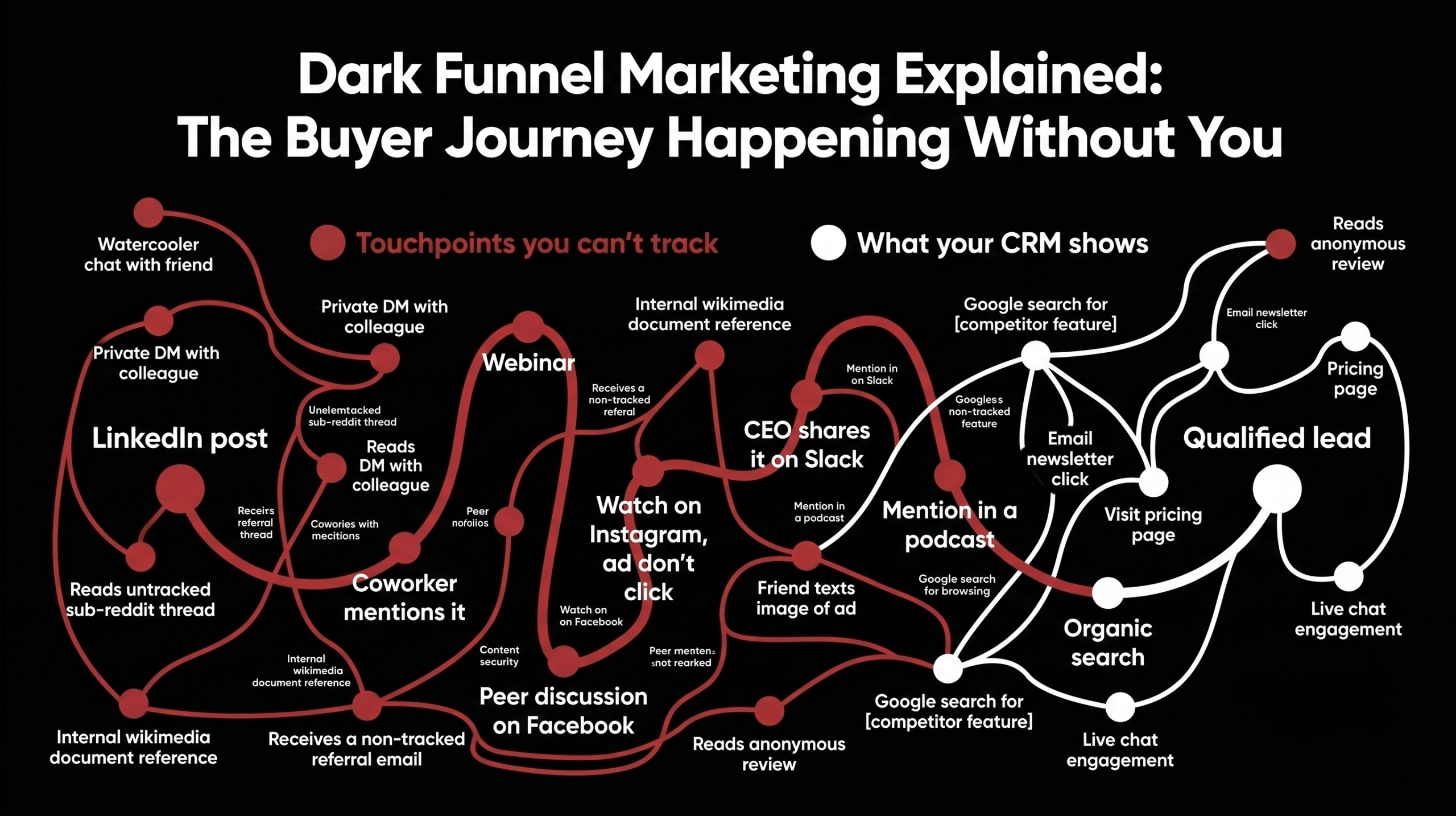
Marketers who once had granular visibility into search terms, placements, audience segments, and channel-level performance now operate within a system where many optimization decisions happen behind the scenes. As budgets increase, questions naturally emerge. Which channels are driving conversions? What search behaviour influences campaign performance? Are conversions incremental or simply being reassigned from existing campaigns?
Performance Max campaign transparency has therefore become one of the most important topics in paid media strategy – one our PPC company in Kolkata has structured the entire measurement layer of our client engagements around, precisely because platform reporting alone no longer answers the questions that matter most. Understanding what can be measured, what remains hidden, and how to build reporting frameworks around incomplete visibility is now a core skill for digital marketers. This article explores the current state of Performance Max transparency, the implications for campaign management, and the practical approaches brands should adopt in 2026.
Why Transparency Became the Central Performance Max Debate
When Google first introduced Performance Max, marketers quickly noticed a significant shift in control. Traditional campaign types allowed advertisers to review keyword reports, placement reports, audience performance, and channel-specific metrics. Performance Max consolidated these insights into a single automated environment.
This created a measurement gap. A campaign could generate strong conversion volume while providing limited information about how those conversions were acquired.
The issue becomes particularly important for businesses operating with substantial media budgets. A local retailer spending ₹50,000 per month may prioritise efficiency above all else. An enterprise brand spending ₹50 lakh per month needs to understand attribution, audience quality, incremental growth, and long-term profitability.
Automation and transparency often exist in tension. The more decisions a machine-learning system makes independently, the fewer decision points become visible to advertisers.
Google’s position has consistently been that outcome-based optimisation matters more than granular reporting. Many advertisers agree that performance improves. Concerns arise when results decline, and marketers lack the visibility required to diagnose the cause.
The conversation has therefore evolved beyond whether Performance Max works. The real question is whether marketers can trust an advertising system they cannot fully inspect.
What Google Has Added to Improve Performance Max Visibility
Google has gradually expanded reporting capabilities in response to advertiser feedback. While Performance Max remains more opaque than traditional campaign types, it is significantly more transparent today than it was during its initial rollout.
Search term insights now provide greater visibility into query categories driving campaign activity. Advertisers can review themes and emerging search behaviour rather than relying entirely on aggregated reporting.
Asset group reporting has also improved. Marketers can evaluate creative performance across headlines, descriptions, images, and videos. While asset ratings remain directional rather than definitive, they provide useful indicators for creative optimisation.
Audience insights offer another layer of transparency. Advertisers can review audience segments that influence campaign performance, including demographic characteristics, in-market behaviours, and customer interests discovered by Google’s systems.
Channel reporting has expanded as well. While not every interaction is visible at a granular level, advertisers now receive better indications of how Performance Max distributes activity across Google’s ecosystem.
Diagnostic tools represent another important improvement. Campaign performance explanations increasingly identify factors such as budget constraints, creative limitations, conversion tracking issues, and audience expansion opportunities.
These updates indicate that Google recognises transparency as a competitive requirement rather than a secondary feature.
The Reporting Blind Spots That Still Exist
Despite improvements, several important transparency limitations remain.
Placement visibility is still restricted compared to Display and YouTube campaigns. Advertisers cannot always evaluate every environment where impressions occur, limiting brand safety analysis and contextual optimisation.
Search query reporting remains less comprehensive than traditional Search campaigns. Marketers receive insights into themes and categories, but not the complete keyword-level visibility that a historically informed search strategy.
Auction dynamics are also difficult to analyse. Traditional Search campaigns allow advertisers to review impression share, competitor overlap, and ranking insights at a detailed level. Performance Max provides far less competitive intelligence.
Incrementality remains another challenge. Many brands discover that Performance Max captures conversions that might have occurred through branded search, direct traffic, or existing remarketing campaigns. Determining whether the campaign generated genuinely new demand requires external measurement frameworks rather than relying exclusively on platform reporting.
Cross-channel attribution adds further complexity. Rebuilding attribution outside the platform – using server-side tracking, modelled conversions, and behavioural cohorts – is the corrective framework documented in our guide to how behavioural analytics improves digital marketing performance. A conversion may involve YouTube exposure, a search interaction, a product listing click, and a branded search before purchase. While Performance Max optimises toward this journey, the exact contribution of each touchpoint often remains unclear.
For performance marketers focused on efficiency, these blind spots can complicate budget allocation decisions.
Building a Measurement Framework Beyond Google Ads
The most effective advertisers no longer rely on platform reporting alone. Instead, they build independent measurement systems that evaluate business outcomes from multiple perspectives.
First-party data has become central to this approach. Customer acquisition cost, customer lifetime value, repeat purchase behaviour, and revenue retention provide stronger indicators of campaign quality than conversion counts alone.
Google Analytics 4 offers an additional layer of analysis. While attribution models vary, GA4 can help identify broader traffic patterns, landing page performance, and channel interactions that Performance Max reporting may not fully reveal.
Geographic testing remains one of the most valuable methods for evaluating incrementality. Brands can compare regions with different campaign exposure levels to estimate the true impact of advertising activity.
Holdout testing provides another useful framework. By temporarily excluding audience segments, product categories, or geographic regions from campaign activity, marketers can measure whether conversions decline relative to expected benchmarks.
Marketing mix modelling is increasingly relevant for larger advertisers. As platform-level visibility decreases across digital advertising ecosystems, statistical models help estimate the contribution of each channel using aggregate business data rather than user-level tracking.
The brands generating the strongest results from Performance Max are often those investing most heavily in independent measurement infrastructure. The specific optimisation strategies that pair with that measurement – asset-group structure, signal seeding, exclusion audiences – are documented in our Performance Max campaigns optimisation strategies guide.
Creative Assets Have Become the New Optimisation Lever
As keyword-level control decreases, creative quality becomes a more significant determinant of campaign success.
Performance Max relies heavily on asset combinations. Headlines, descriptions, images, videos, and audience signals collectively shape how Google’s systems position ads across inventory sources.
This shifts optimisation efforts away from traditional keyword management and toward creative testing frameworks.
Successful advertisers develop multiple asset variations aligned with different customer motivations. Rather than creating a single message, they build creative libraries addressing price sensitivity, product quality, convenience, trust, urgency, and category-specific needs.
Video assets deserve particular attention. Campaigns that include high-quality video often gain access to additional inventory and engagement opportunities across YouTube and Discover placements.
Creative performance should also be analysed alongside audience segments. A message that resonates with existing customers may perform differently when introduced to prospecting audiences.
This evolution reflects a broader trend across digital advertising. Machine learning increasingly handles targeting and bidding, while human marketers focus on messaging, positioning, and customer psychology.
In many cases, the quality of creative inputs has become a stronger competitive advantage than campaign structure itself. Building the creative library that feeds Performance Max asset groups – the range of variations, messaging tests, and format-specific execution – is the standing remit of our creative agency in Kolkata across every retained paid-media account.
How AI Is Changing Transparency Expectations
The discussion around Performance Max campaign transparency reflects a broader shift occurring across digital marketing.
Search engines, advertising platforms, and recommendation systems increasingly rely on AI-driven decision-making. Similar debates now exist around Google AI Overviews, social media recommendation algorithms, and AI-powered content discovery platforms. The broader strategic implications of that shift across every marketing channel are unpacked in our analysis of how AI-powered search is reshaping digital marketing strategies in 2026.
As automation expands, marketers are adapting their expectations. Complete visibility into every optimisation decision may no longer be realistic.
Instead, the focus is shifting toward outcome validation. Brands want confidence that advertising systems produce incremental business value, even if every underlying decision is not fully exposed.
This creates a new strategic requirement. Marketing teams must become proficient in experimentation, attribution modelling, first-party data analysis, and business-level measurement.
The competitive advantage increasingly belongs to organisations capable of evaluating results independently rather than relying entirely on platform-provided explanations.
Transparency therefore, becomes less about seeing every click and more about understanding whether advertising activity contributes meaningfully to growth.
The Strategic Takeaway
Performance Max campaign transparency has improved considerably, but it remains fundamentally different from traditional Google Ads reporting environments. Marketers now operate within a system where automation drives many optimisation decisions while reporting provides only partial visibility into the underlying mechanics.
The most successful advertisers have adjusted their strategy accordingly. Rather than demanding complete transparency from the platform, they combine Performance Max reporting with first-party data, incrementality testing, analytics platforms, and business-level performance measurement.
This shift reflects a broader evolution across digital marketing. As AI systems assume greater responsibility for targeting, bidding, and delivery decisions, marketers must focus on measurement frameworks, creative excellence, and strategic oversight.
The future of paid media will likely involve even greater automation. Brands that thrive in this environment will not necessarily be those with the most detailed platform reports. They will be the ones who build reliable systems for validating business outcomes, regardless of how much of the algorithm remains hidden. Building that validation infrastructure – server-side tracking, incrementality testing, first-party data, and marketing mix modelling – as a single integrated system is the operating standard of our digital marketing company in Kolkata across every retained account, brought together as an in-house capability from a decade-old software and marketing agency.