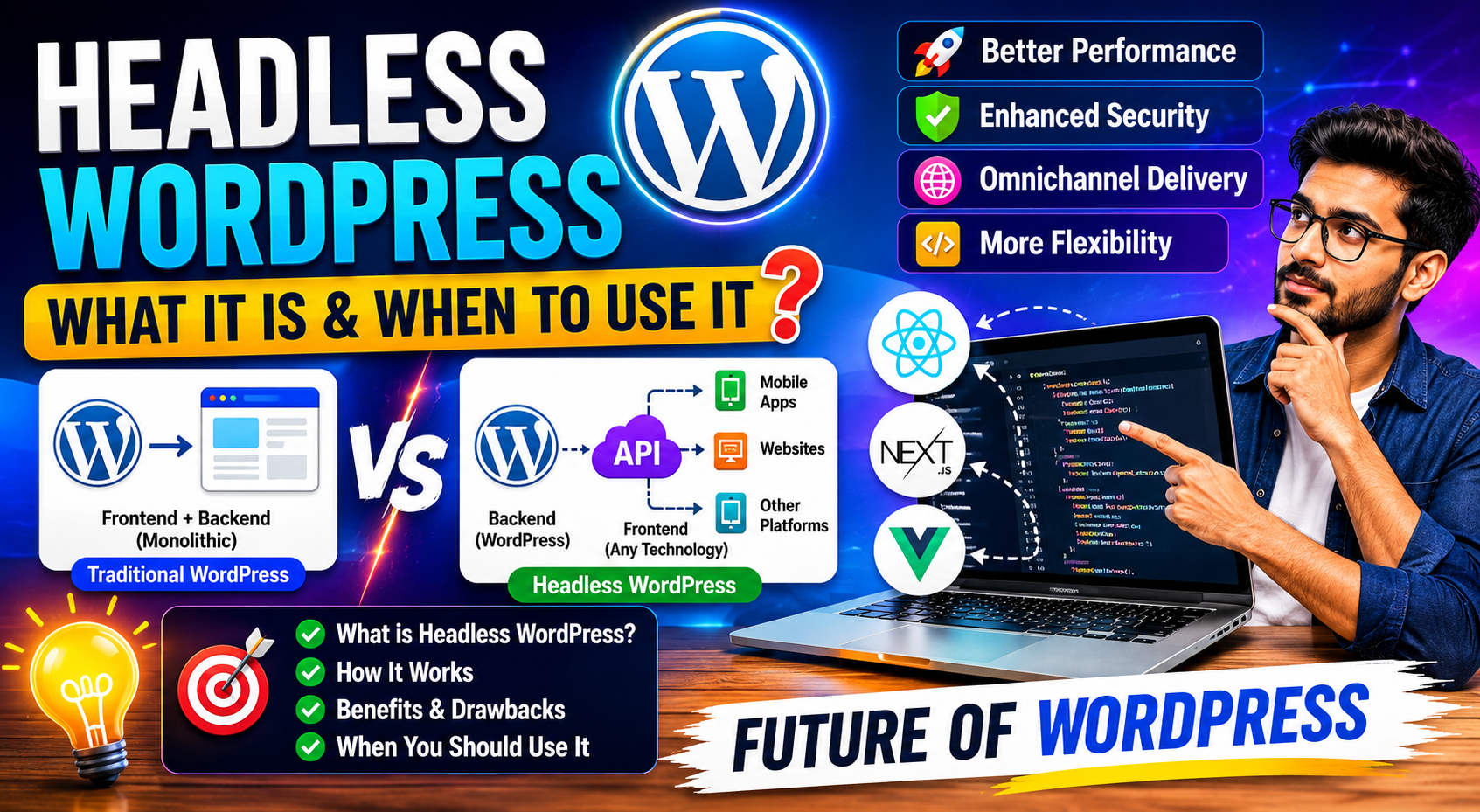
WordPress has long been the world’s most popular content management system (CMS), powering more than 40% of all websites on the internet. Traditionally, WordPress handles both the backend content management and the frontend presentation layer. However, as web technologies continue to evolve, developers and businesses are increasingly adopting a modern architecture known as Headless WordPress.
Headless WordPress offers greater flexibility, improved performance, and the ability to deliver content across multiple platforms. While it may not be the right solution for every project, it can provide significant advantages for businesses with complex digital requirements. Architecting a headless build correctly requires engineering depth most agencies do not carry in-house, which is why our WordPress development company in Kolkata treats headless as a discrete delivery track with its own performance budgets and deployment checklist.
In this article, we’ll explain what Headless WordPress is, how it works, its benefits and drawbacks, and when it makes sense to use it for your website or application.
What is Headless WordPress?
To understand Headless WordPress, it’s important to first understand how traditional WordPress works.
In a standard WordPress setup:
- WordPress stores content in a database.
- PHP templates generate web pages.
- The frontend and backend are tightly connected.
This means WordPress manages everything from content creation to website presentation.
In a Headless WordPress setup, the frontend is separated from WordPress entirely.
WordPress continues to function as the content management system, but a separate frontend application is responsible for displaying the content to users.
The “head” (frontend) is removed from WordPress, which is why the architecture is called “headless.”
How Headless WordPress Works
Headless WordPress uses APIs to deliver content.
The workflow typically looks like this:
- Content editors create content inside WordPress.
- WordPress stores the content in its database.
- Content is exposed through APIs such as:
- WordPress REST API
- GraphQL (via WPGraphQL)
- A separate frontend application retrieves content from the API.
- Users view content through the custom frontend.
Popular frontend frameworks include:
- React
- Next.js
- Vue.js
- Nuxt.js
- Gatsby
- Angular
This separation provides much greater flexibility than traditional WordPress development.
efore committing to a headless build, the broader platform trade-off — including whether WordPress is the right starting point at all – is covered in our WooCommerce vs Shopify India comparison
Benefits of Headless WordPress
1. Improved Website Performance
One of the biggest reasons businesses adopt Headless WordPress is speed.
Modern JavaScript frameworks can generate highly optimized websites that load much faster than traditional WordPress themes.
Benefits include:
- Faster page loading
- Better Core Web Vitals
- Improved user experience
- Higher PageSpeed scores
Fast websites often achieve better SEO rankings and higher conversion rates.
See our wordpress guide for page speed insights to improve site speed.
2. Enhanced Security
Traditional WordPress websites expose the frontend directly to the public internet.
In a Headless setup:
- The WordPress admin can remain hidden.
- Attack surfaces are reduced.
- Many common WordPress vulnerabilities become less relevant.
While no system is completely secure, Headless WordPress can provide stronger protection when properly configured.
3. Greater Development Flexibility
Developers are not restricted by WordPress themes or PHP-based templates.
Instead, they can use modern frameworks and technologies to create highly customized user experiences.
This flexibility allows developers to build:
- Interactive web applications
- Advanced dashboards
- Progressive Web Apps (PWAs)
- Enterprise platforms
4. Omnichannel Content Delivery
Content can be distributed across multiple platforms from a single WordPress backend.
Examples include:
- Websites
- Mobile apps
- Smart TVs
- Digital kiosks
- Voice assistants
- IoT devices
A single content source can power multiple digital experiences.
5. Better Scalability
Large organizations often require systems capable of handling significant traffic and complex content structures.
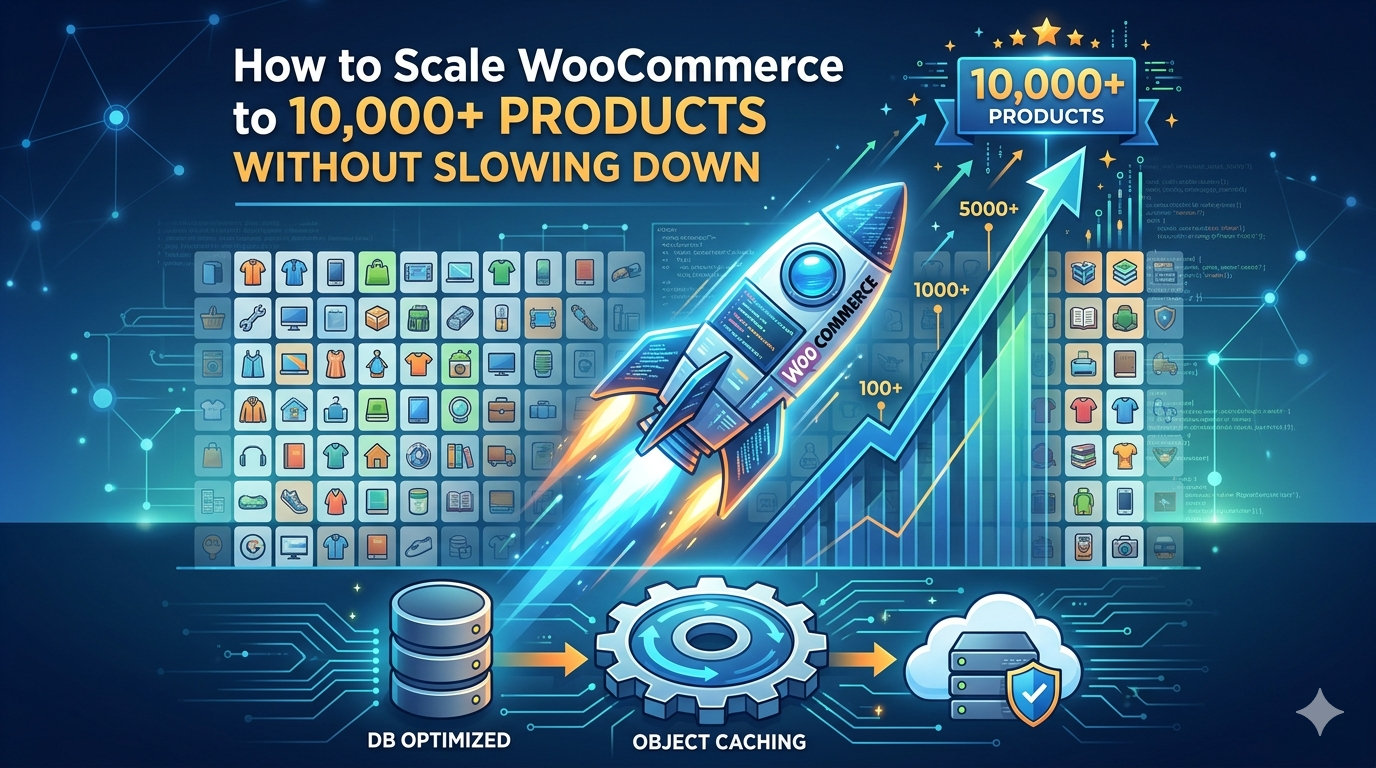
Headless architectures can scale more efficiently because frontend and backend systems operate independently. For high-SKU WooCommerce stores specifically, the architectural decisions covered in our [guide to scaling WooCommerce to 10,000+ products] overlap directly with the case for going headless.
This makes Headless WordPress attractive for enterprise-level applications.
Drawbacks of Headless WordPress
Despite its advantages, Headless WordPress is not suitable for every project.
Increased Development Complexity
Traditional WordPress websites can often be built quickly using themes and plugins.
Headless projects require:
- Frontend developers
- API integrations
- Separate deployment environments
- Additional maintenance
Development costs are usually higher.
More Expensive Development
A Headless WordPress project often involves multiple technologies and specialized expertise.
As a result:
- Development time increases
- Hosting costs may rise
- Ongoing maintenance becomes more complex
For small businesses, these costs may not be justified.
Plugin Compatibility Issues
Many WordPress plugins assume WordPress controls the frontend.
Features such as:
- Page builders
- Forms
- Search functionality
- Dynamic widgets
may require custom implementation in a Headless environment.
Learning Curve
Developers unfamiliar with JavaScript frameworks like React or Next.js may face a steep learning curve when adopting Headless WordPress.
When Should You Use Headless WordPress?
Not every website requires a Headless architecture.
Here are situations where Headless WordPress makes sense.
Large Enterprise Websites
Organizations with extensive content requirements often benefit from Headless architecture.
Examples include:
- Media companies
- News portals
- Government websites
- Corporate platforms
The ability to scale and deliver content efficiently becomes a major advantage.
Websites Requiring Exceptional Performance
If website speed is a top priority, Headless WordPress can significantly improve performance.
This is especially useful for:
- High-traffic websites
- Global audiences
- SEO-focused businesses
Mobile Applications
Many businesses need content available across both websites and mobile applications.
Headless WordPress allows developers to manage content centrally while delivering it to:
- Android apps
- iOS apps
- Web applications
Multi-Channel Publishing
Businesses that publish content across numerous platforms can streamline operations using Headless WordPress.
Content can be managed once and distributed everywhere.
Custom Web Applications
Applications requiring advanced interactivity often benefit from modern frontend frameworks.
Examples include:
- Booking systems
- Learning management systems
- Membership portals
- SaaS platforms
Headless WordPress provides the flexibility these projects demand.
When Traditional WordPress is the Better Choice
In many situations, traditional WordPress remains the smarter option.
Choose standard WordPress if:
- You have a limited budget.
- You need a simple business website.
- You rely heavily on WordPress plugins.
- You want quick deployment.
- You don’t have access to React or Next.js developers.
For most small businesses, traditional WordPress provides everything needed at a lower cost and complexity level.
Popular Technologies Used with Headless WordPress
Modern Headless WordPress projects often combine WordPress with technologies such as:
Frontend Frameworks
- React
- Next.js
- Vue.js
- Nuxt.js
- Gatsby
APIs
- WordPress REST API
- WPGraphQL
Hosting Platforms
- Vercel
- Netlify
- AWS
- Cloudflare
These technologies work together to create highly optimized digital experiences.
Final Thoughts
Headless WordPress represents the future of modern content management for many businesses and organizations. By separating the content management layer from the presentation layer, Headless WordPress offers improved performance, enhanced flexibility, stronger security, and multi-channel content delivery capabilities.
However, it is not a one-size-fits-all solution. While enterprises, media companies, and technology-focused businesses can benefit greatly from Headless WordPress, traditional WordPress remains the most practical option for many small and medium-sized businesses.
Before choosing a Headless architecture, carefully evaluate your business goals, budget, technical resources, and long-term growth plans. When implemented correctly, Headless WordPress can provide a scalable and future-proof foundation for modern digital experiences.