Search has fundamentally shifted. Over 40% of product searches now begin on platforms outside Google – Amazon, YouTube, and increasingly AI-driven answer engines. Meanwhile, the average buyer consumes 11.4 pieces of content before making a purchase decision. The gap between brands that understand this new landscape and those that don’t is widening fast.
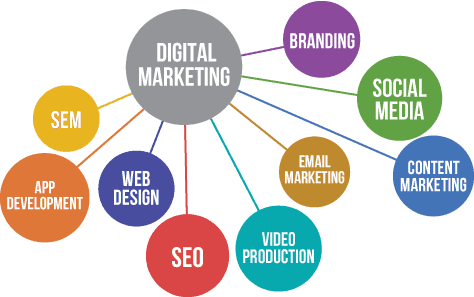
A digital marketing agency sits at the intersection of strategy, technology, and distribution. But the term is dangerously broad. Some agencies run paid ads. Others build organic authority. The best ones integrate both and connect every channel back to revenue.
If you’re a founder, CMO, or growth lead evaluating whether to hire a digital marketing agency or what to demand from one you already work with, this article cuts through the ambiguity – and reflects the actual operating model of our digital marketing agency in Kolkata across SEO, paid media, content, and analytics under one roof.
Strategy Architecture: Translating Business Goals into Channel Logic
The first thing a credible digital marketing agency does is not run ads or publish content. It maps your business model to the right distribution channels, and that mapping requires a specific kind of strategic thinking that most in-house teams lack bandwidth for.
A mature agency begins with what’s called a demand-capture vs demand-creation diagnosis – the strategic bedrock for any modern programme, fully unpacked in our analysis of why every business needs a digital marketing strategy in 2026. If you’re operating in a category people already search for (say, project management software), the priority is search-intent capture – SEO, Google Ads, comparison content. If you’re in an emerging category (say, AI-powered legal workflow automation), you need demand creation: thought leadership, community-building, LinkedIn authority, and top-of-funnel education.
Agencies working at a strategy level also map customer journey stages to content and channel types. Awareness content lives on social and in editorial placements. Consideration content lives on your blog, in email nurture sequences, and in YouTube tutorials. Decision-stage content, pricing pages, case studies, competitor comparisons, live on your website and in paid retargeting.
The deliverable isn’t a list of tactics. It’s a channel architecture with clear attribution logic: which touchpoints are responsible for awareness, which for consideration, and which for conversion.
Search Engine Optimisation: Beyond Rankings to Topical Authority
SEO has changed more in the past 24 months than in the preceding decade. Google’s Helpful Content updates and the rollout of AI Overviews have shifted the reward system from keyword density and backlink volume toward demonstrable subject matter authority and entity-based relevance signals.
A digital marketing agency operating at the current SEO standard builds what’s known as a topical authority map, a content architecture where your site covers a subject area comprehensively, not just superficially – the architectural foundation of every engagement at our engineering-led SEO services in Kolkata. If you sell HR software, that means publishing deeply on compliance, onboarding, performance management, and payroll, not just “HR software features.” Google’s systems increasingly reward sites that demonstrate expertise across an entire topic cluster, not just rank for isolated head terms.
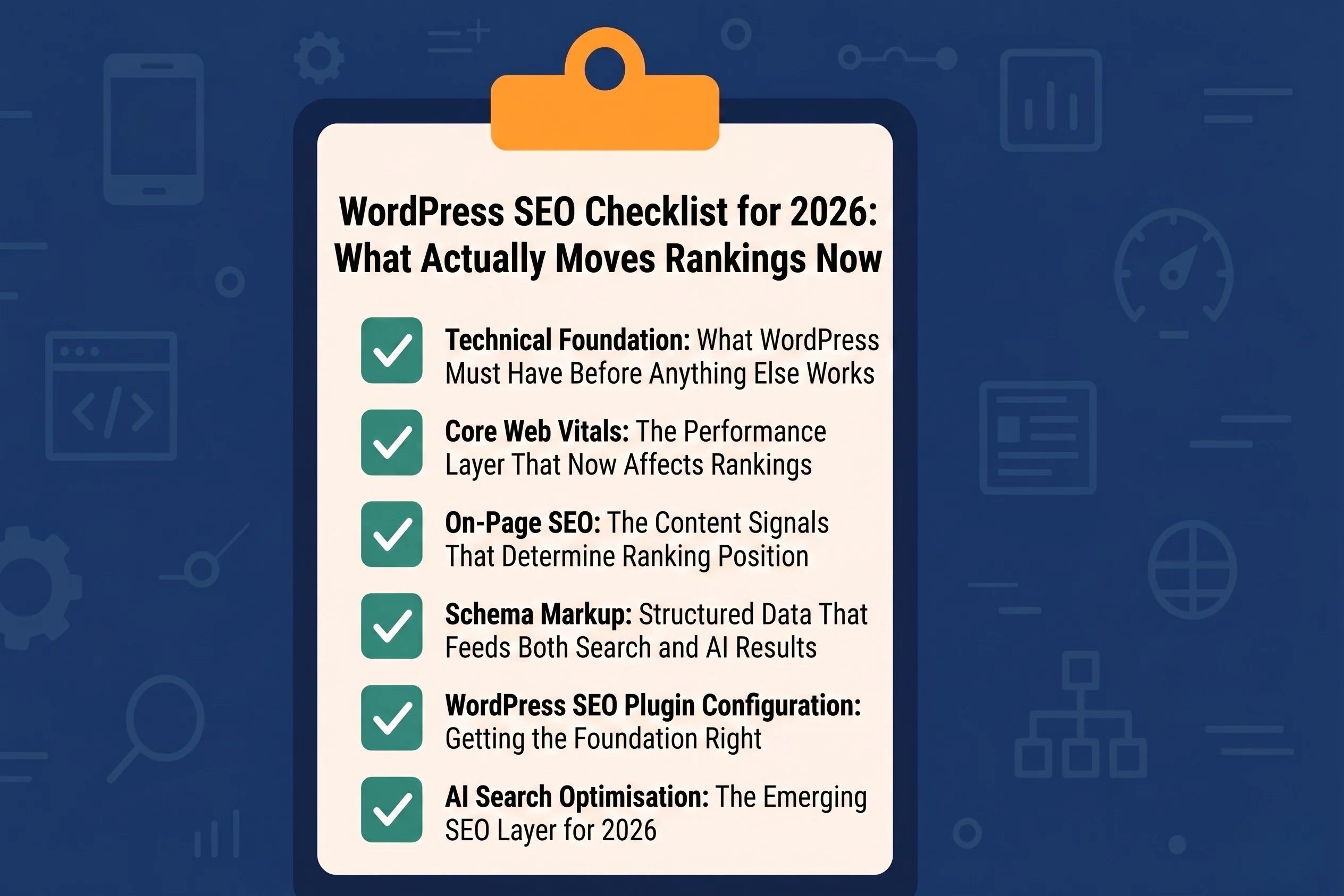
Technical SEO remains foundational. Core Web Vitals (Largest Contentful Paint, Interaction to Next Paint, Cumulative Layout Shift) directly affect both rankings and conversion rate. An agency should audit your site’s performance architecture alongside its content. A well-structured article on a slow, poorly-indexed site will consistently underperform a mediocre one on a technically clean domain.
The emerging frontier is AI search optimisation, structuring content so it appears in ChatGPT, Gemini, and Perplexity responses. This requires different signals than traditional SEO: named entity clarity, citation-worthy original data, and answer-first content formatting. Agencies that haven’t yet built a framework for this are already behind.
Paid Media Management: The Compounding Complexity of Multi-Platform Advertising
Running paid media in 2025 is not the same skill set as it was in 2019. The consolidation of audience data, the deprecation of third-party cookies, and the shift to AI-powered bidding systems have fundamentally changed what good paid media management looks like.
On Google Ads, the move to Performance Max campaigns means the algorithm now controls ad creative selection, audience targeting, and placement across Search, Display, YouTube, Gmail, and Maps simultaneously – which is why our PPC company in Kolkata treats signal seeding, asset-group structure, and exclusion audiences as a discrete optimisation discipline on every account. The agency’s job is no longer to micromanage keywords, it’s to feed the algorithm high-quality creative inputs, structured conversion signals, and first-party audience data so the system can optimise meaningfully.
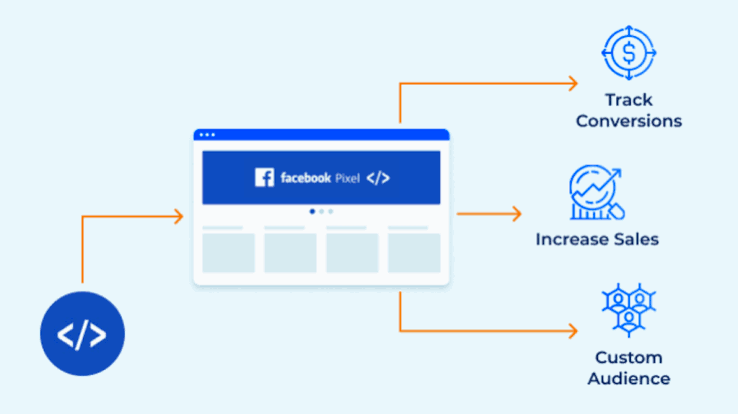
On Meta, the iOS 14 privacy changes reduced pixel-based attribution accuracy significantly. Agencies that adapted moved to Conversions API (server-side tracking), modelled attribution, and broader campaign structures that give Meta’s Advantage+ algorithm more room to find converting audiences. Brands still using old pixel-only tracking are measuring roughly 30–40% of their actual Meta-driven revenue – and rebuilding that measurement stack is the first move our social media marketing agency in Kolkata makes when migrating an account onto Meta Advantage+.
The strategic layer agencies add is cross-channel budget allocation, dynamically shifting spend based on where the marginal return is highest. This requires unified reporting across platforms, which most in-house teams don’t have the infrastructure or time to build. The difference between a 3x and a 5x ROAS often comes down to how quickly an agency can identify which campaign type, audience segment, or creative format is pulling ahead and reallocate toward it.
Content and Brand Authority: Building Assets That Compound Over Time
Paid media rents attention. Content and brand-building own it. A digital marketing agency that focuses exclusively on performance channels without building brand authority is optimising for short-term returns at the expense of long-term defensibility.
Brand authority is now measurable in ways it wasn’t five years ago. Search share of voice, how often your brand appears for relevant queries relative to competitors, is a proxy for category ownership. Branded search volume growth indicates that people are actively seeking you out, not just discovering you through paid interruptions. Both of these compounds over time: the more authority you build, the lower your cost per acquisition across all channels.
At the execution level, content production inside a high-performing agency isn’t just blog writing. It involves original research (surveys, proprietary data studies) that generate backlinks and press coverage; long-form thought leadership that builds trust among enterprise buyers who have 6–12 month evaluation cycles; and short-form video content designed for native platform algorithms, specifically the recommendation systems on TikTok, YouTube Shorts, and Instagram Reels, which reward watch time and completion rate rather than follower count.
The brands growing fastest right now have turned their content into a distribution moat: their articles rank, their videos get recommended, and their newsletters drive direct return traffic. An agency builds the system behind that, editorial calendars, repurposing workflows, distribution checklists, not just the individual assets.
Analytics, Attribution, and Measurement Frameworks
The most underestimated function of a digital marketing agency is measurement design. Without a sound attribution model, you will consistently over-invest in last-click channels (typically branded search and retargeting) and under-invest in the upper-funnel channels that actually created demand.
The current best practice for measurement-mature brands is a multi-touch attribution model supplemented by Marketing Mix Modelling (MMM) for larger budgets. MMM uses statistical regression across historical spend and revenue data to estimate the incremental contribution of each channel, including offline channels and brand-building activity that don’t generate directly trackable clicks.
At the operational level, agencies should be configuring GA4 event tracking for micro-conversions (scroll depth, video views, form starts, resource downloads), not just macro-conversions (purchases, lead submissions). Micro-conversion data allows you to understand where in the funnel you’re losing people, which informs both content strategy and UX decisions.
The key KPIs a digital marketing agency should be reporting on go beyond channel-level metrics. Customer Acquisition Cost (CAC) by channel, CAC:LTV ratio by cohort, pipeline velocity from first touch to close, and revenue attribution by content asset, these are the numbers that connect marketing activity to business outcomes and determine whether agency spend is actually generating return.
Specialisation vs. Full-Service: How to Choose What Your Business Actually Needs
Not every business needs a full-service digital marketing agency. The decision depends on your growth stage, internal capability, and the complexity of your go-to-market model.
Early-stage companies (under $2M revenue) are typically better served by specialist agencies: one focused on SEO and content, or one focused on paid acquisition, not both simultaneously. Budgeting concentration into one channel you can own is more efficient than spreading thin across five.
Growth-stage companies ($2M–$20M revenue) typically need integrated execution: a content and SEO foundation feeding organic acquisition, paid channels accelerating demand capture, and email nurture converting middle-of-funnel leads. This is where full-service or multi-agency stacks make sense, provided there’s a clear lead agency responsible for channel coherence.
Enterprise brands are increasingly moving toward embedded agency models, where agency teams work inside the brand’s org structure, share internal data systems, and operate with longer planning horizons. The trend toward in-housing commoditised execution (social posting, basic content) while outsourcing strategic and technical functions (advanced SEO, programmatic buying, marketing data engineering) continues to accelerate.
The right question to ask any agency before engaging is not “what services do you offer” but “what does your client’s measurement framework look like 90 days after engagement, and how do you demonstrate incrementality?”
A digital marketing agency, at its best, is not a vendor. It’s a growth infrastructure partner, one that translates your business model into a channel architecture, builds systems that compound over time, and connects every activity back to measurable commercial outcomes.
The immediate priorities for most brands evaluating agency support are: cleaning up attribution infrastructure first (you can’t optimise what you can’t measure accurately), then choosing channel focus based on where your buyers actually spend attention, not where it’s easiest to run campaigns.
The direction of the industry is unambiguous. AI-driven discovery systems, first-party data as the primary targeting substrate, and brand authority as the compounding moat, these are not future trends. They are current realities that separate agencies worth partnering with from those still operating on a 2019 playbook. Choose accordingly.