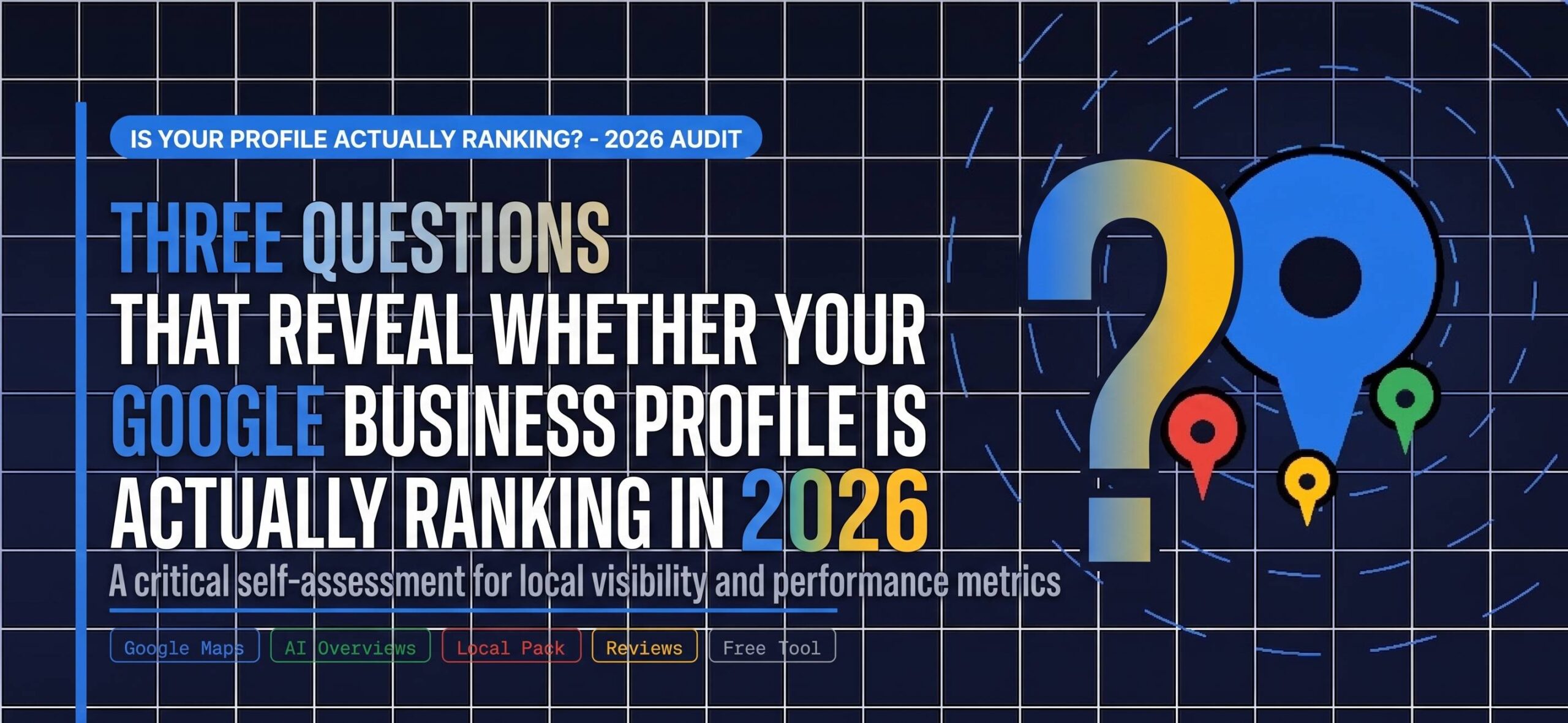

There is a specific moment when a well-optimised Google Business Profile starts losing ground to competitors. It is not a penalty. There is no algorithm update notification. It is quieter than that a slow erosion of rankings driven by a metric that most local SEO guides have not yet named: Activity Velocity. That naming and the measurement system underneath are part of what our Kolkata SEO agency builds into every local-SEO programme.
Understanding Activity Velocity is the difference between a GMB Profile that holds its position in the Local 3-Pack and one that gradually slips to positions four through eight while its owner wonders what changed.
What Activity Velocity Actually Is
Activity Velocity is the rate at which a Google Business Profile generates fresh signals across a rolling 30-day window. It is not the total volume of content on your profile, it is the recency and consistency of new content being added.
Google’s local ranking model processes freshness in a way that is analogous to how it treats news content: the most recently updated, actively managed sources carry stronger signals than static, historically complete ones. A profile optimised thoroughly in January that receives no updates through March is, by April, algorithmically indistinguishable from a profile that was never optimised at all.
The signals that contribute to Activity Velocity include:
- Google Posts: frequency, content type (Offer, Update, Event), and keyword relevance of each post.
- Photo and video uploads: recency of the most recent upload, upload frequency over the past 30 days, and content authenticity scored by Vision AI.
- Review responses: how quickly new reviews are responded to, and the keyword and location relevance of the response text.
- Q&A activity: new questions answered, new question-answer pairs seeded, and the last date the section was updated.
- Attribute updates: changes to business hours, service listings, accessibility features, and category-specific attributes. For the practical weekly cadence that maintains all of these, see [the 15-minute weekly GBP routine]
The Decay Curve: When Posting Once a Month Becomes Invisible
The most common mistake among businesses that do basic Google My Business Profile maintenance is scheduling one post per month and considering the profile managed. In the 2024 algorithm, monthly posting was considered adequate. In 2026, the freshness decay curve has steepened significantly.
A Google Post published on the 1st of the month registers a strong freshness signal in days one through seven. By day 14, that signal has halved in relevance weight. By day 21, it is minimal. A business that posts once monthly is effectively signalling inactivity for three out of every four weeks.
The businesses consistently ranking in the top three positions for competitive local keywords in Indian urban markets in 2026 are posting two to three times per week, not because more is always better, but because that cadence keeps the freshness signal above the decay threshold continuously.
What Healthy Activity Velocity Looks Like
For a single-location business with one team member managing the GBP, a minimum viable Activity Velocity schedule looks like this:
- Posts: Two per week. One Offer or Update mid-week, one photo-led Update at the weekend. Total time: 20 minutes weekly.
- Photos: Three to five new images per week. Operational shots taken on mobile, uploaded within 24 hours of capture. File names are descriptive and location-referenced before upload. The authenticity logic behind this is covered in our [unfiltered-video E-E-A-T guide]
- Review responses: Every review was responded to within four hours of receipt. Responses include natural keyword and location references.
- Q&A: Two new seeded question-answer pairs added monthly. All user questions answered within 24 hours.
The Scheduling Trap: Why Batching Content Undermines Freshness
Many agencies and business owners manage Google Business Profile by scheduling a month of posts in a single session, then stepping back. This approach fails for a reason that is not immediately obvious: Google’s crawl pattern distinguishes between a post created and published in real time versus a post created 28 days ago and queued. Real-time publishing carries a stronger freshness signal than scheduled content from a creation-date perspective. The content of a post matters less than when it was created relative to when it was published.
The practical implication is straightforward: publish GMB posts within 24 hours of creation. For businesses that need to plan content in advance, draft and publish within the same working day rather than setting posts to auto-publish weeks ahead.
Measuring Your Activity Velocity Against Competitors
Activity Velocity is most useful as a comparative measure. Open the profiles of your top two local competitors monthly and note the following:
- Date of their most recent Google Post
- Date of their most recent photo upload
- Whether they have responded to reviews in the past seven days
- Last Q&A activity date
If a competitor’s Activity Velocity score exceeds yours across three or more of these signals, they are accumulating freshness authority faster than you. Close that gap before focusing on any other aspect of local SEO.
Conclusion
Activity Velocity is not a complexity, it is a discipline. The businesses losing 3-Pack positions in 2026 are not doing so because their profiles were poorly optimised to begin with. They are losing ground because they stopped treating their google my business profile as a live channel requiring consistent maintenance. Establish a posting cadence above the freshness decay threshold, keep it consistent, and monitor competitor freshness monthly. That combination is the foundation of durable local visibility in 2026.
FAQ
Q: How often should I post on Google Business Profile in 2026?
A: Minimum twice per week for competitive urban markets. For lower-competition local keywords, one post every three to four days is sufficient to maintain freshness above the decay threshold.
Q: Does scheduling GMB Profile posts in advance hurt rankings?
A: Creating content weeks in advance and queuing it to auto-publish is less effective than publishing within 24 hours of creation. Draft and publish on the same day wherever possible.
Q: What counts as a freshness signal on Google Business Profile?
A: Posts, photo uploads, review responses, Q&A updates, attribute changes, and new service or product listings all contribute to your profile’s freshness signal.
For brands that prefer this run by a team rather than an in-house owner, our digital marketing company in Kolkata executes Activity Velocity programmes for clients across healthcare, real estate, hospitality, and D2C.