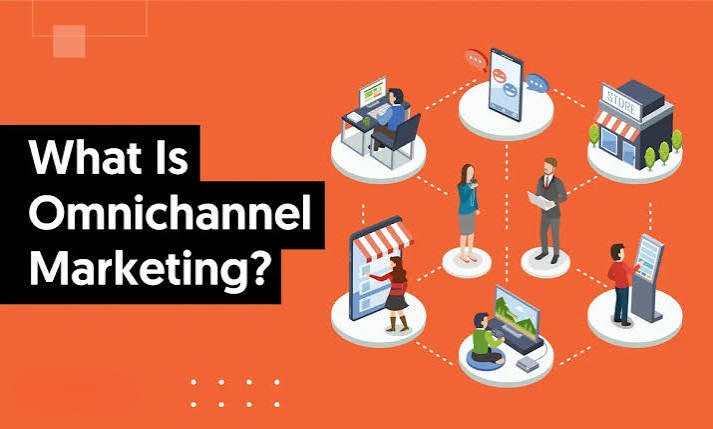
Salesforce’s State of the Connected Customer report found that 76% of customers expect consistent interactions across departments, yet fewer than half actually receive them. The expectation that a brand knows who you are, what you last purchased, and what you are currently considering, regardless of whether you are browsing on mobile, walking into a store, or speaking with a support agent, is no longer a premium experience expectation. It is the default standard that consumers apply across every brand interaction. The gap between that expectation and what most brands actually deliver is where omnichannel marketing lives, and where most marketing programs fall short.
Omnichannel marketing is the discipline of creating a unified, consistent, and contextually aware customer experience across every channel a brand operates, digital and physical, paid and owned, pre-purchase and post-purchase. It is not multichannel marketing, which simply means being present on multiple channels. The distinction is integration: multichannel delivers different messages through independent channels; omnichannel delivers a connected experience where each channel is aware of what happened in the others and responds accordingly.
This article explains what genuine omnichannel execution requires, the specific structural reasons most brands fail to achieve it despite significant investment, and the strategic decisions that separate brands with coherent cross-channel experiences from those running coordinated-looking but functionally siloed channel programs.
The Structural Difference Between Multichannel and Omnichannel
Most brands that describe themselves as omnichannel are, in practice, multichannel. The distinction is not semantic, it reflects a fundamental difference in how customer data flows, how channel decisions are made, and what the customer actually experiences when they move between touchpoints.
A multichannel brand has a presence on Instagram, Google Search, email, and its own website. Each channel has a team, a budget, a content calendar, and a set of metrics it is accountable for. The Instagram team optimises for engagement. The paid search team optimises for ROAS. The email team optimises for open rates. Each team does its job competently and reports good numbers, while the customer who clicked an Instagram ad, visited the website, signed up for email, and then searched Google for the brand encounters messaging that is disconnected across every one of those touchpoints. Each channel is doing its job, but no channel knows what the other is doing.
A genuinely omnichannel brand would recognise that same customer at each touchpoint. The email triggered after the website visit would reference the specific product they viewed on Instagram. The retargeting ad on Google would acknowledge that they have already signed up for email and are not a cold prospect requiring introductory messaging. The support agent handling an inbound query would have visibility into the customer’s channel history before picking up the conversation. This level of integration requires shared customer data infrastructure, not just coordinated creative.
The practical test for whether your brand is multichannel or omnichannel is simple: if a customer interacts with your brand across three different channels in one week, does each subsequent interaction reflect awareness of the previous ones? If the answer is no, if each touchpoint treats the customer as though the previous interactions did not happen, the brand is multichannel regardless of how many channels it operates.
Why Data Silos Are the Primary Execution Barrier
The most consistent explanation for failed omnichannel marketing execution is not strategy or intent, it is data architecture. Customer data generated across channels typically lives in separate, non-communicating systems: CRM data in Salesforce or HubSpot, e-commerce data in Shopify or Magento, email data in Klaviyo or Mailchimp, paid media data in Google Ads and Meta Business Suite, and in-store POS data in a retail system that is not connected to any of the above. Each system has a record of the customer, but no single system has the complete record, and the systems do not talk to each other by default.
Customer Data Platforms (CDPs) – including Segment, mParticle, and Bloomreach- are the infrastructure layer designed specifically to solve this problem. A CDP ingests customer data from every system in the stack, creates a unified customer profile that persists across channels and devices, and makes that unified profile available to every downstream system, so that the email platform, the ad platform, and the support tool are all working from the same customer record rather than their own isolated view.
The implementation challenge is that a CDP does not solve data silo problems by itself, it consolidates data that the brand’s existing systems generate, which means every system that should be feeding customer data into the CDP must be configured to do so correctly. A brand with twelve disparate data sources needs twelve data integrations working reliably before the CDP produces a unified customer view worth acting on. That integration complexity, multiplied by the ongoing maintenance as systems are upgraded or replaced, is why CDP implementations frequently take longer and cost more than anticipated, and why some brands achieve data unification in pilot segments before the full customer base is covered.
Identity resolution is the specific technical problem that sits underneath data consolidation. The same customer who visited your website as an anonymous user, later signed up with an email address, and then made a purchase with a different email address exists as three separate records in most CRM systems. Connecting those records into a single customer identity requires probabilistic matching, using behavioural signals, device fingerprints, and overlapping attributes to infer that separate data points represent the same person. Without identity resolution, unified customer profiles contain gaps and duplicates that corrupt the personalisation downstream systems attempt to deliver.
Channel Ownership Conflicts: The Organisational Problem Strategy Cannot Solve
Data architecture is a technical barrier to omnichannel marketing execution. Channel ownership conflicts are an organisational barrier, and they are frequently harder to resolve because they involve people, incentives, and accountability structures rather than software configurations.
In most marketing organisations, channels are owned by separate teams with separate budget accountability and separate performance metrics. The paid social team is measured on ROAS from social campaigns. The SEO team is measured on organic traffic. The CRM team is measured on email engagement. Each team has an incentive to claim credit for conversions that happen in their channel window, which produces attribution conflict rather than collaboration. A customer who first engaged through organic search, was nurtured through email, and converted through a retargeting ad generates a conversion that three teams can simultaneously claim, and none has a structural incentive to acknowledge the others’ contribution.
True omnichannel execution requires a shared revenue accountability model where every channel team is measured against the same business outcome, customer acquisition cost, customer lifetime value, or total revenue, rather than channel-specific metrics that optimise for individual performance at the expense of system performance. Brands that have made this organisational shift – Sephora, Nike, and in the Indian context, Nykaa and Myntra – consistently outperform brands running technically impressive individual channel programs that are not collectively accountable for the same outcome.
The practical implication for marketing leadership is that omnichannel is an organisational design problem before it is a technology problem. Building a CDP and connecting data sources does not produce omnichannel outcomes if the teams consuming that data are still optimising independently toward channel-specific metrics. The measurement framework change – from channel metrics to shared business outcomes – is what forces the cross-channel coordination that omnichannel experience requires.
Execution Framework: Where Omnichannel Actually Operates in Practice
The channels where omnichannel integration produces the most measurable conversion impact are the transitions between channels, the moments when a customer moves from one context to another, and when the brand either maintains continuity or loses it. These transitions are where message match gaps, data sync failures, and personalisation breakdowns most frequently appear.
The cart abandonment sequence is one of the most studied cross-channel transitions in e-commerce. A customer who abandons a cart on mobile and receives a generic “You left something behind” email, with no reference to the specific product, no acknowledgement that they were browsing on mobile, and no offer calibrated to their purchase history, experiences a failure of omnichannel execution at a high-intent moment. The same trigger, delivered with product-specific imagery, a contextually appropriate offer based on the customer’s LTV tier, and a reminder that the item is available for same-day pickup at their nearest store if they prefer not to wait for delivery, is omnichannel execution that acknowledges what the brand knows about this specific customer.
Physical-digital integration is where the omnichannel gap is widest for most brands with both online and offline presence. A customer who researches a product extensively online, visits a store to examine it in person, and then purchases through the brand’s app has moved through three distinct environments, yet most brands have no mechanism for the in-store sales associate to access the customer’s online research history, product comparisons, or wishlist. Brands that have solved this through clienteling apps that give associates access to customer profiles, or through QR-based product identification that connects in-store behaviour to the customer’s digital profile, report significant improvements in both conversion rate and average transaction value in the store environment.
Loyalty programs function as one of the most effective omnichannel connectors because they create a persistent identity anchor across every channel. A loyalty account that is the same regardless of whether the customer shops online, in-store, through a third-party platform, or via the brand’s app allows every touchpoint to reference a shared history, purchase frequency, preferred product categories, LTV tier, geographic location, without requiring the complex probabilistic identity resolution that anonymous customer data demands.
Measurement: Why Omnichannel Attribution Remains Unsolved for Most Brands
The measurement problem for omnichannel marketing is that the attribution models most brands use, last click being the default, multi-touch being the aspiration, were built for digital-only customer journeys. They cannot natively account for the influence of an in-store interaction on a subsequent online conversion, a billboard impression on a branded search query, or a customer service call on a renewal decision.
Unified Measurement Frameworks and Marketing Mix Modelling (MMM), combined with multi-touch attribution for digital channels, are the most complete available approach. MMM uses statistical regression to quantify the contribution of every marketing input, including offline channels, to business outcomes over time. The tradeoff is temporal resolution: MMM typically requires 18–24 months of historical data to produce reliable models and produces insights at the channel level rather than the customer level. It tells you what your TV budget contributed to revenue growth across a quarter; it cannot tell you that a specific customer’s purchase was influenced by that TV campaign.
The practical resolution for most brands is to layer multiple measurement approaches rather than seeking a single model that captures everything: multi-touch attribution for digital channel optimisation decisions, MMM for portfolio-level budget allocation, incrementality testing for evaluating the true marginal contribution of specific channels, and customer lifetime value cohort analysis to evaluate whether the customers acquired through each channel return at rates that justify the acquisition cost. Each model answers a different question; none answers all of them.
The Strategic Priority for Brands
Omnichannel marketing succeeds when the customer’s experience feels continuous, when the brand responds to what it knows about each individual rather than treating every interaction as the first. That continuity requires three things most brands have not built simultaneously: unified customer data infrastructure, a shared accountability model across channel teams, and measurement frameworks that evaluate the system rather than individual channels.
The implementation priority for most organisations is to start with data: audit where customer data is generated, how it is stored, and which systems lack connections to a unified customer record. The gaps in that audit identify where personalisation is breaking down. Address the highest-traffic, highest-intent transitions first, cart abandonment sequences, post-purchase cross-sell flows, and lapsed customer reactivation programs, where the conversion value of improved continuity is most directly measurable.
The direction of customer expectation continues to move toward complete contextual awareness, customers will increasingly expect every brand touchpoint to reflect not just their purchase history but their current intent, their preferred communication channel, and their position in the buying cycle. The brands that build the infrastructure to meet that expectation now, while the majority of their competitors are still running coordinated-looking but fundamentally siloed channel programs, will accumulate a customer experience advantage that compounds with every data point they collect and every transition they make seamless.