How the Full-Funnel System Actually Works
Most businesses running Meta Ads are operating with a single-stage problem, they run conversion campaigns to cold audiences and wonder why the cost per purchase is high and results are inconsistent. The campaign structure looks reasonable, a conversion objective, a broad or interest-based audience, and a product-focused creative. But the fundamental issue is asking a cold audience to make a purchase decision in a single ad exposure, without any prior brand familiarity, product understanding, or trust signal. That is not a targeting problem or a creative problem. It is a funnel problem.
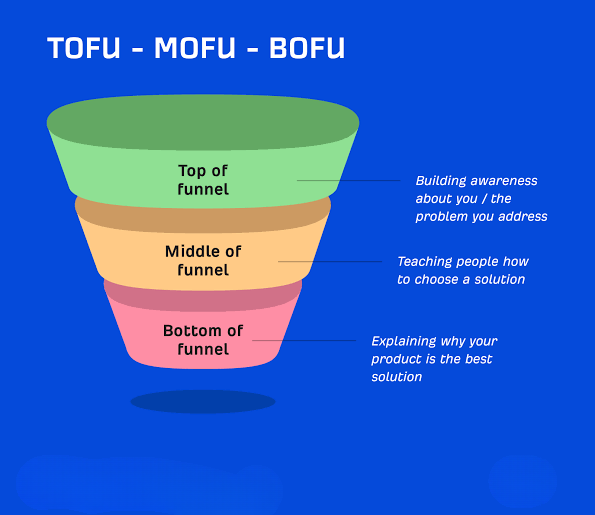
Meta’s advertising system is built to support every stage of the buyer journey, from the first moment a potential customer becomes aware that your product category exists, through the consideration phase where they evaluate whether your brand specifically is worth attention, to the conversion phase where a ready-to-buy audience just needs the right offer at the right moment. Each stage requires a different objective, a different creative approach, a different audience definition, and a different success metric. Running only the bottom-funnel stage is like asking someone to marry you on a first date, the infrastructure for trust has not been built.
This article explains what the Meta Ads funnel actually is, how each stage works mechanically within Meta’s system, what creative and targeting logic applies at each level, and how the three stages connect into a system that compounds performance rather than producing isolated results.
High Funnel: Building Awareness With Cold Audiences
The top of the Meta Ads funnel has one job: introduce your brand or product to people who have never encountered it before, in a way that creates enough familiarity and curiosity to make subsequent touchpoints effective. Nothing is being sold at this stage. No conversion is expected. The goal is attention and memory, getting your brand into the consideration set of a relevant audience before any purchase intent exists.
High-funnel campaigns use objectives that reflect this: Video Views (ThruPlay), Reach, Brand Awareness, or Engagement, all of which optimise Meta’s delivery system to find users who are most likely to watch your content, see your ad, or interact with it in bottom-commitment ways. These objectives differ fundamentally from conversion objectives, which optimise for users likely to complete a purchase or submit a form. The machine learning model behind each objective is tuned differently, which means using a conversion objective against a cold audience, as many advertisers do, is instructing the system to find buyers in a pool that has not been warmed to your brand, producing inefficient spend.
Audience targeting at the high funnel is intentionally broad. Lookalike audiences built from your customer list, broad interest categories relevant to your product space, and Meta Advantage+ Audience — which allows Meta’s algorithm to find relevant users automatically within a defined category — are appropriate at this stage. The audience pool needs to be large enough for Meta’s system to find the segment most likely to engage with the awareness content, and restricting it too narrowly at the awareness stage limits the system’s ability to discover new customer profiles.
Creative at the high funnel prioritises stopping power, product demonstration, and brand introduction, not offer presentation or price communication. A 15–30-second video that demonstrates the product being used in a recognisable scenario, communicates a single benefit clearly, and presents the brand with enough visual distinctiveness that a viewer would recognise it in subsequent exposures is the appropriate awareness creative format. The hook must land in the first three seconds because Meta’s feed environment rewards content that immediately answers “why should I keep watching?” Static images work for awareness when they carry a strong visual contrast or an unexpected visual element; standard product shots on white backgrounds do not perform at the awareness stage because they provide no reason to engage.
The key metric at the high funnel is cost per ThruPlay (cost per completed or nearly-completed video view) or cost per 1,000 impressions (CPM) against the target audience segment. The business outcome being generated is audience creation, specifically, the pool of users who watched 25%, 50%, or 75% of the video, which becomes the targeting pool for the mid-funnel stage. High funnel campaigns that generate a large pool of high-completion-rate video viewers at a low cost per view are succeeding, even if they report zero direct conversions.
Mid Funnel: Building Consideration and Purchase Intent
The middle of the Meta Ads funnel addresses the gap between awareness and purchase decision — the phase where a potential customer who recognises your brand is evaluating whether it is worth pursuing further. This is the most underinvested stage in most Meta Ads accounts, and it is frequently the reason that retargeting conversion campaigns underperform: the gap between cold awareness and hot retargeting is too large to bridge without a consideration layer in between.
Mid-funnel campaigns target warm audiences, people who have already engaged with the brand in a meaningful way. The primary sources of mid-funnel audiences are: video viewers (25–75% completion from top-funnel campaigns), Instagram and Facebook profile engagers (people who have visited the profile, liked a post, or saved content in the last 60–90 days), and website visitors who visited a product or category page but did not add to cart. These audiences have already demonstrated some level of interest; the mid-funnel campaign’s job is to deepen that interest to the point of purchase consideration.
Campaign objectives at mid funnel include Traffic (to drive product page visits from warm audiences), Engagement (to extend the brand relationship with additional content consumption), and Video Views for deeper product content (longer demonstrations, comparison content, testimonial videos). Some advertisers use a lead generation objective at this stage to capture email addresses from warm audiences, moving prospects into a CRM-based nurture sequence that runs alongside the paid campaign structure.
Creative at the mid-funnel shifts from brand introduction to product depth. Carousel ads showing multiple product variants, educational content explaining how the product works and who it is for, user-generated content and customer testimonials, and comparison content that addresses the objections a considering buyer is likely to have are all appropriate at this stage. The creative should assume the viewer already knows the brand exists, it does not need to reintroduce it, but rather needs to advance the relationship. A mid-funnel ad that leads with “Here’s what our customers say after 30 days” performs better than one that leads with Introducing [Brand Name] against an audience that has already been exposed to the brand.
Frequency management matters specifically at the mid-funnel because the audience pool is smaller and the campaign may run to the same users multiple times per week. A frequency of four to six exposures over a 30-day period is generally appropriate for mid-funnel content, enough for meaningful brand impact without triggering the negative sentiment that excessive ad frequency produces. Rotating creative variants every two to three weeks prevents fatigue and keeps the content fresh enough that repeat exposures continue to add relationship value rather than annoyance.
Bottom Funnel: Converting Intent to Purchase
The bottom of the Meta Ads funnel targets the audience closest to a purchase decision, people who have demonstrated high-intent behaviour such as adding a product to cart without purchasing, visiting the checkout page, spending multiple sessions on product pages, or interacting with the brand across multiple channels in a short window. This is the stage where conversion objectives, strong offers, and urgency-based creative belong because this audience has done the evaluation work and needs a specific reason to complete the transaction now.
Campaign objectives at the bottom funnel are Conversions, with the primary conversion event set to purchase or lead, depending on the business model. The algorithm’s job at this stage is to find the right moment to serve the ad to an audience that is already close to converting, not to build new audience pools or warm cold prospects. Meta’s delivery system is good at finding high-probability conversion moments within warm audience segments, which is why bottom-funnel campaigns frequently show the most dramatic efficiency improvements when the pixel is tracking the right events correctly and the warm audience pool is large enough to give the algorithm meaningful data to optimize against.
Audience targeting at the bottom funnel uses the highest-intent behavioral signals available: cart abandoners (Custom Audience from AddToCart pixel event without subsequent Purchase), checkout initiators, people who have viewed a specific product page three or more times, and returning visitors with sessions longer than a defined duration threshold. These audience segments are typically smaller than mid-funnel pools, which is why adequate top- and mid-funnel activity is a prerequisite for functional bottom-funnel retargeting. If the top and mid-funnel stages are not generating sufficient audience volume, the bottom-funnel retargeting pool is too small for efficient optimisation.
Creative at bottom funnel is offer-led and urgency-aware. Dynamic Product Ads (DPAs), which automatically serve ads featuring the specific products a user viewed or added to the cart, are one of the highest-performing bottom-funnel formats because they close the gap between intent signal and ad relevance completely. A user who added a specific pair of running shoes to the cart and then abandoned sees an ad featuring exactly those shoes rather than a generic brand awareness message. DPAs require product catalogue integration with the Meta Ads account but produce measurable conversion rate improvements over static creative for any brand with catalogue depth.
Offer structure at the bottom funnel should be calibrated to the value of a recovered cart or converted consideration. A 10% discount code, a free shipping offer, a bundle incentive, or a limited-time availability message can all function as the final nudge for a high-intent audience that has stopped short of completing the purchase. However, training your bottom-funnel audience to expect a discount on every touchpoint by always serving a discount creative at the bottom of the funnel reduces full-price purchase rates over time as customers learn to abandon carts and wait for the discount retargeting ad. Rotating between offer-based and value-reinforcement creative at the bottom funnel preserves both conversion rate and margin.
How the Three Stages Connect: The System Logic
The most important concept in Meta Ads funnel management is that the three stages are not independent campaigns running in parallel they are a connected system where each stage feeds the next. The high-funnel video campaign builds the audience that the mid-funnel carousel targets. The mid-funnel engagement campaign builds the warm website visitor audience that the bottom-funnel DPA retargets. If any stage in the system is absent or underinvested, the stages below it operate on a smaller or lower-quality audience pool.
Budget allocation across the funnel typically follows a 60:20:20 or 50:30:20 split, with the majority allocated to high funnel (which generates the audience volume that feeds everything else), a meaningful portion to mid funnel (which converts awareness into consideration at scale), and a smaller but high-efficiency allocation to bottom funnel (where the warm audience converts at the lowest cost per acquisition). The bottom-funnel stage appears most efficient in isolation because it targets only the highest-intent users, but without adequate investment in the stages above, the high-intent audience pool shrinks until the bottom-funnel campaigns lose scale and efficiency simultaneously.
The attribution dimension of the connected system is where most advertisers encounter reporting confusion. High-funnel video views generate no attributed conversions in Meta’s last-click or even 7-day click attribution model because the conversion happens later, in a different campaign, after the warm audience targeting produces the result. The high-funnel campaign looks like a cost without return in standard attribution reporting. This is why evaluating the three stages of a Meta funnel requires blended metrics across all three campaigns simultaneously, total spend against total conversions and revenue across the funnel system, rather than evaluating each campaign independently against a conversion efficiency benchmark it was never designed to meet.
Campaign Structure: How to Build the Full-Funnel Architecture in Meta Ads Manager
Translating the funnel logic into actual campaign architecture in Meta Ads Manager requires decisions about campaign objectives, ad set organisation, and audience exclusion logic that prevent stages from cannibalising each other.
Separate campaigns per funnel stage is the recommended structure, one campaign for high funnel with a Video Views or Reach objective, one campaign for mid funnel with a Traffic or Engagement objective, and one campaign for bottom funnel with a Conversions objective. Separating campaigns allows each stage’s delivery to be optimised independently and makes budget allocation across stages visible and controllable.
Audience exclusions prevent overlap between stages. The mid-funnel campaign should exclude the bottom-funnel audience (cart abandoners and checkout initiators) because those users should be in the more aggressive, offer-led bottom-funnel campaign rather than receiving mid-funnel consideration content. The high-funnel campaign should exclude existing customers and current warm audiences because spending top-funnel awareness budget on people already in the consideration or conversion phase wastes impression budget on an audience that needs a different message.
Retargeting windows at each stage should reflect realistic purchase consideration timelines for your product. A ₹500 impulse purchase has a shorter consideration window than a ₹50,000 considered purchase, and the retargeting windows (7 days, 14 days, 30 days, 60 days) at each funnel stage should reflect how long your specific buyers take to move from awareness to purchase, calibrated against the average session-to-purchase data visible in your analytics.
The Strategic Priority for Brands
The Meta Ads funnel is not a creative taxonomy, it is a customer journey engineering system. High-funnel engineers brand familiarity at scale. Mid-funnel engineers’ product consideration from a warm audience. Bottom-funnel engineers purchase conversions from a high-intent pool. Each stage requires different objectives, different creative, different audiences, and different success metrics, but none of them works as well in isolation as they do in sequence.
The implementation path for brands currently running only conversion campaigns is to add one stage at a time. Start by identifying your highest-converting existing creative and building a video version suitable for awareness distribution. This costs less than building a complete funnel infrastructure immediately and creates the audience signal that the rest of the system needs. Once the awareness campaign has generated a meaningful warm audience pool (typically 1,000–5,000 engaged users, depending on your budget scale), activate the mid-funnel campaign to that pool. Add bottom-funnel DPA or offer-based retargeting once cart abandonment data is sufficient.
The brands generating the strongest blended CAC from Meta Ads in 2026 are not spending more than their competitors, they are spending more intelligently across more funnel stages, with each stage doing the specific job it was designed to do and feeding the stage below it with a warmer, more informed, more purchase-ready audience than cold targeting alone could ever produce.