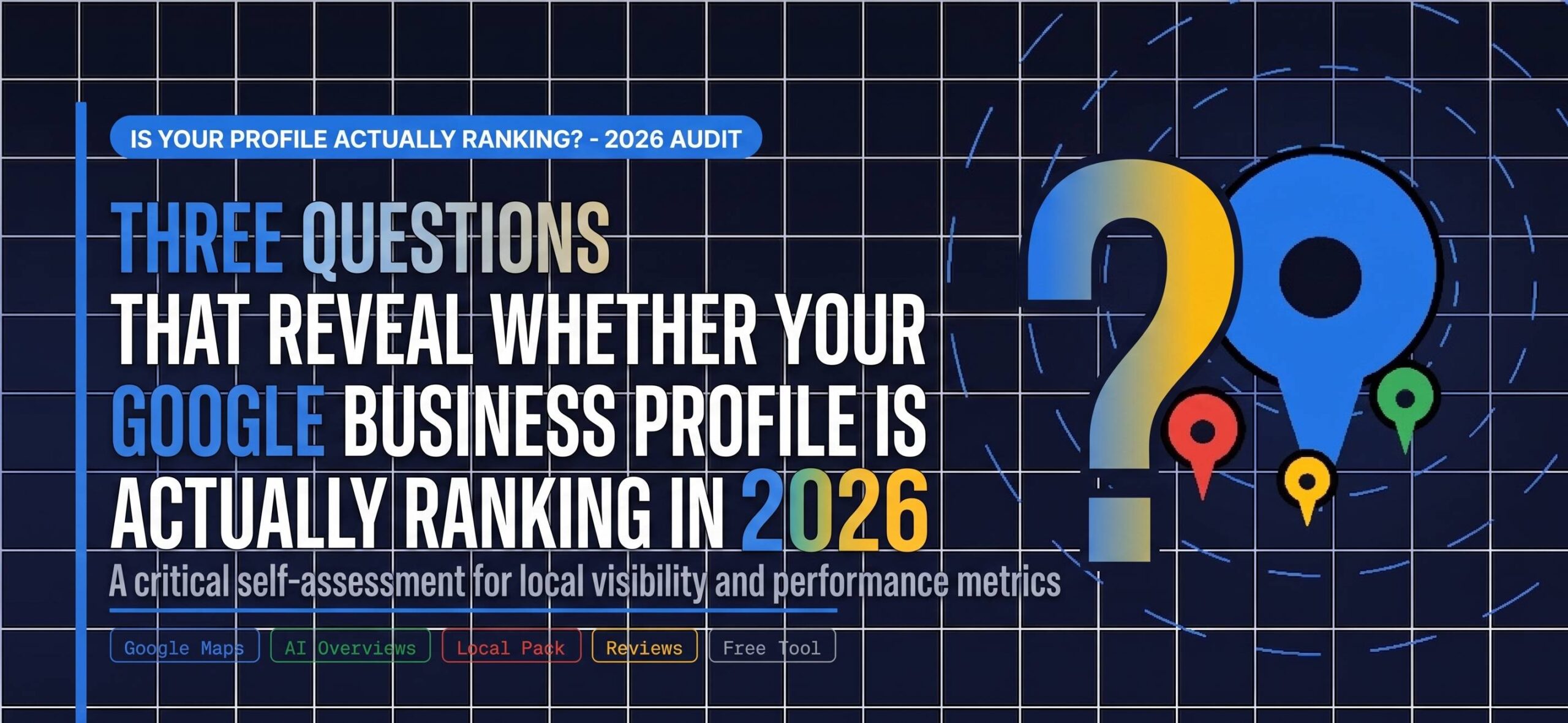
There is a version of Google Business Profile management that feels complete, the profile is verified, the description is written, reviews have been collected, and photos are uploaded, but it produces no measurable ranking results. The gap between what feels like a managed profile and what the 2026 algorithm actually rewards is wider than most businesses realise.
Three diagnostic questions, each answerable in under five minutes with a mobile device, will tell you more about your actual local search performance than any dashboard metric. They test the three surfaces where local visibility now matters: the typed map pack, voice search, and AI-generated recommendations. Answer them honestly before investing further in any local SEO activity.
Question 1: When Did You Last Publish a Google Post?
Open your Google Business Profile and check the date of your most recent published post. Do not check the drafts folder or your internal content calendar check what is actually live on your profile.
If the answer is more than seven days ago, your Activity Velocity is below the competitive threshold for most urban Indian markets. If the answer is more than 14 days ago, your profile’s freshness signal has decayed to the point where competitors posting consistently are receiving a ranking advantage on freshness alone, regardless of how thoroughly your profile was originally optimised.
Why this question matters: Google’s local ranking model processes freshness signals continuously. A post published seven or more days ago is contributing a diminishing signal. A profile where the most recent post is 21 days old is, from the algorithm’s perspective, functionally equivalent to a profile that has not posted at all in the current measurement window.
The correct answer is that your last Google Post was published within the past four days. If it was not, your first action after reading this article is to publish one not schedule it, publish it now.
Question 2: What Percentage of Your Reviews Mention a Specific Service?
Open your Google Business Profile and read your 20 most recent reviews. For each review, ask one question and does this review mention a specific service name, product, location, or outcome?
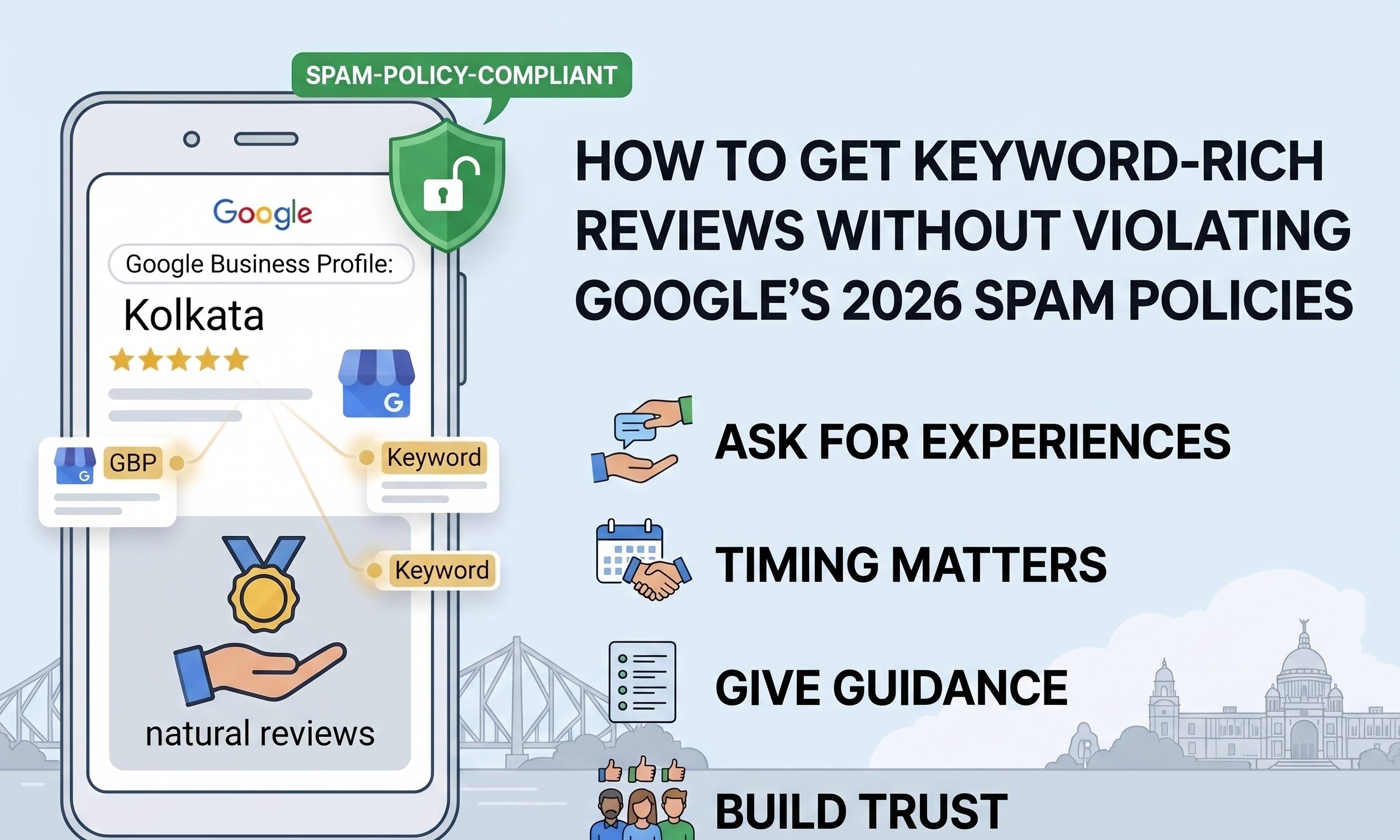
Count the number that do. Divide by 20. That percentage is your Sentiment Signal Density and the proportion of your review corpus that provides Google’s language model with usable topical and geographic associations.
A Sentiment Signal Density below 40 percent, fewer than 8 of 20 reviews containing a specific reference, indicates your review content is generic. Generic reviews provide Google with no signal about what your business actually does, where it operates, or what problems it solves. A profile with 200 generic five-star reviews will consistently rank below a profile with 50 specific, detailed reviews in AI-generated local recommendations.
Sentiment Signal Density below 40 percent also has a practical consequence: your profile is unlikely to be cited in Google AI Overview answers for specific service queries, because the language model has no specific content to extract and synthesise from.
The correct answer is 60 percent or higher. nything below that requires a review sentiment strategy, specifically, the Specificity Conversation workflow and the 48-hour follow-up sequence covered in our keyword-rich reviews guide
Question 3: Does Your Business Appear in Voice Search Results?
This test requires a mobile device and a Google account not signed into your business. From your primary business location or the centre of your service area, open Google Assistant and ask: “(your primary service) near me”.
Note exactly what Google Assistant says in response. Does it name your business? Does it name a competitor? Does it provide a list of options, and if so, where does your business appear?
If your business is not named in the spoken response for your primary service query, it means one of three things. Either your profile’s Q&A section does not contain content that matches voice query patterns. Or your service descriptions are not written in the conversational, complete-sentence format that Google’s voice retrieval system parses. Or your entity completeness the degree to which every section of your GMB Profile is filled with specific, accurate information does not meet the threshold required for voice surface eligibility.
Run the same test with a ‘near me’ variant and with a city-specific variant: “(your service) in (your city)”. A business appearing in city-specific results but not in ‘near me’ results has a proximity configuration issue. A business appearing in neither has a content structure issue.
What Your Answers Tell You
These three questions are diagnostic, not prescriptive. They tell you where the gap is between your current profile and a profile that the 2026 local algorithm is actively rewarding. The intervention for each gap is different:
- Post recency gap: implement the 15-minute weekly GMB Profile routine immediately, starting with a post published today.
- Sentiment density gap: deploy the Specificity Conversation and 48-hour follow-up sequence for the next 90 days and re-audit after 30 new reviews.
- Voice search invisibility: audit Q&A content for voice-format questions, rewrite service descriptions as complete, citable sentences, and verify service area configuration at sub-city precision.
The businesses that ask these three questions monthly rather than once at setup and never again are the businesses that catch ranking slippage early, before a competitor has accumulated a three-month freshness advantage that takes months to recover from.
Conclusion
Three questions. Each answerable in under five minutes. Each is pointing directly to the dimension of local search visibility that is most likely to be costing you a 3-Pack position right now. The value of this self-audit is not in complexity, it is in repetition. Run it monthly. Track whether the answers are improving. Use the results to prioritise the one specific intervention that closes the largest gap. That discipline, applied consistently, is the entire practice of local SEO in 2026. For brands that need it built and run for them, our digital marketing team in Kolkata operates the full routine across multiple client profiles.
Q: How often should I run this three-question self-audit?
A: Monthly, on the same date each cycle. Pair it with the monthly 3-Step GMB Profile Freshness & Sentiment Audit for a complete picture of profile health and competitor positioning.
Q: What if I appear in voice search for some queries but not others?
A: This is expected. Optimise for the queries where the gap is largest — typically your highest-revenue service category. Q&A seeding for that specific service cluster is the fastest fix.
Q: Is there a tool that automates these three checks?
A: Not comprehensively. GeoGrid tools partially automate the map pack check. Voice search must be tested manually on a device not associated with your business account. AI Overview citation monitoring has no reliable automated tracking tool as of 2026.