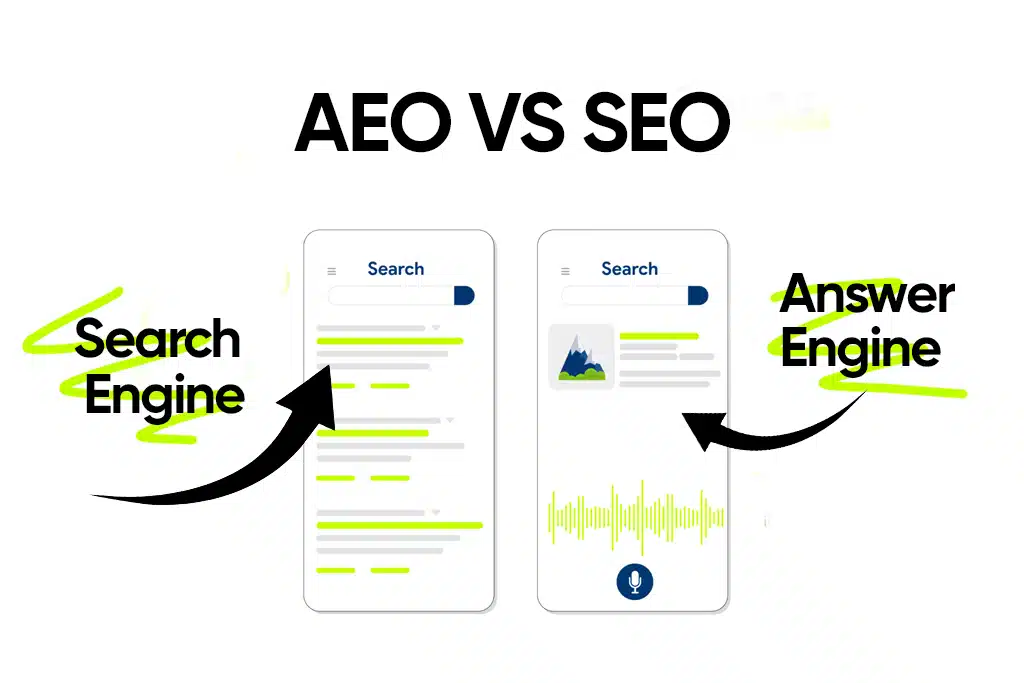
Gartner projects that traditional search engine volume will drop by 25% by 2026 as users shift to AI-powered answer engines, such as ChatGPT, Perplexity, Google AI Overviews, and Claude. Yet the average website still optimizes for ten blue links that fewer users ever click. If you’re tracking keyword rankings in 2026, you’re measuring a shrinking pie. This article explains what Answer Engine Optimization actually is, the specific ways it diverges from conventional SEO mechanics, and the structural changes you need to make so your content becomes the source AI systems cite, not the page nobody scrolls to find.
What AEO Actually Optimizes For
AEO is the practice of structuring content so generative AI systems and answer engines extract, cite, and reproduce your information when responding to user queries. The win condition isn’t a position on a results page, it’s being quoted, linked, or paraphrased inside an AI-generated answer.
Where SEO targets crawlers building an index, AEO targets retrieval systems feeding large language models. These systems utilise Retrieval-Augmented Generation (RAG), which involves pulling relevant passages from indexed sources and then synthesising an answer that cites those passages. Your job is to make your content the highest-value passage in that retrieval set.
The Technical Differences Between SEO and AEO
Traditional SEO rewards page-level signals: backlinks, domain authority, internal linking architecture, and Core Web Vitals. AEO operates at the passage level. A single well-structured paragraph buried on page three can be cited by Perplexity if it directly answers the query, regardless of where it sits in your site hierarchy.
This changes three things immediately:
- Crawlability extends to AI bots specifically – GPTBot, ClaudeBot, PerplexityBot, and Google-Extended, each respecting different robots.txt directives.
- Content chunking matters more than word count – answer engines extract 50-150-word passages, not 2,000-word essays.
- Source diversity replaces backlink scarcity – AI systems pull from forums, documentation, and niche sites that traditional SEO would consider low authority.
Recent studies of AI Overview citations show that 60-70% of cited URLs do not rank in the top 10 organic results for the same query. This is a fundamentally different game.
Content Architecture That Wins Answer Citations
Answer engines reward clear, self-contained passages that resolve specific intents. The structural patterns that consistently earn citations:
- Direct answer in the first 40-60 words of any section, before context or backstory
- Definition-style sentences following the format “X is Y that does Z”
- Numbered lists and tables for comparison, ranking, or sequential information
- Question-based H2 and H3 headings match natural conversational queries.
- Specific data points with sources rather than vague claims
You should restructure existing high-traffic content into modular passages. A guide on “B2B email marketing” becomes a series of standalone answers: what open rates B2B emails average, how often to send B2B sequences, and which subject line patterns convert. Each passage is independently citable. The same logic applies to GBP content – see [how to structure GBP for voice and AI summaries]
Schema and Structured Data for Answer Engines
Structured data takes on heightened importance for AEO because it explicitly declares the meaning of content rather than leaving it to inference.
The schemas earning disproportionate AI visibility in 2026:
- FAQPage and QAPage for question-answer content, with one question per markup block
- HowTo schema with sequential steps and tools/materials specified
- Article schema with about and mentions properties identifying the entities covered
- Dataset schema when publishing statistics, surveys, or research
- ClaimReview for fact-checking content, increasingly used by AI systems for verification.
Google’s documentation on AI Overviews confirms that structured data helps the system understand and feature content. Bing’s deep partnership with OpenAI means schema markup directly influences ChatGPT search results as well. For the underlying entity layer that schema feeds, see entity SEO explained
How Measurement Shifts From Rankings to Citations
Position tracking becomes secondary. The metrics that matter:
- Citation share across AI Overviews, Perplexity, ChatGPT, and Claude for your priority queries
- Branded mentions within AI responses, even without a link
- Referral traffic from AI sources-identifiable in GA4 through referrers like perplexity.ai, chat.openai.com, and gemini.google.com
- Crawler hit rates from AI bots are visible in server logs.
- Featured snippet retention, which strongly correlates with AI Overview inclusion
Tools like Profound, Otterly, and AthenaHQ have emerged specifically to track AI visibility. Set up monitoring for your top 20 commercial queries across at least three answer engines monthly.
Where SEO and AEO Converge in 2026
AEO doesn’t replace SEO, it sits on top of it. Answer engines still need to find, crawl, and trust your content before they can cite it. Foundational SEO work continues to matter:
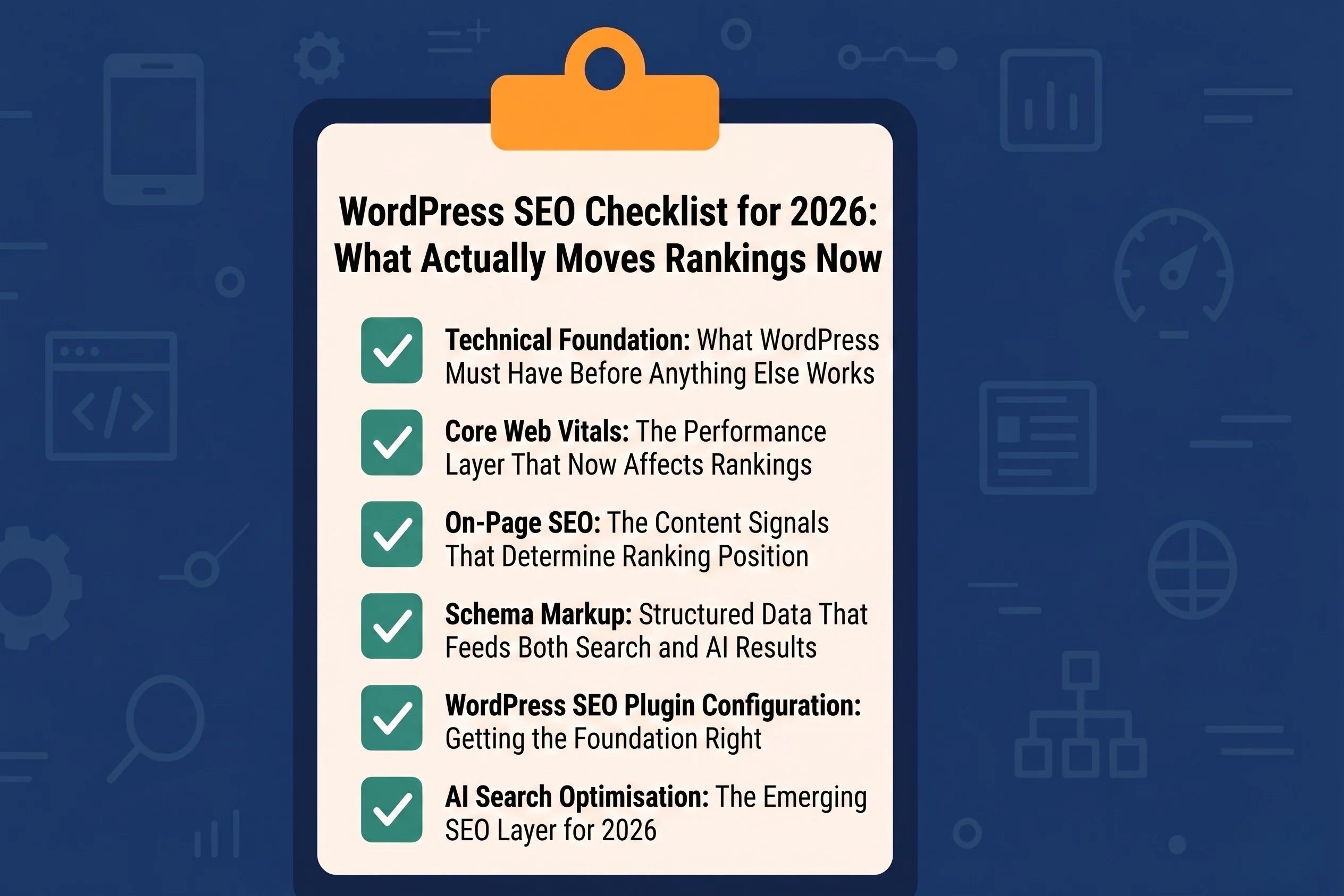
Technical health, page speed, HTTPS, and proper indexing remain prerequisites. E-E-A-T signals influence whether AI systems treat your source as authoritative — the specific artefacts to engineer are covered in our E-E-A-T signals guide
he shift is additive: you keep the SEO foundation, then layer passage-level optimization, conversational query targeting, and entity-rich structured data on top. Sites that abandon SEO fundamentals to chase AEO trends typically lose visibility in both channels. That’s why our SEO company in Kolkata treats AEO as a layer on top of disciplined SEO foundations, not a replacement.
Conclusion
Start with an audit of your three highest-converting pages. Restructure each into modular Q&A passages with direct answers in the opening sentences, add FAQPage or HowTo schema where it fits, and verify your robots.txt permits the AI crawlers you want citing you. Then track citation share across the major answer engines for your priority queries. The brands earning visibility in AI-generated answers in 2026 aren’t writing different content, they’re writing it in a structure that retrieval systems can extract cleanly.