How to Control What Google Knows About Your Business
In 2023, Google’s John Mueller confirmed what SEO practitioners had been observing for several years: Google does not crawl the web and rank pages in isolation; it builds an understanding of entities, their attributes, and their relationships with each other. Your brand is an entity in that system. How completely Google understands your brand, its category, its people, its products, its geographic presence, and its reputation directly determines how it is surfaced, described, and presented across search results, AI Overviews, voice answers, and Knowledge Panels.
Brand SEO is the discipline of ensuring Google’s entity understanding of your brand is accurate, complete, and consistent across every source the system draws from. It is distinct from keyword-based SEO, which optimises individual pages for specific queries. Brand SEO optimises the entity itself, ensuring that when a user searches your brand name, navigates to your Knowledge Panel, or encounters your brand in an AI-generated answer, the information Google presents is correct, authoritative, and aligned with how you want your business to be understood.
This article covers the mechanisms behind Knowledge Panel generation, the signals that build brand entity authority, the practical steps to claim and correct your panel, and the emerging importance of brand entity signals in AI search environments.
How Google Builds a Knowledge Panel (and What It Actually Draws From)
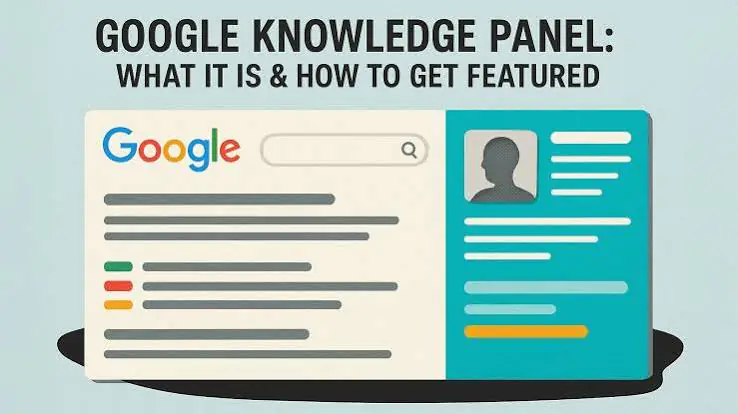
A Knowledge Panel is Google’s structured summary of a brand, person, organisation, or place, displayed in the right-hand column on desktop or at the top of mobile results for branded queries. It is generated algorithmically from sources Google treats as authoritative for entity information: Wikipedia and Wikidata carry the most weight, followed by the brand’s official website (specifically structured data and organisation schema), Google Business Profile for local entities, and consistent mentions across credible third-party sources.
Understanding this source hierarchy is the foundation of Brand SEO strategy. A brand that exists only on its own website has a thin entity presence, Google has one source to draw from and no corroborating signals to validate it. A brand with a Wikidata entry, a complete Google Business Profile, consistent mentions across industry directories, press coverage from credible publications, and properly structured schema on its own website has a rich, multi-source entity profile that Google can draw from with confidence.
The Knowledge Panel for a business typically includes the brand name, logo, official website, founding date, founders, headquarters location, social media profiles, and a description pulled from Wikipedia or the brand’s own structured data. Each field in the panel corresponds to a specific data source. The description field, for example, is typically pulled from Wikipedia if a page exists, or from the meta description or schema markup on the brand’s own homepage if no Wikipedia page exists. Knowing which source populates which field tells you exactly where to invest entity-building effort.
Wikidata – the structured data layer behind Wikipedia – deserves specific attention because it is one of the sources that directly feed Google’s Knowledge Graph, which underlies Knowledge Panel generation. A Wikidata entity for your brand, with properly completed fields including instance type, official website, country of origin, founding date, and key personnel, creates a machine-readable entity record that Google can reference with high confidence. This is not the same as a Wikipedia article, Wikidata entries are structured data records that require no notability threshold to create, and they feed Knowledge Graph signals directly.
The Entity Authority Signals Google Weighs for Brand Queries
Beyond the Knowledge Panel itself, brand entity authority determines how your brand is treated across Google’s entire search infrastructure, whether it appears as an autocomplete suggestion, whether branded queries trigger rich results, whether your brand is referenced in AI Overviews, and whether Google’s systems treat your site as a trusted publisher that earns crawl priority and ranking stability.
NAP consistency – Name, Address, Phone number – is the foundational signal layer for local business entities. Google cross-references your business details across Google Business Profile, your website, industry directories, and citation sources to validate that a single, consistent entity is represented rather than multiple conflicting variations.
Schema markup at the organisation level, specifically the Organisation schema type with legalName, url, logo, foundingDate, founder, sameAs, and contactPoint properties correctly completed, provides the brand’s own structured declaration of its entity attributes. The sameAs property is particularly important: it links your brand’s official website to its profiles on Wikipedia, Wikidata, LinkedIn, Crunchbase, and other credible platforms, explicitly telling Google’s systems that all of these profiles represent the same entity. This explicit linking reduces the ambiguity that causes Knowledge Panel incompleteness.
Press and editorial mentions from credible publications create entity co-citation signals, patterns where your brand is referenced alongside credible entities your industry already recognises. A startup in the fintech space that earns coverage in Inc42, Entrackr, or YourStory alongside references to established players in the category begins to acquire the entity association signals that help Google contextualise what the brand is, what category it belongs to, and what other entities it is meaningfully connected to. These contextual associations feed Knowledge Graph entity relationships, not just backlink profiles.
Claiming and Correcting Your Knowledge Panel
Google provides a Knowledge Panel claim process for verified brand representatives that allows limited management of panel information, not full editorial control, but the ability to suggest corrections, update featured images, connect social profiles, and flag inaccurate information for review. The claim process requires verifying identity through a signed-in Google account that can be connected to an authoritative source of truth for the entity (typically the brand’s official website or a verified Search Console property).
Claiming your Knowledge Panel should be a priority for any brand whose panel contains inaccurate information, wrong founding dates, incorrect descriptions, missing or outdated social profiles, or imagery that no longer reflects the current brand. Unclaimed panels with incorrect information can persist for extended periods because Google’s automated update mechanisms have no verified representative to flag the errors.
The correction process for panel information that cannot be fixed through the claim mechanism requires addressing the underlying source that Google is drawing from. If the panel description is inaccurate because it is pulling from an outdated Wikipedia article, the correct fix is to edit the Wikipedia article rather than asking Google to change the panel directly, because the panel will re-sync from Wikipedia on its next crawl. If the logo is outdated, updating the logo file referenced in your website’s Organization schema and ensuring the image URL is accessible for Google’s crawlers typically produces a panel update within a few weeks.
Social profile connections in the Knowledge Panel- the links to Instagram, LinkedIn, Twitter/X, YouTube, and other platforms – are populated from the sameAs property in your schema markup and from Google’s own cross-referencing of profile pages that reference the official website. Ensuring all official social profiles link back to the brand’s website with a consistent URL format, and that the brand’s website includes a sameAs schema reference to each official profile, keeps these connections accurate and prevents the Knowledge Panel from surfacing unofficial or parody accounts as official profile references.
Brand SEO in AI Search: How Entity Signals Feed AI Overviews and Answer Engines
The knowledge panel is the most visible expression of brand entity authority in traditional search, but the more strategically significant implication of strong brand entity signals in 2026 is their role in AI-generated search results. Google’s AI Overviews, Perplexity, and ChatGPT Search all draw entity information from knowledge bases and structured data sources when constructing answers that reference specific brands, which means the same entity authority signals that determine Knowledge Panel completeness also determine how accurately and how prominently your brand appears in AI-generated answers.
A brand with weak entity signals – no Wikidata entry, inconsistent directory information, absent or incomplete schema – is frequently misrepresented or absent from AI-generated answers about its category, even when its website has strong content and organic rankings for relevant keywords. AI systems synthesise entity information from structured, cross-referenced sources first, and fall back to unstructured web content only when structured sources are insufficient. This inversion of the traditional SEO priority, where page content and links were paramount, means brand entity building is now a prerequisite for AI search visibility, not a secondary concern.
Conversely, brands with strong entity signals appear more confidently and more accurately in AI-generated results. When Perplexity or Google’s AI Overview constructs an answer about the best digital marketing agencies in Kolkata, it draws entity information about each agency from whatever structured and semi-structured sources it can access, Wikidata entries, Google Business Profile data, credible publication mentions, and schema markup. An agency with a complete, consistent, multi-source entity profile is represented accurately; an agency whose entity information is sparse or inconsistent is either absent from the answer or described in terms that reflect whatever partial information the AI system could access.
Competitive Brand Protection: Defending Branded Search Real Estate
Brand SEO is not only about ensuring Google understands your brand correctly, but it is also about ensuring that branded search results are dominated by content you control or content that accurately represents your brand, rather than competitor ads, negative press, or third-party listing sites that capture branded search traffic you should be earning.
Branded keyword defence through Google Ads ensures that your own brand terms cannot be cost-effectively captured by competitors bidding on your name, because your Quality Score for your own brand terms will be significantly higher than a competitor’s, producing a lower cost-per-click for your own branded campaigns while making it expensive for competitors to maintain position. This is one of the few paid search investments with near-certain ROI for established brands, because branded query traffic converts at higher rates than any other query type.
Reputation management as a Brand SEO function involves ensuring that the first page of branded search results is populated by content that accurately reflects the brand’s intended positioning, the official website, official social profiles, credible press coverage, and review platform listings where the brand has proactive engagement. When negative content or competitive content begins appearing for branded queries, the most sustainable defence is generating enough authoritative positive content that it outranks the problematic result rather than attempting removal, a strategy that requires the same entity authority building described throughout this article, applied specifically to the branded search results page.
Monitoring branded search results regularly, through Google Search Console’s query data filtered to branded terms, and through direct SERP checks across device and location types, gives brands early warning of reputation issues or competitor intrusions into branded search real estate before those problems compound. Setting Google Alerts for the brand name, founder names, and primary product names provides a lightweight first-line detection system for new content about the brand that may be affecting branded search results.
The Strategic Priority for Brands
Brand SEO and Knowledge Panel management are not vanity exercises, they are the foundational layer of how Google and AI systems represent your brand to users who search for it by name, encounter it in category results, or receive AI-generated answers that reference it. The brands that invest in entity authority building, consistent structured data, Wikidata presence, citation consistency, editorial mentions, and proactive Knowledge Panel management accumulate a compounding advantage in how accurately and how prominently they are represented across the full range of modern search environments.
The implementation priority for most businesses is straightforward: complete your Wikidata entity record, implement full Organisation schema on your homepage, audit NAP consistency across every directory where your business is listed, claim your Knowledge Panel, and establish a regular monitoring practice for branded search results and AI search citations.
The direction of search continues toward entity-based understanding and AI-mediated discovery. In that environment, being correctly understood as an entity is a prerequisite for being consistently found, and the brands that build that entity authority now, before the AI search landscape fully matures, will be the ones whose names appear accurately and prominently when the systems drawing on that authority are deciding what to tell the next billion users who ask.