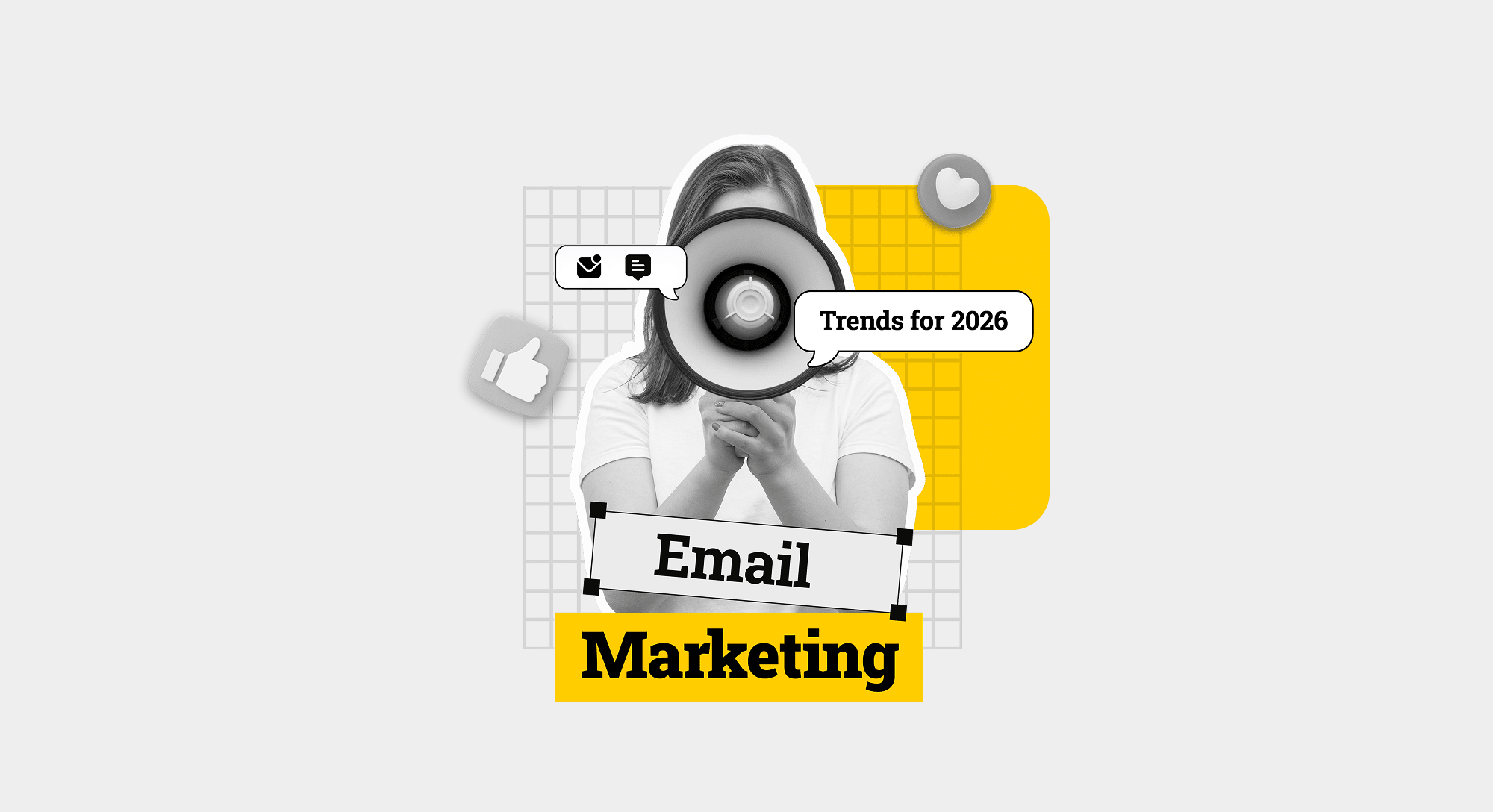
Email has been declared dead so many times that it’s practically immortal. With an average return of ₹3,600 for every ₹100 spent (roughly $36 for every $1 invested globally), email marketing continues to outperform every other digital channel on a pure ROI basis. But there’s a critical distinction that most businesses miss: the difference between sending emails and running email marketing automation. One is a task. The other is a system that generates revenue while you sleep.
The Problem With “Batch and Blast” Email
The traditional email approach – collect a list, write a broadcast, hit send to everyone – is not just ineffective in 2026, it’s actively harmful. Irrelevant bulk emails train your subscribers to ignore you. They spike unsubscribe rates. They damage your sender reputation, which causes even your best emails to land in spam. And with inbox providers becoming increasingly sophisticated, low engagement rates across a list can result in domain-level deliverability problems that affect every email you send.
The solution isn’t to email less. It’s to email smarter, sending the right message to the right person at the right moment in their journey.
What Email Automation Actually Means
Email automation is the practice of sending triggered, personalised email sequences based on user behaviour, time intervals, or data attributes, without manual effort for each send.
A new subscriber gets a welcome sequence. A user who viewed your pricing page but didn’t enquire gets a follow-up email addressing common objections. A customer who purchased three months ago gets a re-engagement email with a relevant new offer. None of this requires someone to press send. It all runs on logic you set up once and refine over time.
The Core Automation Sequences Every Business Needs
The Welcome Sequence (Days 1–7)
The moment someone joins your list is when your brand has maximum attention. A well-structured welcome sequence introduces your company, establishes your expertise, sets expectations, and delivers immediate value, whether that’s a free resource, a checklist, or a compelling piece of content. Businesses that send welcome emails see up to 4x higher open rates compared to standard campaigns.
The moment someone joins your list is when your brand has maximum attention. A well-structured welcome sequence introduces your company, establishes your expertise, sets expectations, and delivers immediate value, whether that’s a free resource, a checklist, or a compelling piece of content. Businesses that send welcome emails see up to 4x higher open rates compared to standard campaigns.
The Lead Nurture Sequence
Not every lead is ready to buy today. A nurture sequence keeps warm prospects engaged over weeks or months, delivering educational content, case studies, and social proof. The goal is to be the brand they think of first when they’re ready to make a decision. A lead nurtured through email is typically more informed, less price-sensitive, and faster to close.
Not every lead is ready to buy today. A nurture sequence keeps warm prospects engaged over weeks or months, delivering educational content, case studies, and social proof. The goal is to be the brand they think of first when they’re ready to make a decision. A lead nurtured through email is typically more informed, less price-sensitive, and faster to close.
The Abandoned Action Sequence
Whether it’s an abandoned cart for ecommerce or an incomplete enquiry form for a service business, abandonment sequences are among the highest-converting automations available. A three-email sequence sent over 24 hours, a gentle reminder, a value reinforcement, and a time-limited incentive can recover a significant portion of lost intent.
Whether it’s an abandoned cart for ecommerce or an incomplete enquiry form for a service business, abandonment sequences are among the highest-converting automations available. A three-email sequence sent over 24 hours, a gentle reminder, a value reinforcement, and a time-limited incentive can recover a significant portion of lost intent.
The Post-Purchase Sequence
Selling to an existing customer costs 5 to 7 times less than acquiring a new one. A post-purchase sequence that thanks the customer, confirms their decision was right, delivers onboarding value, and then cross-sells or upsells related offerings maximises lifetime customer value. It also dramatically increases the likelihood of a review or referral.
Selling to an existing customer costs 5 to 7 times less than acquiring a new one. A post-purchase sequence that thanks the customer, confirms their decision was right, delivers onboarding value, and then cross-sells or upsells related offerings maximises lifetime customer value. It also dramatically increases the likelihood of a review or referral.
The Re-Engagement Sequence
Every list accumulates inactive subscribers over time. Rather than letting them drag down your engagement metrics, a re-engagement sequence gives them a clear choice: stay (and receive something of value for doing so) or unsubscribe. A smaller, highly engaged list performs far better than a large, disengaged one.
Every list accumulates inactive subscribers over time. Rather than letting them drag down your engagement metrics, a re-engagement sequence gives them a clear choice: stay (and receive something of value for doing so) or unsubscribe. A smaller, highly engaged list performs far better than a large, disengaged one.
Personalisation: Beyond Just Using Someone’s First Name
True personalisation in 2026 goes well beyond “Hi [First Name].” Modern email platforms allow you to segment based on industry, purchase history, content consumed, location, company size, and dozens of other data points. A SaaS company can send one version of an email to startup founders and a completely different version to enterprise procurement managers, for the same product, entirely different messaging. This level of relevance is what separates forgettable emails from ones that actually get replied to.
Metrics That Tell You Whether Your Email Strategy Is Working
Open rate tells you whether your subject lines are compelling and your sender reputation is healthy. Anything above 30–35% for a warm list is strong.
Click-to-open rate (CTOR), not just click rate, tells you whether the email content itself is relevant. It measures clicks as a percentage of opens, removing list size from the equation.
Conversion rate tells you whether the email drove the action you wanted. This requires linking email performance to your CRM or analytics platform.
Unsubscribe rate and spam complaints are the warning signals. A spike in either indicates a relevance or frequency problem that needs immediate attention.
Revenue per email sent is the ultimate measure for ecommerce businesses. Every automated sequence should be attributed to revenue so you can quantify exactly what it’s worth.
Choosing the Right Platform
For most small-to-mid-sized businesses, platforms like Mailchimp, Klaviyo (excellent for ecommerce), ActiveCampaign, or HubSpot provide powerful automation capabilities without requiring a developer. The right choice depends on your CRM, your ecommerce platform, your list size, and how sophisticated your sequences need to be. The platform matters less than the strategy behind it, a thoughtful automation built on a simple tool will outperform a poorly planned automation on the most expensive platform.
The Compounding Effect of Email Done Right
What makes email automation genuinely powerful is that it compounds. Each sequence you build adds to a system that runs continuously. A welcome sequence built today will still be nurturing leads two years from now. A re-engagement campaign optimised this quarter will keep improving your list quality indefinitely. Unlike paid advertising, which stops the moment you stop spending, email automation is an asset that appreciates over time.
For businesses serious about growth, email is not a channel to automate and forget. It’s a relationship infrastructure. Build it intentionally, personalise it authentically, and measure it rigorously, and it will remain one of the most reliable revenue channels in your digital marketing mix.