Getting a visitor to your product page is only half the job. The harder half happens in the next few seconds after they land, whether they scroll, hesitate, add the item to their cart, or quietly close the tab and compare prices elsewhere.
That’s the job of the product detail page, or PDP. For most ecommerce businesses, it’s the single page where the most revenue-critical decisions get made, and yet it’s often the most under-optimised part of the funnel. Brands pour budget into ads, SEO, and influencer campaigns to drive traffic, then send that traffic to a product page they haven’t rethought in months.
This article breaks down what PDP optimisation actually means, why it matters, the specific elements that make a product page convert, and how to measure whether your efforts are working, for D2C brands, Shopify stores, and ecommerce teams more broadly.
What Is PDP Optimisation?
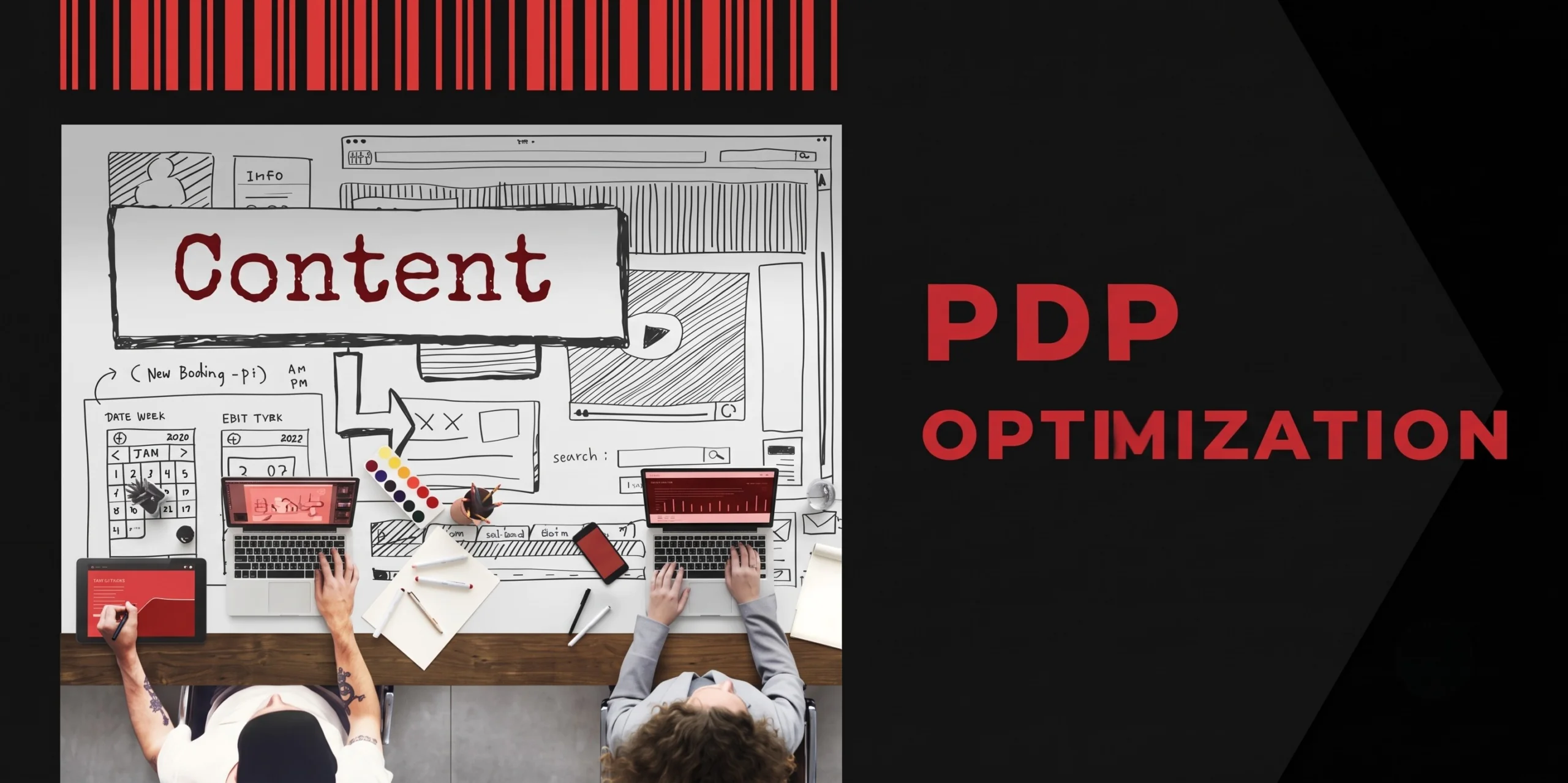
PDP optimisation is the process of improving a product detail page’s content, design, and user experience so that more visitors take the desired action, usually adding the product to their cart or completing a purchase.
It covers everything a shopper sees and interacts with on that page: the product title, images and videos, description, pricing, call-to-action buttons, reviews, delivery information, and the overall layout and load speed. The goal isn’t just to make the page look better, it’s to remove the specific points of hesitation that stop someone from buying.
Think of the PDP as a silent salesperson. In a physical store, a good salesperson answers questions before they’re asked, shows the product from different angles, mentions what other customers thought, and makes the checkout process easy. An optimised PDP does the same thing, except it has to do it without a human in the room, through images, copy, layout, and trust signals doing that work instead.
Product detail page optimisation sits at a different stage of the funnel than checkout optimisation. Checkout tools reduce friction for a shopper who has already decided to buy. PDP optimisation influences whether that decision gets made in the first place.
Why Is PDP Optimisation Important for Ecommerce Brands?
Every ecommerce business eventually hits the same wall: traffic keeps growing, but conversion rate doesn’t keep up. That’s usually a signal that the problem isn’t acquisition it’s what happens once people arrive.
A well-optimised product page helps in several concrete ways:
Increases customer confidence. Clear images, honest descriptions, and visible reviews reduce the uncertainty a shopper feels about a product they can’t physically touch.
Improves add-to-cart rate. When a page answers the obvious questions size, material, delivery time, return policy upfront, shoppers don’t need to leave the page to find answers elsewhere, which is often where they get distracted and don’t come back.
Reduces purchase hesitation. Trust badges, secure payment icons, and social proof address the quiet “is this a legitimate brand” question that new or unfamiliar D2C businesses face more than established marketplaces.
Reduces product-related queries. A page with a strong size chart, FAQ section, and detailed specifications cuts down on pre-sales questions to customer support, saving the team time and preventing shoppers from abandoning their carts while waiting for an answer.
Improves the overall shopping experience. Fast-loading, mobile-friendly, well-structured pages simply feel more trustworthy and are easier to buy from, regardless of the product category.
Increases conversions and revenue. All of the above compound into more completed purchases from the same volume of traffic, which is usually a cheaper way to grow revenue than spending more on acquisition.
Key Elements of a High-Converting Product Detail Page
Not every element carries equal weight, but each plays a specific role in either building trust or removing friction.
Product Title
The title should be clear and descriptive rather than clever. It needs to communicate what the product is and ideally include attributes shoppers search for, such as material, size, or use case, since this also supports product page SEO.
Product Images and Videos
This is usually the highest-impact element on the page. Multiple angles, zoom functionality, lifestyle shots showing the product in use, and short videos all reduce the “what will I actually receive” uncertainty that’s one of the biggest reasons shoppers abandon a product page, particularly for apparel, beauty, home goods, and anything where texture or fit matters.
Product Descriptions
Good product descriptions do more than list specifications, they answer the shopper’s unspoken questions: who is this for, what problem does it solve, how does it compare to using nothing at all. Generic, copy-pasted descriptions are one of the most common reasons a page fails to convert despite good traffic.
Product Benefits and Features
Features describe what the product has; benefits describe what the customer gets from it. A page that only lists specs (“100% cotton, 180 GSM”) misses the chance to explain why that matters (“breathable enough for daily wear in humid weather”). The best PDPs do both.
Pricing and Offers
Price should be unambiguous, and any discount, bundle, or EMI/BNPL option should be visible on the page itself rather than only appearing at checkout. Surprise costs at checkout are one of the most well-documented causes of cart abandonment.
Clear CTA Buttons
The “Add to Cart” or “Buy Now” button should be visually distinct, positioned where shoppers naturally look, and not competing with too many secondary actions. A page with five equally weighted buttons gives the shopper decision fatigue instead of a clear next step.
Size and Specification Information
For fashion, footwear, and furniture especially, an unclear or hard-to-use size chart is a direct cause of both abandoned carts and, later, returns. Specification tables should be easy to scan, not buried in a paragraph.
Customer Reviews and Ratings
Reviews are one of the strongest trust signals available, particularly for D2C brands that don’t yet have the brand recognition of an established retailer. Verified-buyer reviews and customer photos tend to carry more weight than star ratings alone.
Trust Badges
Secure payment icons, verified checkout badges, and clear return-policy callouts reassure shoppers who are unfamiliar with the brand. These matter more for newer D2C brands than for well-known marketplaces.
Shipping and Delivery Information
Shoppers want to know when they’ll receive the product and what payment options are available before they commit, not after they’ve filled out an address form. For Indian ecommerce specifically, showing Cash on Delivery (COD) availability directly on the PDP, along with an estimated delivery window, addresses a common source of hesitation.
Return and Exchange Policy
A clearly stated, easy-to-find return policy reduces perceived risk, especially for categories like apparel where fit issues are common.
FAQs
A well-curated FAQ section answers the recurring pre-sales questions a support team already knows about, without requiring the shopper to leave the page or wait for a reply.
Stock Availability
Showing real stock levels, including low-stock indicators when genuinely accurate, creates natural urgency without resorting to manufactured scarcity tactics that erode trust over time.
Product Recommendations
“Frequently bought together,” “You may also like,” or size-and-color variant suggestions keep the shopper engaged on-site and can lift average order value, even when the primary goal is simply completing the first sale.
How PDP Optimisation Helps Increase Conversion Rate
Each of the elements above targets a specific point of hesitation. Put together, PDP optimisation increases conversion rate through a few consistent mechanisms:
Reducing friction. Every extra click, unanswered question, or moment of confusion is a chance for a shopper to leave. A well-structured page removes those moments.
Answering questions before they’re asked. Detailed descriptions, size charts, and FAQs mean shoppers don’t need to search elsewhere, on your site or, worse, a competitor’s, to get the information they need to decide.
Improving trust. Reviews, trust badges, and transparent policies matter more in ecommerce than in physical retail, because the shopper can’t verify quality by touching the product.
Creating appropriate urgency. Genuine stock indicators or time-bound offers can nudge an undecided shopper toward a decision, provided they’re accurate and not overused to the point of feeling manipulative.
Making the buying decision easier. Ultimately, a good PDP doesn’t try to persuade a reluctant shopper, it removes the obstacles standing between an already-interested visitor and a completed purchase.
It’s worth being direct about what PDP optimisation can and can’t do: it improves the conversion rate of visitors who are already a reasonable fit for the product. It won’t turn cold, mismatched traffic into buyers, and no single change guarantees a lift, the value comes from testing changes against your own baseline over time.
PDP Optimisation for D2C Brands
D2C brands face a different starting position than large marketplaces: less built-in brand trust, and no third-party platform reputation to lean on. That makes a few elements matter more:
Brand storytelling. Sharing why the product was made, what problem it solves, or the founder’s reasoning behind it gives shoppers a reason to trust a brand they haven’t heard of before.
Merchandising and lifestyle imagery. Showing the product in a real-world context, worn, used, styled, helps shoppers visualise ownership in a way plain studio shots don’t.
Social proof. Reviews, user-generated content, and even follower counts or press mentions can substitute for the trust that an established retailer already carries.
Bundles, upselling, and cross-selling. D2C brands often have tighter margins per unit than they’d like, so PDPs that suggest complementary products or bundle discounts can lift average order value without needing more traffic.
Personalised product experiences. Recommending sizes, variants, or related products based on browsing behavior helps smaller catalogs feel more tailored, closing some of the gap with larger platforms that have more data to work with.
PDP Optimisation for Shopify Stores
Shopify powers a large share of D2C and independent ecommerce businesses, and several PDP improvements are particularly practical within its ecosystem:
- Mobile-first design – the majority of Shopify traffic for most stores comes from mobile, so the PDP should be designed for a phone screen first, not adapted from a desktop layout afterward.
- Sticky Add to Cart – keeping the CTA visible as a shopper scrolls through images and descriptions avoids making them scroll back up to buy.
- Product media apps – using zoom, 360-degree views, or short video loops (many available through the Shopify App Store) to strengthen the visual trust signal.
- Clear variant selection – colour and size swatches that update the product image, rather than a plain dropdown menu, reduce confusion for shoppers choosing between options.
- Size guides – either a static chart or an interactive size-recommendation tool, depending on the product category.
- Reviews apps – integrating a reviews solution that displays photos and verified-buyer badges, not just star ratings.
- FAQ sections – either built directly into the page template or via an accordion app, so they don’t add unnecessary scroll length.
- Delivery estimators — showing an estimated delivery date based on pin code or zip code directly on the PDP.
- Fast-loading pages – compressing images and limiting the number of third-party apps running on the product page, since each additional script adds load time.
- A clear checkout journey – making sure the path from PDP to cart to checkout is short and doesn’t introduce unnecessary steps or distractions.
Common PDP Optimisation Mistakes to Avoid
Even well-intentioned product pages tend to repeat the same set of mistakes:
- Poor-quality images: low resolution, inconsistent lighting, or too few angles.
- Generic product descriptions: copy that could apply to any similar product, with no specific detail or personality.
- Too much information without structure: long blocks of text with no headings, bullet points, or visual hierarchy.
- Hidden shipping costs: costs that only appear at checkout, after the shopper has already committed mentally to buying.
- Weak CTAs: buttons that blend into the page or use vague language instead of a clear action.
- Missing reviews: either no reviews section at all, or one that’s hard to find.
- Poor mobile experience: text too small, images that don’t load properly, buttons that are hard to tap.
- Confusing size charts: measurements without clear instructions on how to take them, or no comparison to common sizing standards.
- Slow-loading pages: heavy, uncompressed images and too many third-party scripts.
- Lack of trust signals: no visible return policy, security badges, or contact information.
Fixing even a few of these tends to have a disproportionate impact, since they’re often the reason an otherwise interested shopper leaves.
How to Measure PDP Optimisation Success
PDP optimisation isn’t something to eyeball; it should be measured against clear metrics, tracked before and after changes are made. Relevant ones include:
- Product page conversion rate — the percentage of PDP visitors who complete a purchase.
- Add-to-cart rate — the percentage of PDP visitors who add the product to their cart, a useful earlier signal than final conversion.
- Buy-now rate — for stores with a direct buy-now option, how often it’s used compared to add-to-cart.
- Bounce rate — how many visitors leave the PDP without any further interaction.
- Engagement rate — time on page, scroll depth, and interaction with elements like image galleries or size charts.
- Average order value (AOV) — whether product recommendations and bundling are lifting order size.
- Revenue per visitor (RPV) — a blended metric that captures both conversion rate and order value.
- Checkout initiation rate — how many shoppers who add to cart actually begin the checkout process.
No single metric tells the full story. A change that lifts add-to-cart rate but doesn’t move final conversion might be creating false intent rather than genuine purchase decisions. The most reliable approach is comparing a consistent set of these metrics before and after a change, ideally through a controlled test rather than a single before/after snapshot that could be influenced by seasonality or traffic source changes.
A Practical PDP Optimisation Checklist
Use this as a starting point to audit an existing product page:
- Are there at least 4–6 high-quality images showing different angles and use cases?
- Is there at least one product video or 360-degree view, where relevant to the category?
- Does the description explain both features and real-world benefits?
- Is pricing, including any discount or EMI/BNPL option, clearly visible?
- Is the primary CTA button visually distinct and easy to find?
- Is there a clear, easy-to-use size or specification chart?
- Are customer reviews visible, with photos where available?
- Are trust badges (secure payment, verified checkout) present?
- Is delivery time and COD/payment availability shown on the page itself?
- Is the return and exchange policy clearly stated?
- Is there an FAQ section addressing common pre-sales questions?
- Is stock availability shown accurately?
- Are related or complementary products recommended?
- Does the page load quickly on mobile?
- Is the path from PDP to checkout short and free of distractions?
Final Thoughts
PDP optimisation isn’t a one-time project you complete and move on from, it’s an ongoing process that involves customer behavior data, testing, merchandising decisions, UX design, and content quality working together. What converts well for one product category, price point, or audience won’t necessarily work identically for another, which is why the strongest ecommerce teams treat their product pages as something to keep refining rather than something to set and forget.
The brands that get the most out of their traffic aren’t necessarily spending the most on acquisition, they’re the ones whose product pages do the work of answering questions, building trust, and making the decision to buy as easy as it can reasonably be.
Frequently Asked Questions
What is PDP optimisation?
PDP optimisation is the process of improving a product detail page’s images, descriptions, layout, trust signals, and calls-to-action so more visitors add the product to their cart and complete a purchase.
Why is PDP optimisation important?
It’s important because driving traffic to a product page is only useful if that page can convince visitors to buy. An unoptimized PDP wastes the traffic and marketing spend used to bring shoppers there in the first place.
How does PDP optimisation increase conversion rate?
It increases conversion rate by reducing friction, answering common shopper questions upfront, building trust through reviews and transparency, and making the path to purchase as simple as possible.
What should a product detail page include?
At minimum, a strong PDP should include clear images, an informative description, transparent pricing, a visible CTA, size or spec details, customer reviews, delivery and return information, and an FAQ section.
Is PDP optimisation only relevant for large ecommerce brands?
No. It’s arguably more important for smaller D2C brands, since they don’t have the built-in trust of an established retailer and rely more heavily on the PDP itself to convince a first-time shopper.
How often should a product page be optimised?
There’s no fixed schedule, it depends on performance data, seasonal changes, new reviews, and evolving customer questions. Many teams review PDP performance quarterly, or whenever conversion metrics shift noticeably.
What’s the difference between PDP optimisation and checkout optimisation?
PDP optimisation influences whether a shopper decides to buy in the first place. Checkout optimisation reduces friction for shoppers who have already made that decision, helping more of them complete the purchase.
Can PDP optimisation guarantee higher sales?
No single change guarantees a lift in sales. PDP optimisation improves the odds by removing common points of hesitation, but results depend on the product, audience, and how changes are tested against a store’s own baseline data.