Quick Answer: Google My Business optimisation (also called GBP optimisation) is the process of strategically configuring, enriching, and actively managing your Google Business Profile so Google’s local algorithm ranks your listing in the Local 3-Pack, the three map results that appear at the top of local search. In 2026, it extends beyond the profile itself to include review sentiment, AI Overview eligibility, GeoGrid rank tracking, and real-time signal management across Google Maps, voice search, and AI-generated local summaries.
Table of Contents
| 01 | What Is Google My Business Optimization? (Core Definition) |
| 02 | Why GMB Optimization Is Non-Negotiable in 2026 |
| 03 | What Is Google Maps SEO? |
| 04 | What Is Google Business Profile Optimization? |
| 05 | What Is GMB Review Management and Sentiment Strategy? |
| 06 | What Is Local Citation Building for GMB? |
| 07 | What Are GMB SEO Services and What Should They Include? |
| 08 | The AI Overhaul: How Google AI Overviews Are Reshaping Local Search |
| 09 | How to Approach GMB Optimization in the AI Era: 5 Principles |
| 10 | The Complete 2026 GMB Roster: 35 Terms Every Business Owner Must Know |
| 11 | Work With a Google My Business Optimization Specialist |
What Is Google My Business Optimisation? (Core Definition)
Google My Business optimisation is the ongoing, structured management of a Google Business Profile to maximise visibility, authority, and click-through rate in Google’s local search results, specifically the Local 3-Pack and Google Maps.
Google Business Profile (GBP), previously branded as Google My Business or Google Local Listing, is the free business listing that powers local search. It controls what appears when someone searches for your business type in a specific location like the map results, the knowledge panel, the call button, the directions link, the photos, and the reviews.
Optimisation means treating that profile as a live, managed channel, not a listing you create once and forget. It includes technical configuration (categories, attributes, NAP data), content management (descriptions, posts, Q&A, photos), authority building (reviews, citations, backlinks), and increasingly, AI surface eligibility (Google AI Overviews, voice search, Gemini-generated local recommendations).
How It Differs from Older Approaches
Pre-2024, basic GBP setup, verified address, correct category, a few photos was often sufficient to rank in competitive markets. In 2026, Google’s local algorithm processes more than 200 signals across a rolling 30-day window. A profile optimized in January and left untouched by March is algorithmically equivalent to a profile that was never optimized at all.
Why It Matters Specifically in 2026
Google AI Overview now answers a growing share of local queries before users see a single blue link. Being cited in that generated answer requires a level of profile completeness, entity richness, semantic depth, and structured Q&A content that standard optimisation practices do not reach. The businesses investing in GBP optimisation today are building the entity signals that determine AI citation eligibility tomorrow.
| Nullstacks Technologies provides a full-service Google My Business optimization programme for Indian businesses and internationally covering profile audit, review management, citation building, GeoGrid tracking, and AI Overview readiness. |
Why GMB Optimisation Is Non-Negotiable in 2026
Local search is the highest-intent traffic channel available to a physical or service-area business, and Google’s Local 3-Pack captures the dominant share of it.
Approximately 46% of all Google searches carry local intent. Of those users, 78% who conduct a mobile local search visit a physical business within 24 hours. Businesses in the Local 3-Pack receive, on average, 700% more clicks than businesses ranking in organic positions 4 through 10 beneath the map pack.
The urgency in 2026 is driven by three converging shifts:
- AI Overview expansion: Google’s AI-generated answer panels now appear for a widening category of local queries. Being cited requires entity completeness that goes beyond standard profile setup.
- Voice search growth in India: India is one of the world’s fastest-growing voice search markets. Voice results are pulled directly from the GBP data profile. Completeness is a direct prerequisite for voice visibility.
- Algorithm freshness weighting: Google’s local ranking update increased the weight assigned to Activity Velocity, the rate at which a profile generates fresh signals. A static, historically optimised profile now ranks below a less-complete profile with consistent recent activity.
Local Search Stat | Impact on Business |
| 46% of all Google searches have local intent | Almost half your potential customers start on Google Maps |
| 3-Pack gets 700% more clicks than organic below it | Position in the Pack is exponentially more valuable than positions 4–10 |
| 78% of local mobile searchers visit in 24 hours | Local search drives offline conversion faster than any other channel |
| A complete GBP gets 7x more visits than incomplete | Profile completion is directly correlated with traffic volume |
| Businesses with 100+ photos receive 520% more calls | Media richness is a measurable ranking and conversion signal |
What Is Google Maps SEO?
Google Maps SEO is the practice of optimising a Google Business Profile and its surrounding digital ecosystem to rank higher in Google Maps search results and the Local 3-Pack that appears above organic results on Google Search.
Google Maps SEO is distinct from traditional website SEO. Where website SEO focuses on domain authority and backlink profiles, Google Maps SEO operates on a ranking model governed by three factors Google has named publicly:
- Relevance: How well the business profile matches what the user is searching for. Controlled through primary and secondary category selection, service listings, keyword-rich descriptions, and Q&A content.
- Distance: How geographically close the business is to the user’s search location. Influenced by verified address, service area configuration, and NAP consistency across citations.
- Prominence: How well-known and trusted the business is measured by review count and velocity, backlinks, brand mentions, and overall online activity. Prominence is where most businesses underperform and where the largest ranking gains are available.
Google Maps SEO Ranking Checklist 2026
Primary and secondary categories were correctly assigned and verified against top-ranking competitors.
- Service area configured at the sub-city (neighbourhood) level for service-area businesses.
- Consistent NAP data across GBP, website, JustDial, IndiaMart, Sulekha, Clutch, and 60+ directories
- Minimum 25 reviews with 4.5+ average rating and active response velocity
- Google Posts are published a minimum of twice per week with keyword-relevant headlines.
- Photos uploaded on a rolling weekly cadence, i.e. minimum 3–5 per week
- Q&A section seeded with 15+ question-answer pairs in conversational language
- LocalBusiness + Service + FAQPage schema implemented on the associated website page.
- GeoGrid rank tracking is in place to monitor visibility across the full service area
What Is Google Business Profile Optimisation?
Google Business Profile (GBP) optimisation is the systematic process of completing, enriching, and actively managing every element of a Google Business Profile to maximise relevance signals, trust indicators, and engagement metrics across Google Search and Google Maps.
The terms GBP optimisation and GMB optimisation are used interchangeably. Google rebranded Google My Business as Google Business Profile in 2021, but the optimisation practice and underlying algorithm remain the same.
GBP optimisation operates across six distinct layers, each targeting a different ranking signal:
Layer | What It Covers | Primary Signal |
Technical Setup | Category selection, attribute completion, service listings, verification | Relevance |
Content Optimization | Business description, service/product copy, Q&A seeding | Relevance + AI Citation |
Visual Optimization | Photo geo-tagging, video uploads, cover image, logo | Engagement + Vision AI |
Review Management | Review collection, response velocity, sentiment strategy | Prominence |
Citation Building | NAP consistency, directory submissions, structured data | Distance + Prominence |
Activity Management | Google Posts, Q&A responses, attribute updates | Freshness Velocity |
The GBP Optimisation Equation – Nullstacks Workflow
| Formula: Local Rank = (Relevance Score × Content Depth) + (Prominence Score × Review Velocity) + (Distance Score × Citation Accuracy) × Activity Velocity Multiplier Every variable is measurable. Every variable is improvable. The Activity Velocity Multiplier is the most underweighted factor in standard optimization practice, and the highest-leverage intervention for profiles that have stalled. |
What Is GMB Review Management and Sentiment Strategy?
GMB review management is the structured practice of generating authentic customer reviews, responding to them strategically, and optimising review content to improve both local ranking signals and Google’s language model assessment of business authority and relevance.
Reviews are one of the three highest-weighted ranking factors in Google’s local algorithm. In 2026, they carry two distinct values: the traditional ranking signal (review count, average rating, velocity) and a newer semantic signal, the keyword and location specificity in review text, which Google’s language models use to associate your profile with specific service queries.
Why Generic Reviews Underperform in 2026
A business with 80 five-star reviews that all say ‘great service, highly recommend’ is providing Google’s language model with no associative data about what the business does or where it operates. A business with 40 reviews, where each mentions a specific service and location, provides rich topical and geographic association data that the model extracts for ranking and AI citation purposes.
The Compliant Review Sentiment Framework
- The Specificity Conversation: When closing a service interaction, explain the specific details, service name, location, and outcome that make reviews more useful to other customers. This prompts specificity without scripting the review.
- The 48-Hour Follow-Up: Request reviews via WhatsApp 48–72 hours after service completion. This window produces 3x the response rate of checkout-moment requests and generates longer, more specific review text.
- Context-Prompted QR Cards: Physical review cards with QR codes. Below the QR code: ‘Tell others what service you used and how it helped, your details help customers in their respective city and help in finding the right specialist.’
- Keyword-Natural Responses: Every review response is indexed content. Responses that include the service name and location (‘we are glad our welding gloves performed well for your team in Chennai’) add indexed semantic content to the profile.
| Google’s 2026 Review Spam Detection: Google’s AI-assisted review authenticity scoring in 2026 is significantly more sensitive to templated language patterns. Providing customers with pre-written review text, using review-gating software, or generating reviews via any automated tool violates Google’s review policies and can result in review removal or profile suspension. Every strategy in the framework above is fully compliant. |
What Is Local Citation Building for GMB?
Local citation building is the process of creating and maintaining consistent mentions of a business’s Name, Address, and Phone number (NAP) across authoritative online directories, platforms, and databases, to strengthen Google’s confidence in the business’s legitimacy and geographic relevance.
Google cross-references NAP data across a business’s GBP, website, social profiles, and third-party directories to verify that the business is real, active, and located where it claims to be. Inconsistencies, a different phone number on JustDial vs the GBP, and a truncated address on Sulekha create verification conflicts that suppress local rankings.
Priority Citation Directories for Indian Businesses
Directory | Domain Authority | Why It Matters |
| JustDial | 85 | India’s most-cited local directory. Google reads JustDial citations for NAP validation. |
| IndiaMart | 87 | Strong B2B authority signal. Essential for manufacturing and wholesale businesses. |
| Sulekha | 72 | High-intent local services platform with strong India-specific citation value. |
| Clutch.co | 91 | Most-trusted global agency review platform. Critical for service businesses. |
| GoodFirms | 86 | Strong verified-review profile. India-friendly verification process. |
| Bing Places | N/A | Microsoft feeds Bing AI and Copilot local results from Bing Places data. |
| Apple Business Connect | N/A | Apple Maps + Siri. Growing as iOS voice search adoption rises in India. |
For Indian businesses, a minimum of 60 consistent citations across national and local directories is the baseline for competitive local markets. Citation audits should be run every six months to catch NAP drift, phone number changes, address format variations, or old trading names persisting on legacy directory entries.
What Are GMB SEO Services and What Should They Include?
GMB SEO services are managed optimization programmes where an agency or specialist takes over the ongoing configuration, content management, review strategy, citation building, and performance reporting of a business’s Google Business Profile delivering measurable local ranking improvements as a continuous service rather than a one-time project.
The distinction between a one-time GBP setup and ongoing GMB SEO services is significant. A setup delivers a correctly configured profile. A managed service delivers and maintains the Activity Velocity, review velocity, content freshness, and citation accuracy that the 2026 algorithm requires to hold a Top 3 local ranking.
What a Professional GMB SEO Service Must Include in 2026
100-Point GBP Audit: Baseline assessment of every profile element against ranking parameters, categories, descriptions, photos, Q&A, NAP, citations, review sentiment, and competitor gap analysis.
- Category & Attribute Optimisation: Primary and secondary category selection benchmarked against top-ranking competitors. All applicable attributes completed.
- Keyword-Rich Business Description: A 750-character GBP description that incorporates target service keywords naturally and communicates genuine differentiators.
- Weekly Google Posts: Minimum two posts per week, i.e. Offers, Updates, or Events published in real time with keyword-relevant headlines.
- Photo & Video Management: 3–5 new operational images per week with descriptive file names. Minimum one 20–30 second unfiltered video per week, uploaded within 24 hours of capture.
- Review Collection System: WhatsApp follow-up sequences, QR card programme, 48-hour response protocol, and keyword-natural response copy, fully compliant with Google’s 2026 review spam policies.
- Q&A Management: 15+ seeded question-answer pairs in conversational, voice-search-optimised language. Monthly additions based on real customer enquiries.
- Citation Building: Submission to 60+ authoritative Indian and global directories with perfectly consistent NAP data.
- GeoGrid Rank Tracking: Monthly visibility reports showing 3-Pack position from 25 geographic points across the service area.
- Schema Implementation: LocalBusiness, Service, FAQPage, and BreadcrumbList schema on the associated website page.
- Monthly Performance Reporting: Live dashboard covering profile views, search queries, calls, direction requests, website clicks, and photo views.
| Nullstacks Technologies provides a full-service Google My Business optimization programme for Indian businesses, covering every element above, delivered by an engineering-led team with active programmes across healthcare, retail, real estate, and B2B manufacturing verticals. |
The AI Overhaul: How Google AI Overviews Are Reshaping Local Search
Google AI Overview is a generative answer panel that appears at the top of Google Search results, synthesising information from multiple sources into a single AI-produced response and increasingly, recommending specific local businesses by name within that generated answer.
AI Overview represents the most significant structural change to local search since the introduction of the Local 3-Pack in 2014. Where the Local 3-Pack shows businesses side-by-side, AI Overview produces a narrative recommendation often citing two or three specific businesses in a generated paragraph before the user sees any traditional results.
Being cited in an AI Overview answer carries several times the brand authority of a 3-Pack position because it is framed as a recommendation from Google itself, not a search result the user must evaluate independently.
What Determines AI Overview Eligibility for Local Businesses?
- Complete structured attributes: Every applicable attribute is checked on the GBP.
- Service descriptions with semantic depth: Not just a service name, but a description that explains what the service covers, who it is for, and what outcome it produces.
- Q&A section with conversational language: AI engines parse Q&A content for answerable structures that match voice and natural-language queries.
- Cross-source consistency: The same service names, geographic references, and business attributes appear in the GBP, website, and review content, creating a coherent entity signal.
- Keyword-specific review corpus: Review text mentioning specific services and locations provides the language model with associative data for constructing local recommendations.
Old Local SEO vs New AI-Era Local SEO – The Comparison
Dimension | Pre-2024 Local SEO | 2026 AI-Era Local SEO |
Primary Goal | Rank in Local 3-Pack | 3-Pack + AI Overview citation + voice results |
Success Metric | 3-Pack position + impressions | Calls, directions, website clicks + AI citation frequency |
Content Focus | Keywords in description and category | Semantic entity completeness + conversational Q&A depth |
Review Strategy | Volume + rating | Volume + rating + keyword specificity in review text |
Photo Strategy | Upload photos, more is better | Authentic operational footage scored by Vision AI |
Posting Cadence | Monthly or weekly | 2–3x weekly – freshness decay curve requires continuous signal |
Citation Strategy | Submit and forget | Submit, audit quarterly, maintain NAP consistency |
Voice Search | Not a primary concern | Q&A structured specifically for voice query format |
Schema | Optional enhancement | Required for rich results and AI Overview eligibility |
How to Approach GMB Optimisation in the AI Era: 5 Principles
The five principles below are not tactics, they are the strategic shifts that separate businesses whose GBP investment compounds over time from those whose rankings plateau and decay.
Principle 1 – Treat Your GBP as a Live Channel, Not a Static Listing
Why it matters: Google’s local ranking algorithm processes freshness signals on a rolling 30-day basis. A profile that is comprehensively optimised but has received no updates for three weeks reads as inactive and begins to lose ground to competitors with consistent Activity Velocity.
How to implement it: Build a minimum viable Activity Velocity schedule, two Google Posts per week, three to five new photos per week, review responses within four hours, one Q&A pair added monthly. The total weekly time investment is under 20 minutes. The compounding ranking effect accumulates month over month.
Principle 2 – Build for Entity Completeness, Not Keyword Density
Why it matters: Google’s AI systems do not rank profiles based on how many times a keyword appears in the description. They rank based on entity completeness and how confidently the system can identify, categorise, and describe your business based on all structured information available.
How to implement it: Complete every applicable attribute on your GBP. Write service descriptions that explain what each service covers, who it is for, and what outcome it produces in complete sentences. Ensure your website, GBP, and directories all describe your business using the same service names and geographic references.
Principle 3 – Engineer Your Review Corpus as Semantic Content
Why it matters: Review text is indexed content. A review corpus where 60%+ of reviews mention specific services, locations, and outcomes provides Google’s language model with the associative data it uses to rank your profile and cite it in AI-generated local recommendations.
How to implement it: Deploy the Specificity Conversation, the QR card context prompt, and the 48-hour WhatsApp follow-up. These three tactics shift the quality and specificity of review content without scripting it, remaining fully compliant with Google’s 2026 spam policies.
Principle 4 – Optimise for Three Surfaces, Not One
Why it matters: Local search visibility in 2026 exists across three distinct surfaces: the typed Google 3-Pack, voice search (Google Assistant, Siri), and AI-generated local summaries (Google AI Overview, Gemini, Perplexity). A GBP optimised only for the typed 3-Pack is invisible on two of the three surfaces where local intent is increasingly expressed.
How to implement it: Structure Q&A content in the exact format of voice queries. Write service descriptions as complete, citable sentences. Configure service areas at sub-city precision. These three changes collectively improve voice and AI surface eligibility without requiring separate optimisation programmes for each channel.
Principle 5 – Measure Visibility, Not Just Position
Why it matters: Standard rank tracking reports your position from one search point. A business may rank #1 from the city centre while ranking #12 from a neighbourhood two miles away that contains 40% of its target customers. Position is a fraction of the picture. Visibility across the service area is the real metric.
How to implement it: Use GeoGrid rank tracking to monitor your Local 3-Pack position from 25 geographic points across your service area monthly. Identify the quadrants where visibility is weakest. Focus on citation building, Q&A content, and post location references on the under-performing zones first.
GBP Visibility Audit
Nullstacks Technologies provides a 100-point Google My Business optimization audit for Indian businesses covering entity completeness, Activity Velocity, review sentiment density, citation accuracy, GeoGrid baseline, and AI Overview eligibility.
Delivered within 48 hours. No commitment required. Yours to keep whether you work with us or not.
The Complete 2026 GMB Roster: 35 Terms Every Business Owner Must Know
This roster covers every term a business owner, marketer, or local SEO professional needs to understand to manage, evaluate, or commission a Google My Business optimization programme effectively in 2026.
Each entry is written to be extractable as a standalone AI answer, this section is your AEO goldmine.
Activity Velocity – The rate at which a Google Business Profile generates fresh signals (posts, photos, reviews, Q&A updates) across a rolling 30-day window. Higher Activity Velocity correlates directly with improved local ranking in the 2026 algorithm.
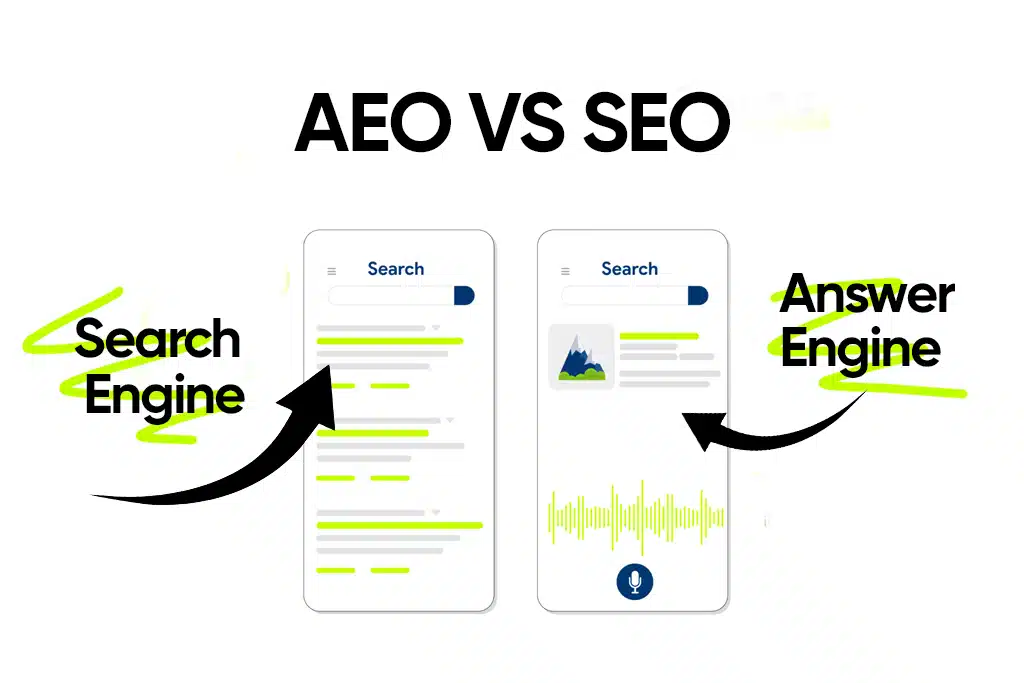
AEO (Answer Engine Optimisation) – The practice of structuring content so it is extracted and used by AI-powered answer engines – including Google AI Overview, ChatGPT Search, Gemini, and Perplexity, in their generated responses.
AI Overview – Google’s AI-generated answer panel is appearing above traditional search results for a growing category of queries, including local business recommendations. Eligibility requires entity completeness beyond standard GBP setup.
Attribute (GBP) – A structured data field on a Google Business Profile specifying business characteristics such as accessibility features, payment methods, language spoken, and industry-specific qualities. Critical for relevance scoring and AI Overview eligibility.
Category (GBP Primary) – The single most important ranking signal on a Google Business Profile. The primary category determines which search queries the profile is eligible to appear for. Selecting the most specific available category is a prerequisite for competitive local ranking.
Citation – Any online mention of a business’s Name, Address, and Phone number (NAP). Consistent citations across authoritative directories strengthen Google’s confidence in a business’s legitimacy and geographic relevance.
Citation Audit – A systematic review of a business’s NAP data across all citation sources to identify and correct inconsistencies. Should be conducted quarterly to prevent NAP drift from suppressing local rankings.
CTA (Call to Action) – A directive element on a Google Post, website page, or GBP listing prompting the user to take a specific next step: call, get directions, book an appointment, or visit the website.
Distance (Google Ranking Factor) – One of Google’s three named local ranking factors. Measures how geographically close a business is to the user’s search location. Influenced by verified address, service area configuration, and NAP consistency.
E-E-A-T (Experience, Expertise, Authoritativeness, Trustworthiness) – Google’s quality evaluation framework. For GBP, Experience is demonstrated through authentic operational content; Expertise through service depth; Authoritativeness through reviews and citations; Trustworthiness through consistent NAP and transparent business information.
Entity (Knowledge Graph) – A real-world object for business, person, place, or concept that Google has identified and catalogued in its Knowledge Graph. A business with high entity completeness is more likely to be cited in AI-generated answers.
Freshness Signal – A ranking input reflecting how recently a Google Business Profile was updated. Google’s local algorithm weights freshness on a rolling 30-day basis, recent activity amplifies all other signals; absence causes ranking decay.
GBP (Google Business Profile) – The free business listing platform from Google, formerly branded Google My Business. Controls a business’s appearance in Google Search, Google Maps, and AI-generated local summaries.
GEO (Generative Engine Optimisation) – The practice of optimising content and profiles to be cited, recommended, or summarised by AI generative engines, including Google Gemini, ChatGPT, and Perplexity in their generated outputs.
GeoGrid Tracking – A local rank tracking methodology measuring a business’s 3-Pack position from multiple geographic points across its service area, typically a 5×5 grid of 25 points rather than from a single central location.
GMB (Google My Business) – The former brand name for Google Business Profile. Both terms are used interchangeably in the industry to refer to the same platform and optimisation practice.
GMB Optimisation – Google Business Profile Optimisation. The ongoing management of a GBP to maximise local ranking, click-through rate, and visibility across Search, Maps, voice, and AI-generated results.
GMB SEO Services – Managed optimisation programmes where an agency handles the ongoing configuration, content management, review strategy, citation building, and performance reporting for a business’s Google Business Profile.
Google Maps SEO – The practice of optimising a GBP and its surrounding digital ecosystem to rank higher in Google Maps search results and the Local 3-Pack.
Google Posts – Short-form content updates published directly on a Google Business Profile. Types include Offer, Update, and Event. Posts contribute to Activity Velocity and keyword relevance signals.
Improve Google My Business Ranking – Colloquial phrasing for the goal of increasing a business’s position in the Local 3-Pack or Google Maps through GMB optimisation, review velocity improvement, citation building, and Activity Velocity management.
Knowledge Panel – The information card appearing on the right side of Google Search results when a user searches for a specific named business. Populated from GBP data and the Knowledge Graph.
Local 3-Pack – The block of three business listings with a Google Map appearing at the top of local search results. Receives 700%+ more clicks than organic results below it.
Local Citation Building – The process of creating and maintaining consistent NAP mentions across authoritative online directories to strengthen Google’s geographic and legitimacy signals for a business.
Local SEO – Search engine optimisation specifically aimed at improving visibility in local search results, including the Local 3-Pack, Google Maps, and AI-generated local summaries.
NAP (Name, Address, Phone) – The three core data points Google uses to verify and locate a business. NAP consistency across all online sources is a foundational requirement for competitive local ranking.
NAP Drift – The gradual inconsistency that develops in NAP data across directories over time caused by relocations, phone number changes, or directory auto-corrections. Quarterly citation audits prevent NAP drift from suppressing rankings.
Prominence (Google Ranking Factor) – One of Google’s three named local ranking factors. Measures how well-known and trusted a business is, based on review count and velocity, backlinks, brand mentions, and overall online activity.
Rank My Business on Google – Common search intent phrasing for the goal of appearing higher in Google Maps or the Local 3-Pack through GMB optimisation and local SEO practices.
Relevance (Google Ranking Factor) – One of Google’s three named local ranking factors. Measures how well a business profile matches the user’s search query. Controlled through category selection, service listings, description copy, and Q&A content.
Review Velocity – The rate at which a business accumulates new Google reviews over a given time period. Consistent review velocity is a stronger ranking signal than a large but stagnant review count.
Schema Markup – Structured data code (JSON-LD format) added to a website’s HTML to provide Google’s systems with explicit, machine-readable business information, enabling rich results and improving AI Overview eligibility.
Sentiment Signal Density – The percentage of a business’s review corpus containing specific service names, geographic references, or outcome descriptions. High density improves topical relevance scoring and AI citation eligibility.
Service Area Business (SAB) – A business serving customers at their location rather than at a fixed premises. SABs configure a service area on GBP instead of, or in addition to, a physical address pin.
Vision AI (Google) – Google’s computer vision technology processes images and videos uploaded to the GBP, classifying scene content, assessing authenticity, and scoring relevance. Authentic operational footage scores higher than produced marketing content.
Voice Search Optimization – Structuring GBP content is particularly for Q&A and service descriptions, in conversational format, so it surfaces in voice search results from Google Assistant, Siri, and Alexa for ‘near me’ and city-specific queries.
Work With a Google My Business Optimisation Specialist
Google My Business optimisation in 2026 is not a one-time configuration task. It is a continuous, multi-signal discipline that requires weekly content management, review velocity strategy, citation maintenance, GeoGrid tracking, and AI surface eligibility and all managed simultaneously, all tracked against measurable outcomes.
The businesses ranking in the Local 3-Pack for competitive Indian market queries share one characteristic: their profiles are managed, not just set up. They post consistently. They respond to every review within hours. They track their visibility from 25 geographic points, not one. They know which layer of their optimisation is underperforming because they measure it monthly.
Building that system from scratch while running a business is where most businesses stall. It is also where a specialist creates disproportionate value. Nullstacks Technologies is India’s engineering-led Google My Business optimisation company, working with 500+ businesses across healthcare, retail, real estate, restaurants, and B2B manufacturing from offices in Kolkata and Bengaluru.
- If you are a business in India, explore our GMB Optimisation Services, from SEO to AEO, with a free audit delivered in 48 hours.
- For a complete overview of our services, see the methodology, channel mix, and pricing tiers in full, explore our Local SEO Optimization Service Page.