- / Case-Study
- / PeakD2C
A Static Marketing site rebuilt into a content-managed platform — without losing a single search ranking.
- Case Study · Technology · Digital Marketing
One team, one build: content architecture, CMS engineering, technical SEO, performance and security all delivered for PeakD2C, a technology and digital marketing company whose website had outgrown what a static site could support.
- SECTOR
Technology · Digital Marketing
- ENGAGEMENT
- SCOPE
- PLATFORM
- The Brief
A marketing team boxed in by its own website
Our original website was fast, visually polished, and easy to maintain from a developer’s perspective — but it wasn’t built for a growing marketing team. Every content update required code changes and a deployment. Publishing a new article, updating a service page, editing a case study, or launching a landing page meant pulling in developers for work that should have belonged to content editors.
The migration couldn’t afford to break what already worked, either. Existing URLs had to stay intact. Search rankings had to be preserved. Structured data, Open Graph metadata, canonical URLs, and sitemap generation all needed to keep working without a single day of disruption.
The challenge wasn’t redesigning the website. The challenge was rebuilding its architecture without anyone noticing.
- THE BUILD
A custom build Wagtail-Platform
A Wagtail platform architected for editors, search engines, and AI crawlers alike
Wagtail was the right platform for a technical marketing site in this category — a mature Python/Django foundation, a StreamField system flexible enough to give editors real freedom, and a template layer that let us preserve the original design pixel-for-pixel through the migration. We built around it for everything a CMS doesn’t hand you out of the box.
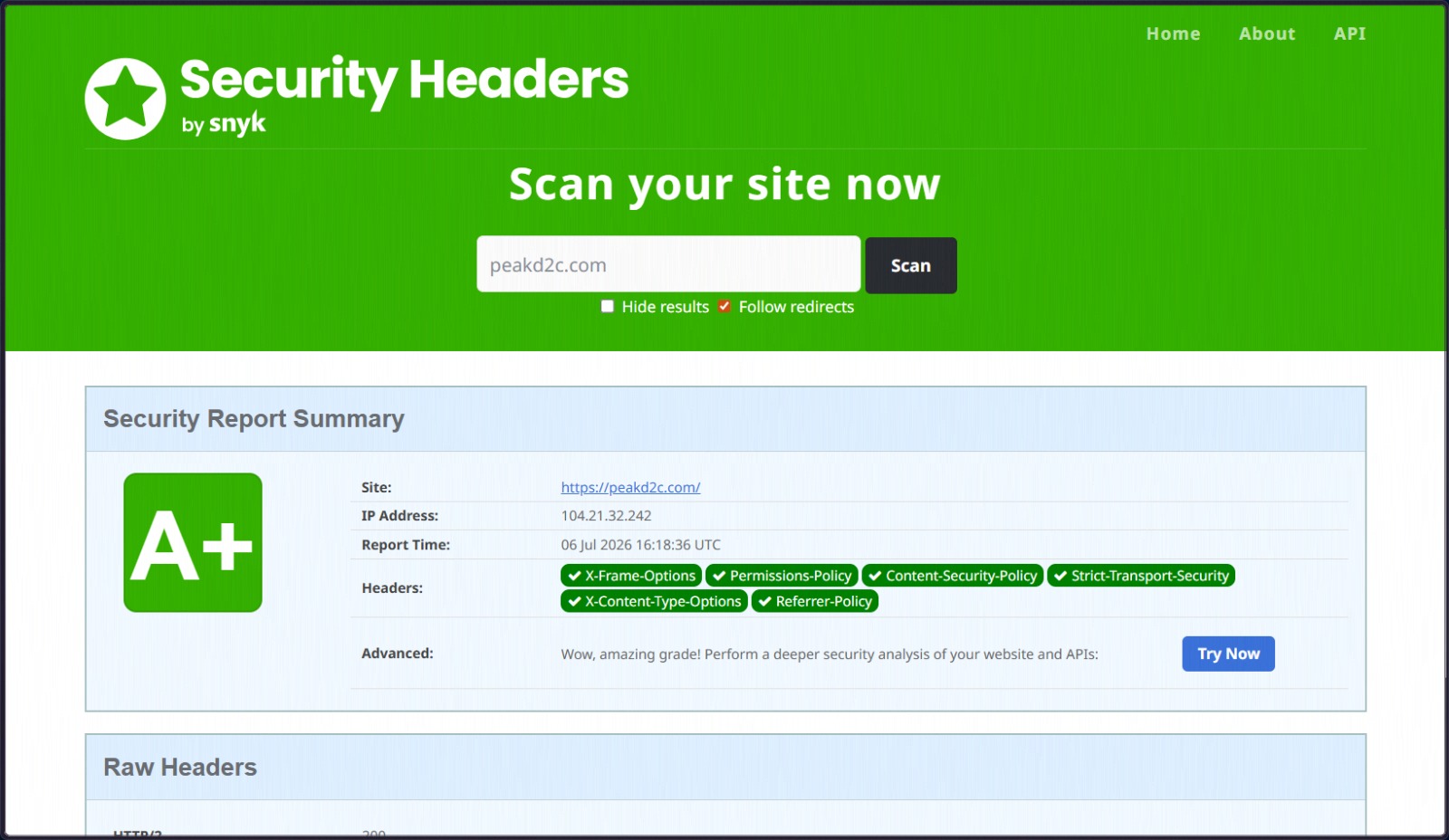
| Content Architecture | Rebuilt around reusable StreamField components, so the marketing team can assemble new pages — articles, service pages, case studies, landing pages — without touching code or waiting on a developer. |
| CMS Engineerin | The static site was migrated into Wagtail while preserving the existing design and UX exactly, turning every future content update into a self-serve, no-deployment task. |
| SEO Architecture | Dynamic metadata, structured data, canonical URLs, Open Graph, XML sitemaps, robots.txt and llms.txt built in from day one — engineered for both search engines and AI discoverability. |
| Performance & Security | WhiteNoise-served assets, responsive image renditions, modern security headers, and a strict Content Security Policy — engineered for a fast, hardened production environment. |
- SEO, PERFORMANCE & SECURITY ENGINEERING
Engineering for Search, Speed & Security
Migrating a static site to a CMS usually costs you something — speed, SEO equity, or both. The mandate here was to give up nothing.
SEO infrastructure was treated as a first-class citizen of the build, not an afterthought bolted on after launch: dynamic metadata, structured data, canonical URL management, Open Graph and Twitter Card tags, XML sitemaps, and a dedicated robots.txt — alongside an llms.txt file, written specifically so AI systems can parse and cite the site accurately.
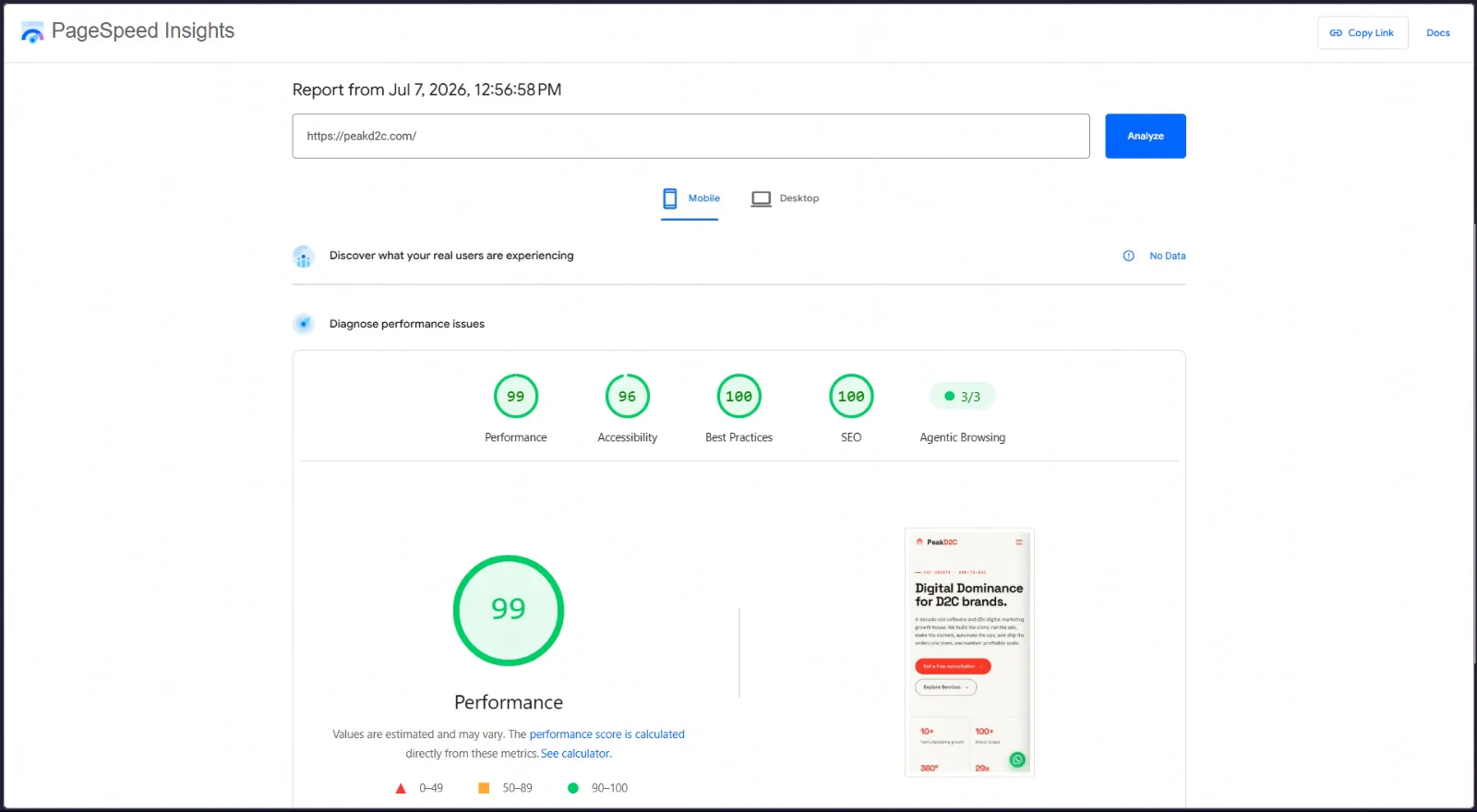
Performance engineering ran in parallel. WhiteNoise handles static asset delivery, images are served through responsive renditions rather than single oversized files, and JavaScript is deferred wherever it doesn’t block first paint. The result held at 99 on Google Lighthouse Performance, 96 on Accessibility, and 100 on both Best Practices and SEO — scores that are typically hard to hold onto once a CMS enters the picture.
Security engineering closed the loop. A production-grade Content Security Policy, Permissions Policy, and a full set of modern response headers earned the site an A+ rating on SecurityHeaders.com — the kind of grade most marketing sites never attempt because it usually conflicts with CMS flexibility. Here it didn’t have to.
Results at a glance:
- 99 — Google Lighthouse Performance
- 96 — Accessibility
- 100 — Best Practices
- 100 — SEO
- A+ —com rating
- 100% dynamic, content-managed metadata
- 20+ reusable StreamField components
Key Takeaway
PeakD2C shows that a marketing website should be engineered as a scalable content platform, not a collection of static pages. By combining Wagtail CMS, technical SEO, performance engineering, and modern security practices, we built a platform that empowers marketers, performs exceptionally for users, search engines and AI systems alike, and gives the business a foundation to grow on.
- WHAT WE DELIVERED
-
Wagtail CMS platform
Full migration from static site, design preserved, StreamField-driven
-
Security Engineering
Content Security Policy, Permissions Policy, modern headers, A+ rating
-
Content Architecture
20+ reusable components, zero-code page assembly for editors
-
AI-readiness layer
llms.txt and structured data built for accurate AI crawling and citation
-
Technical SEO infrastructure
Metadata, structured data, canonical URLs, Open Graph, sitemaps, robots.txt, llms.txt
-
API-ready foundation
Architecture prepared for future API-driven applications on the same platform
-
Performance Engineering
WhiteNoise, hashed assets, responsive images, deferred JS
- CREATIVES MADE BY US